How Long Is 6 Inches? 10 Common Everyday Items for Visual Scale
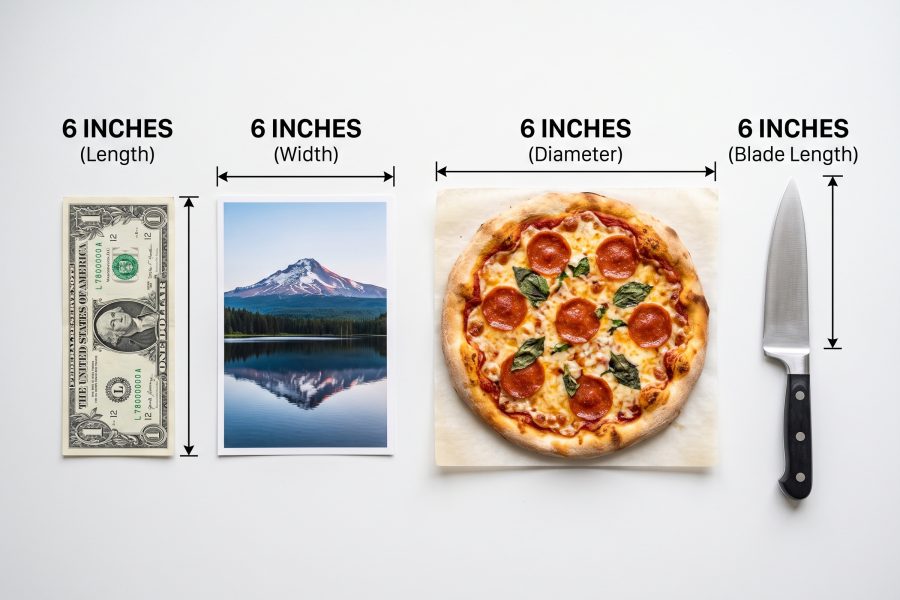
6 inches equals exactly 15.24 centimeters, 152.4 millimeters, or half a foot (0.5 ft). To convert, multiply inches by 2.54 for centimeters, or divide by 12 for feet. It’s the length of a US dollar bill (6.14 in) almost exactly, and the long edge of a standard 4×6 photo print exactly.
- Millimeters: 152.4 mm
- Centimeters: 15.24 cm
- Feet: 0.5 ft (6/12)
- Meters: 0.1524 m
- Yards: 0.1667 yd
Complete Inches Conversion & Dimension Reference Table
| Unit of Measurement | Exact Converted Value | Formula / Multiplier | Practical Reference / Notes |
| Millimeters (mm) | 152.4 mm | 6 × 25.4 | Standard metric technical drawing unit |
| Centimeters (cm) | 15.24 cm | 6 × 2.54 | Most commonly cited metric conversion |
| Decimeters (dm) | 1.524 dm | 6 × 0.254 | Rarely used outside scientific contexts |
| Meters (m) | 0.1524 m | 6 × 0.0254 | Used for larger-scale comparisons |
| Feet (decimal) | 0.5 ft | 6 ÷ 12 | Exactly half a foot |
| Feet (fractional) | 1/2 ft | 6/12 simplified | Same value, fraction form |
| Yards (yd) | 0.1667 yd | 6 ÷ 36 | Rounds to about 1/6 of a yard |
| Fractional inches | 6 0/1 in | — | Whole number, no fraction remainder |
Practical note: Because 1 inch is defined as exactly 2.54 cm under the international yard-and-pound agreement, every value above is mathematically exact — there is no rounding error at this scale.
Visualizing 6 Inches: What Does It Look Like in Real Life?
Half a foot sits at a genuinely useful midpoint in everyday design — long enough to hold, write with, or store something meaningfully, short enough to stay pocket- or drawer-sized. In interior spaces, 6 inches shows up constantly as a “component” measurement rather than a whole-room one: baseboard trim height, the depth of a shelf overhang, or the gap manufacturers leave under kitchen cabinets are all frequently built around this figure.
In construction, 6 inches is half of the 12-inch module used for many floor tiles and ceiling grids, the width of a large rain gutter, and close to the actual width of a “2×6” board (5.5 inches). In everyday life, it is about the height of a mass-market paperback lying on its side and a little less than the length of an adult hand from wrist to fingertip.
10 Common Everyday Items That Are 6 Inches Long
1. A US One-Dollar Bill (Length)
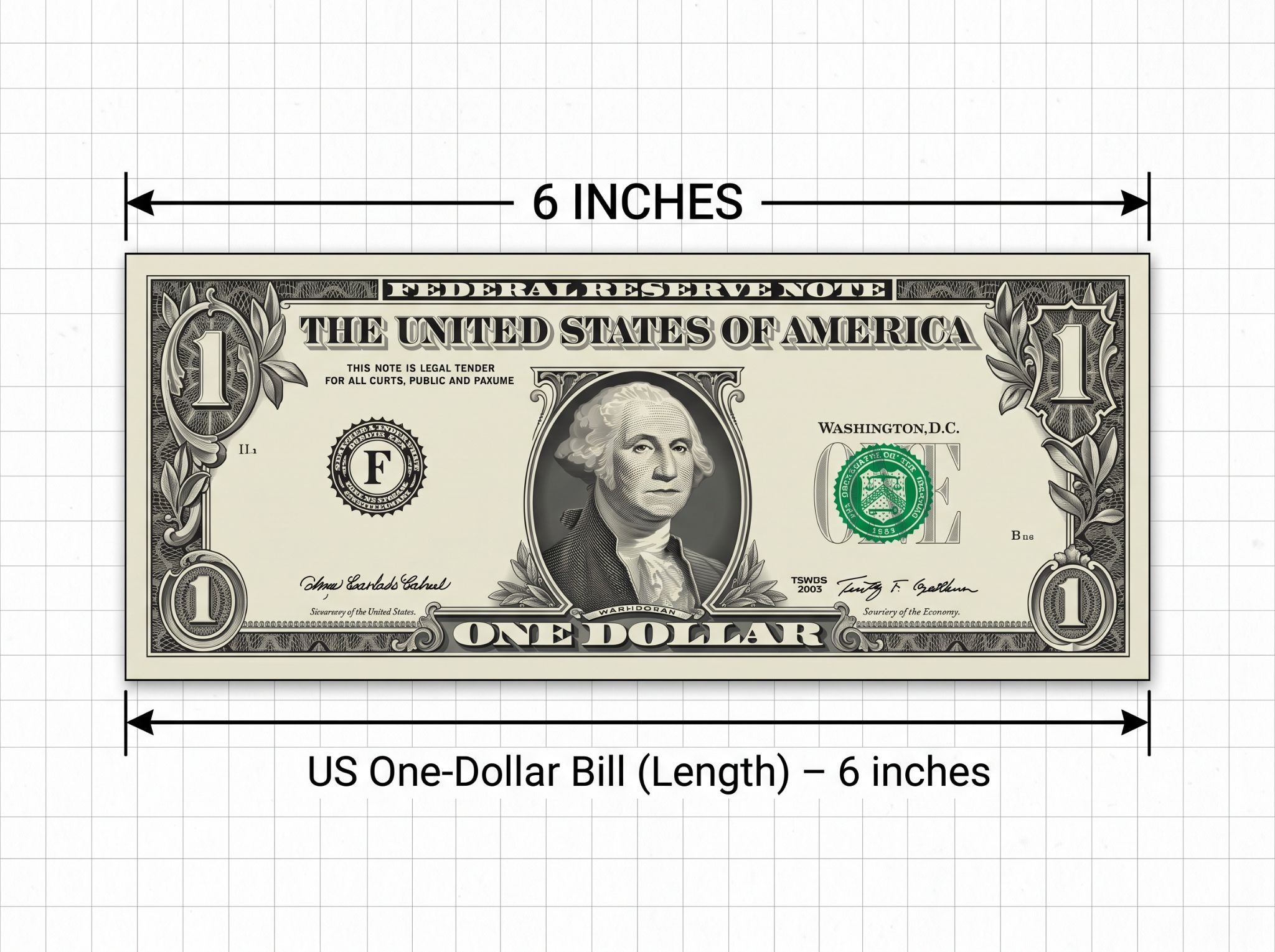
A US dollar bill measures exactly 6.14 x 2.61 inches (156 x 66.3 mm), per official Bureau of Engraving and Printing specifications, and every US denomination is printed to this identical size. It’s the single most reliable pocket reference for 6 inches that exists, since you’re likely carrying one right now, and it’s only about an eighth of an inch longer than the true 6-inch mark.
2. A 4×6 Photo Print (Long Edge)
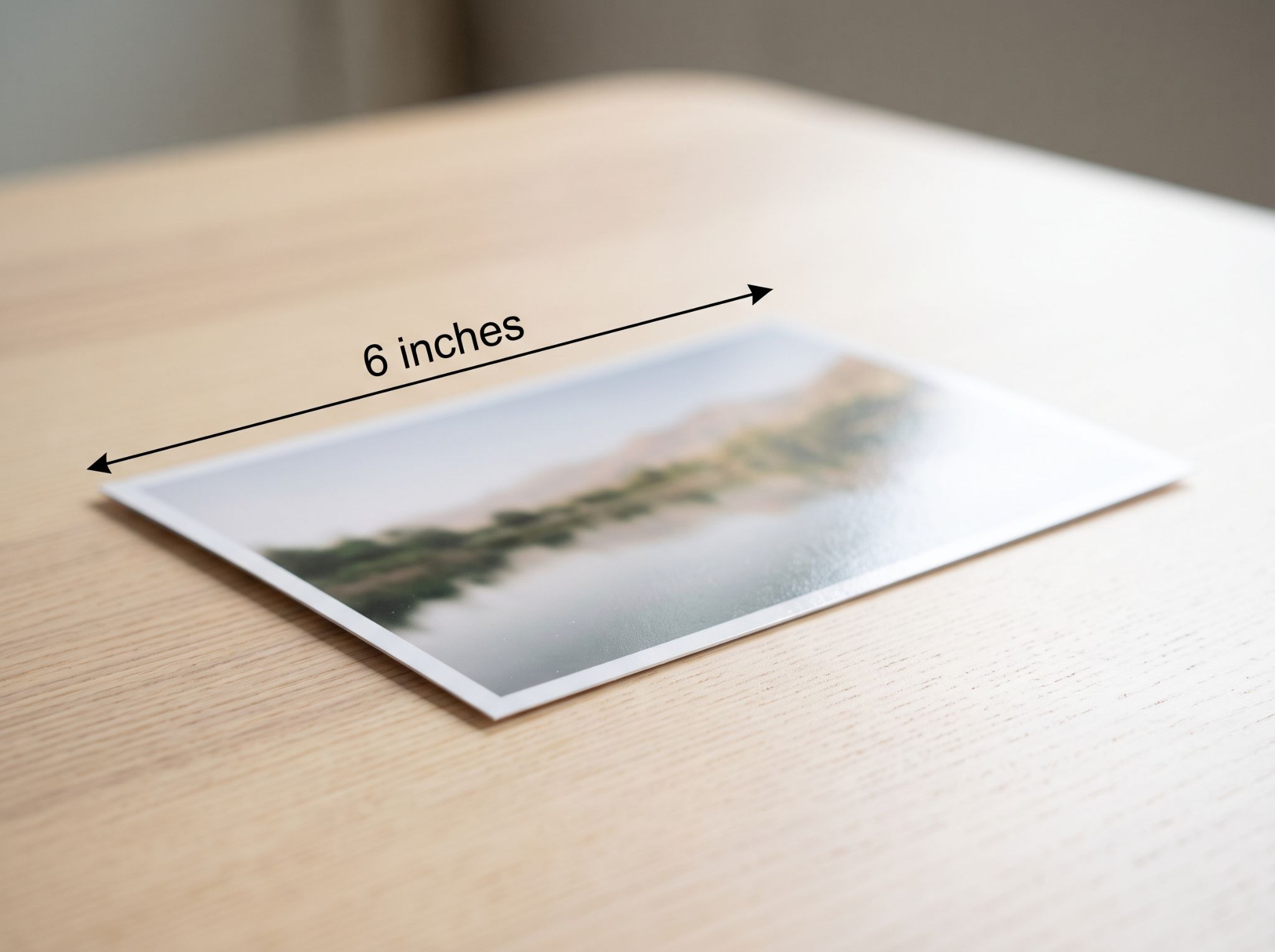
The standard drugstore and online photo print size measures 4 x 6 inches, with the long edge landing at exactly 6 inches. This is a fixed printing-industry standard, not an approximation, making it one of the most precise real-world references available for this exact length.
3. A Subway 6-Inch Sub (Length)
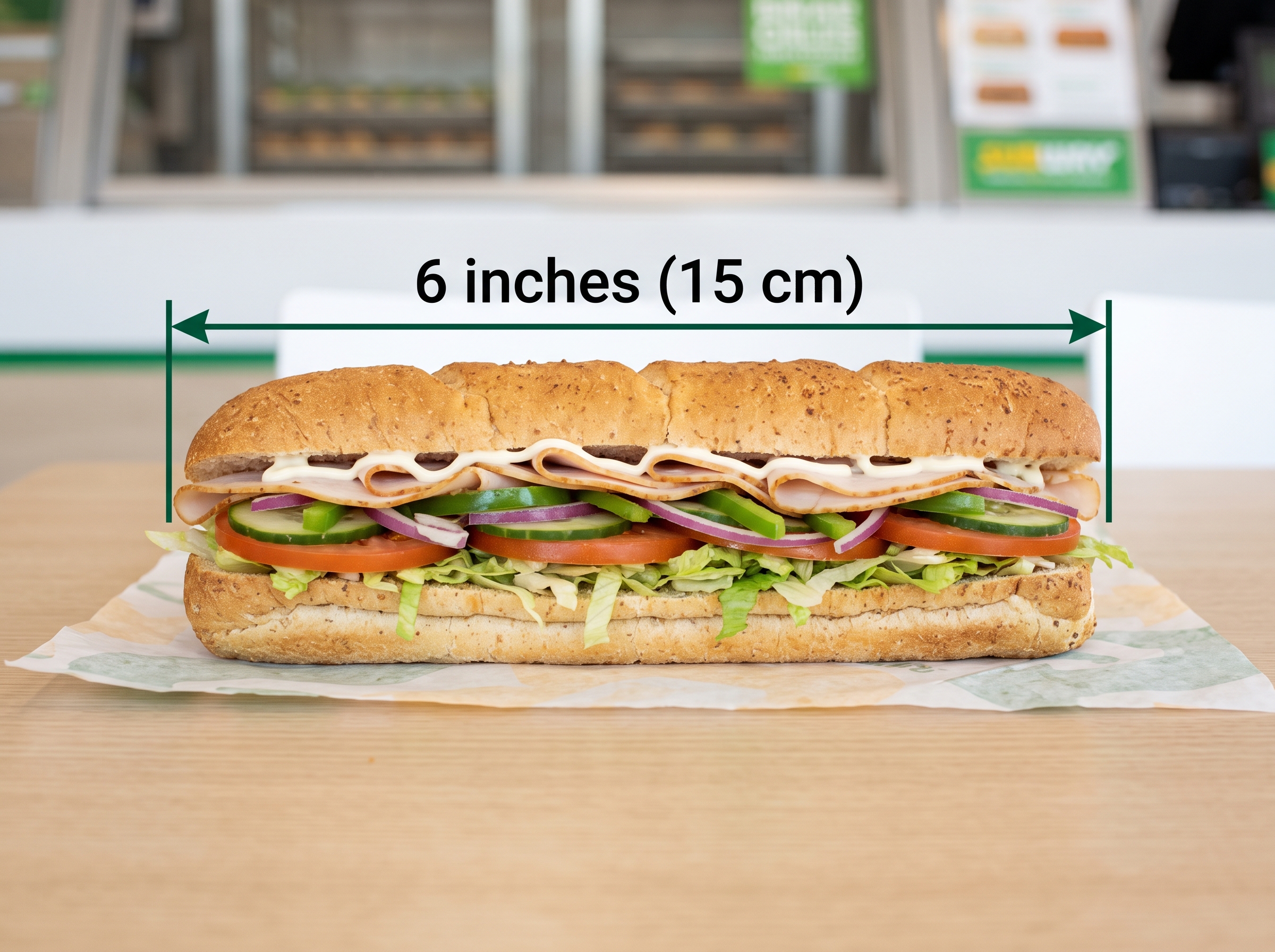
Subway’s smaller sandwich is literally named and built to a 6-inch roll length, a menu category tens of millions of people order by name every week. It’s a rare case where the branded product name and the physical measurement are identical, making it an unusually direct mental reference.
4. A 6-Inch Chef’s Knife (Blade Length)
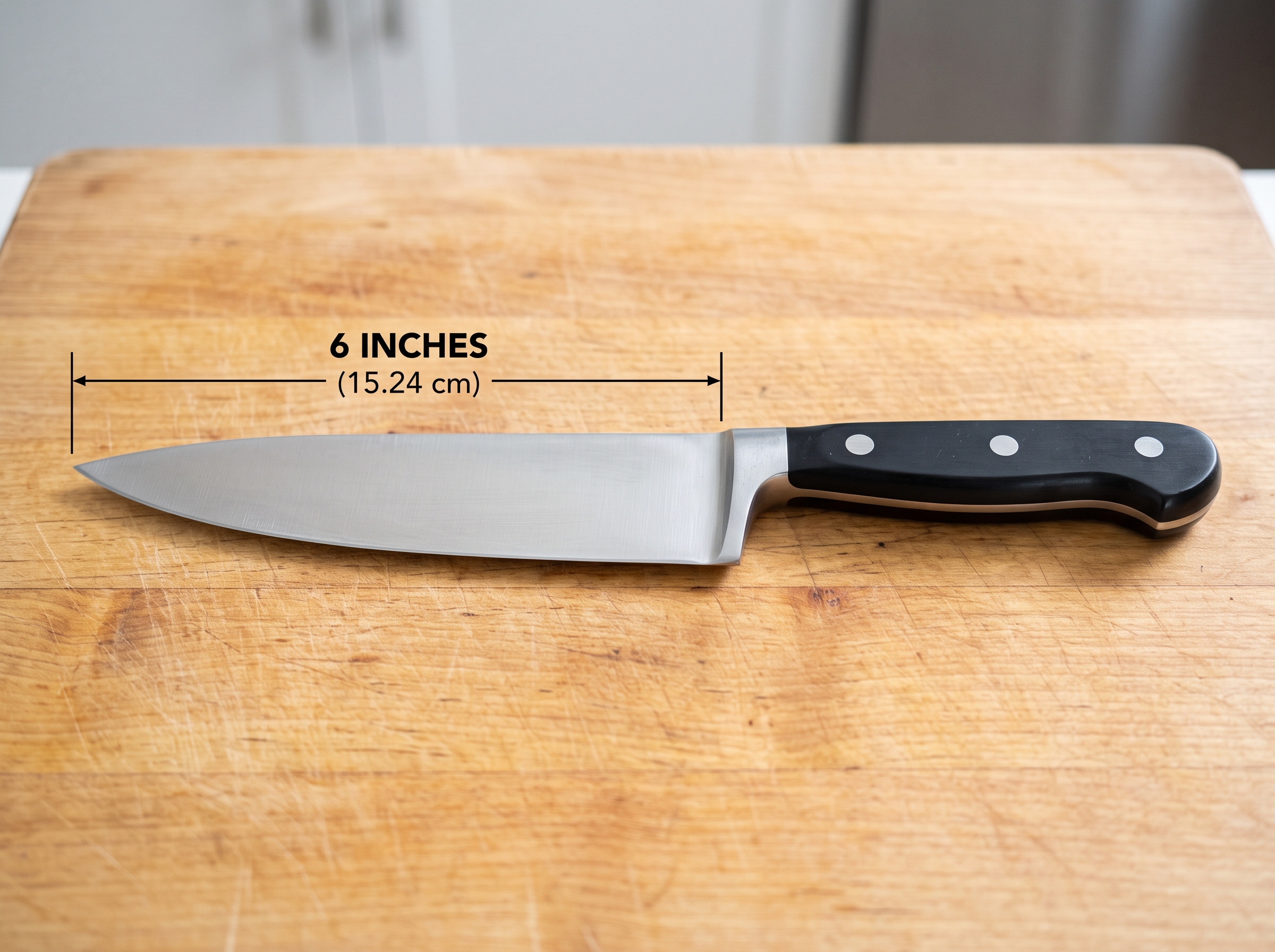
Compact chef’s and santoku knives are manufactured and sold specifically as 6-inch blades, measured tip to heel, by cutlery brands including Victorinox and Wüsthof, sized a step below the more common 8-inch option. Anyone who’s used a smaller kitchen knife that still felt substantial in hand has likely held close to this exact blade length.
5. A 6-Inch Personal Pizza (Diameter)
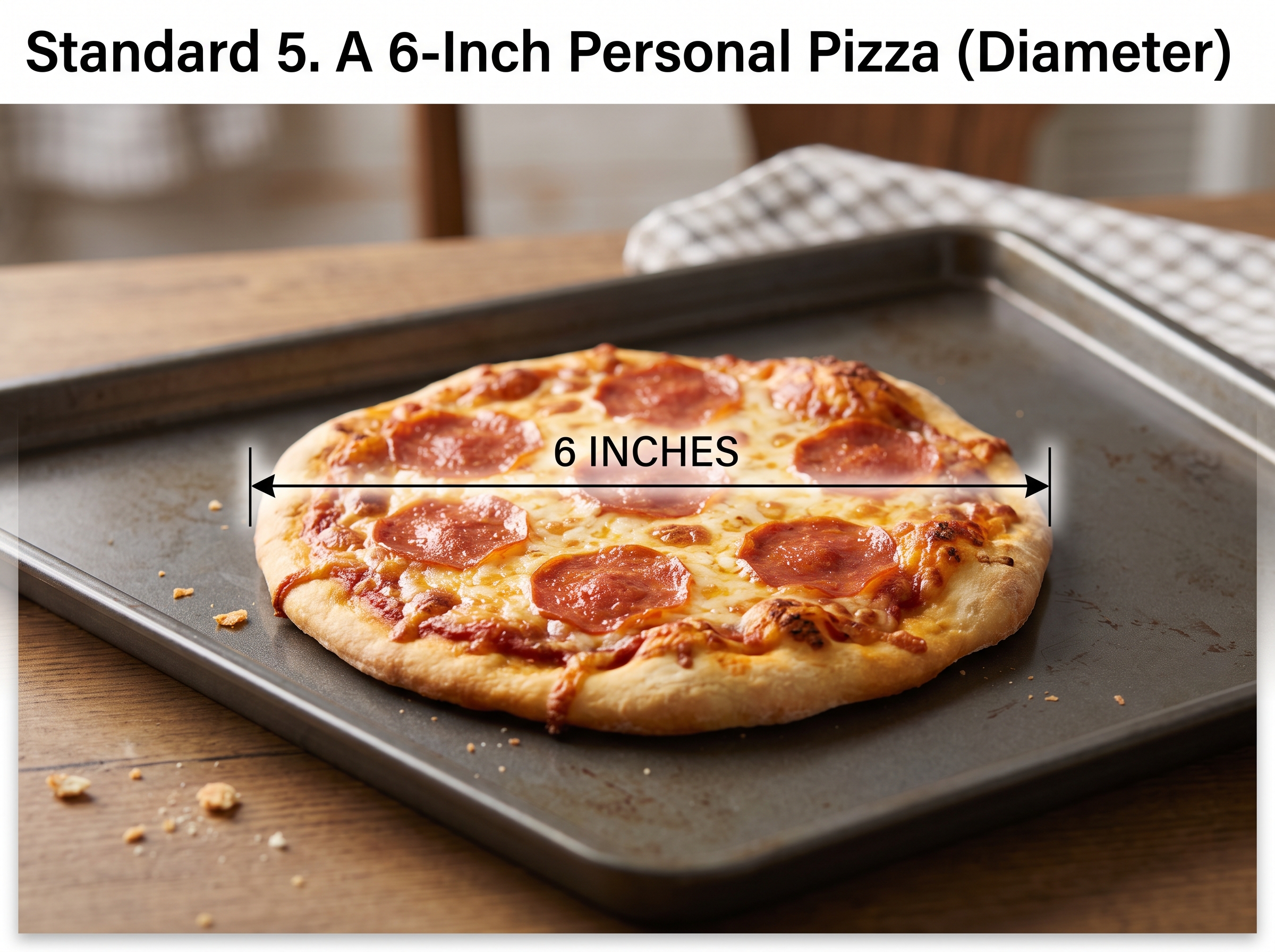
Many pizza chains and frozen-pizza brands sell a “personal” pizza sized to a 6-inch diameter, built as a genuine single-serving menu item rather than a rough estimate. It’s a size most people have ordered without ever registering the measurement behind the name.
6. Half of a Standard 12-Inch Ruler (Length)
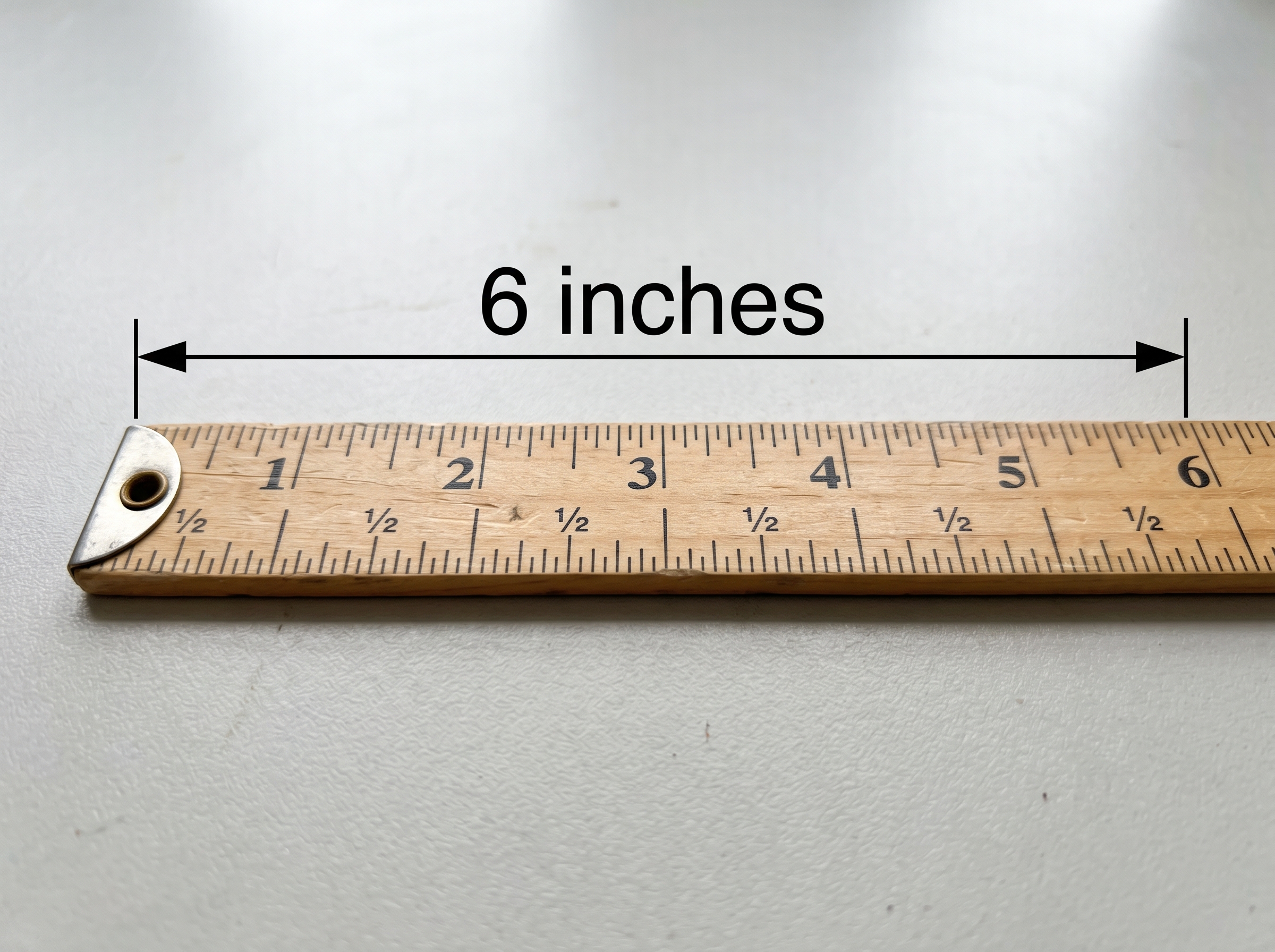
The 6-inch mark sits exactly at the midpoint of any classroom or desk 12-inch ruler, making it the simplest possible physical proof of the measurement — you’re looking at precisely half of a length nearly everyone already knows by sight.
7. A 6-Inch Smartphone Display (Diagonal)
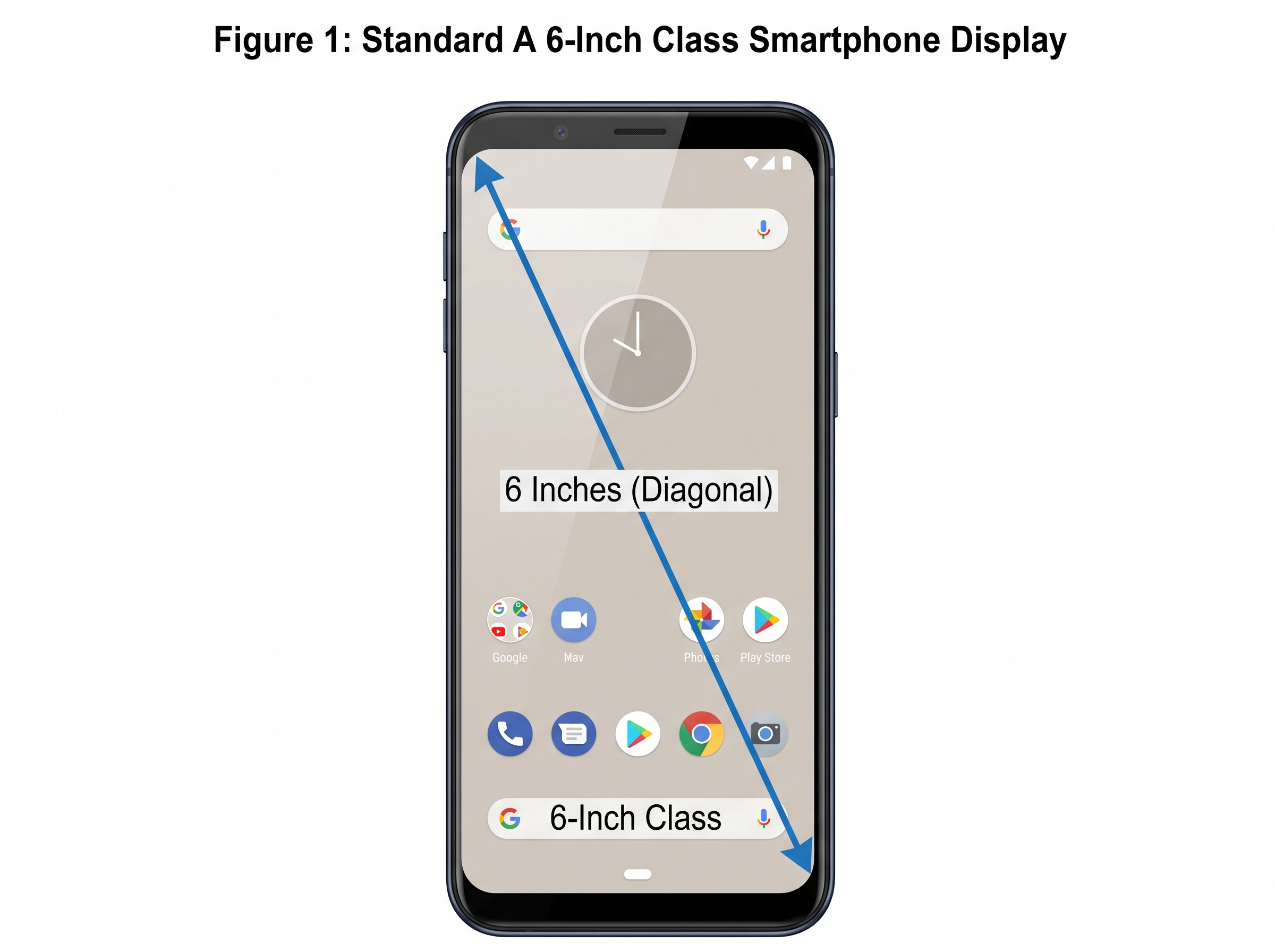
Phone manufacturers market an entire device tier under the “6-inch” display label, measured diagonally corner to corner, with actual figures commonly ranging 5.8 to 6.1 inches depending on the model. It’s a real, industry-recognized display category rather than a loose estimate.
8. Post-it Super Sticky Notes, 4×6 Size (Long Edge)
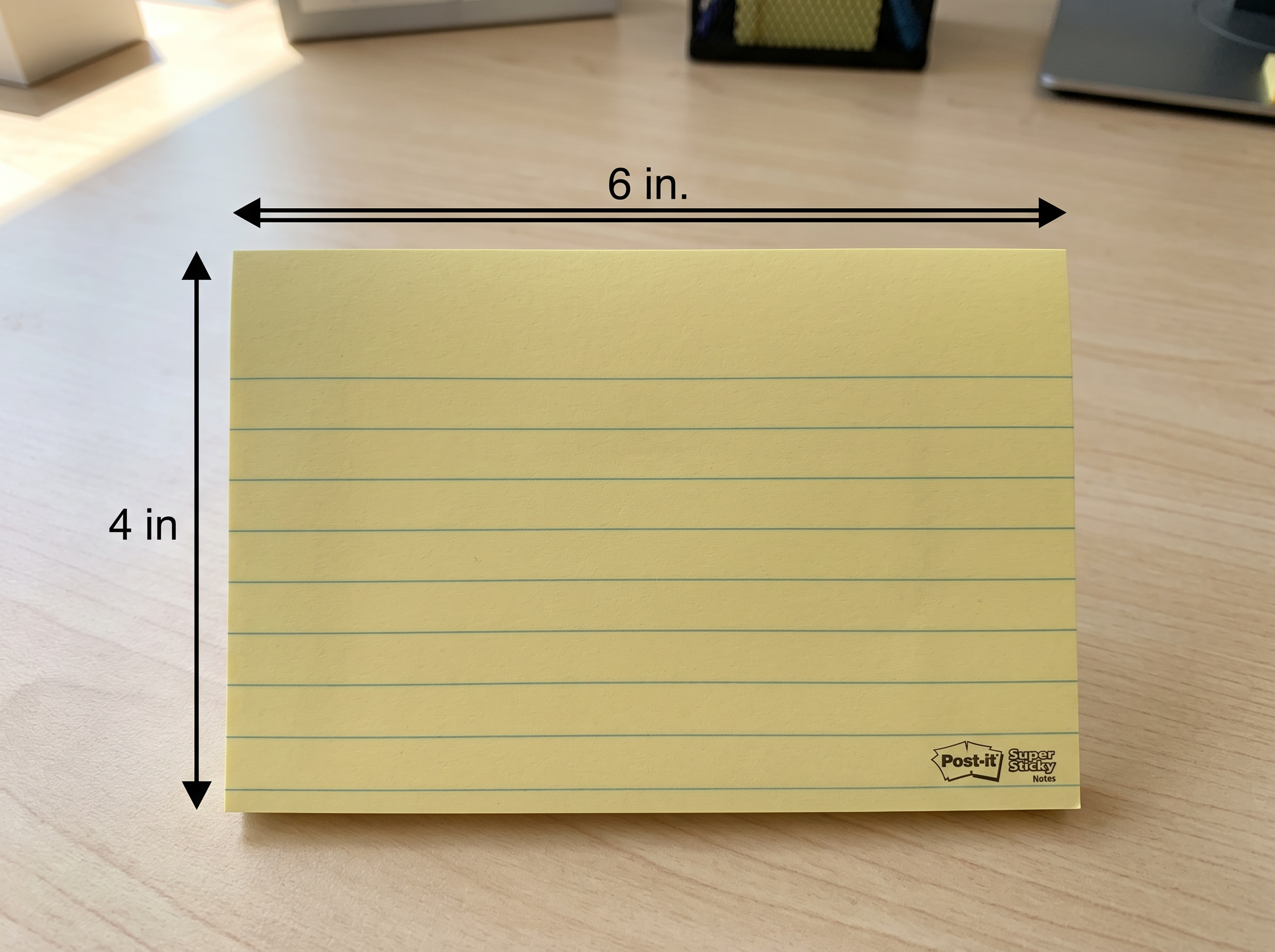
3M sells a large-format Post-it note specifically sized 4 x 6 inches, doubling the footprint of the classic 3×3 note. The 6-inch edge is printed directly into the product’s name and packaging, making it an exact, easily checkable reference.
9. A 6-Inch Cast Iron Skillet (Cooking Surface Diameter)
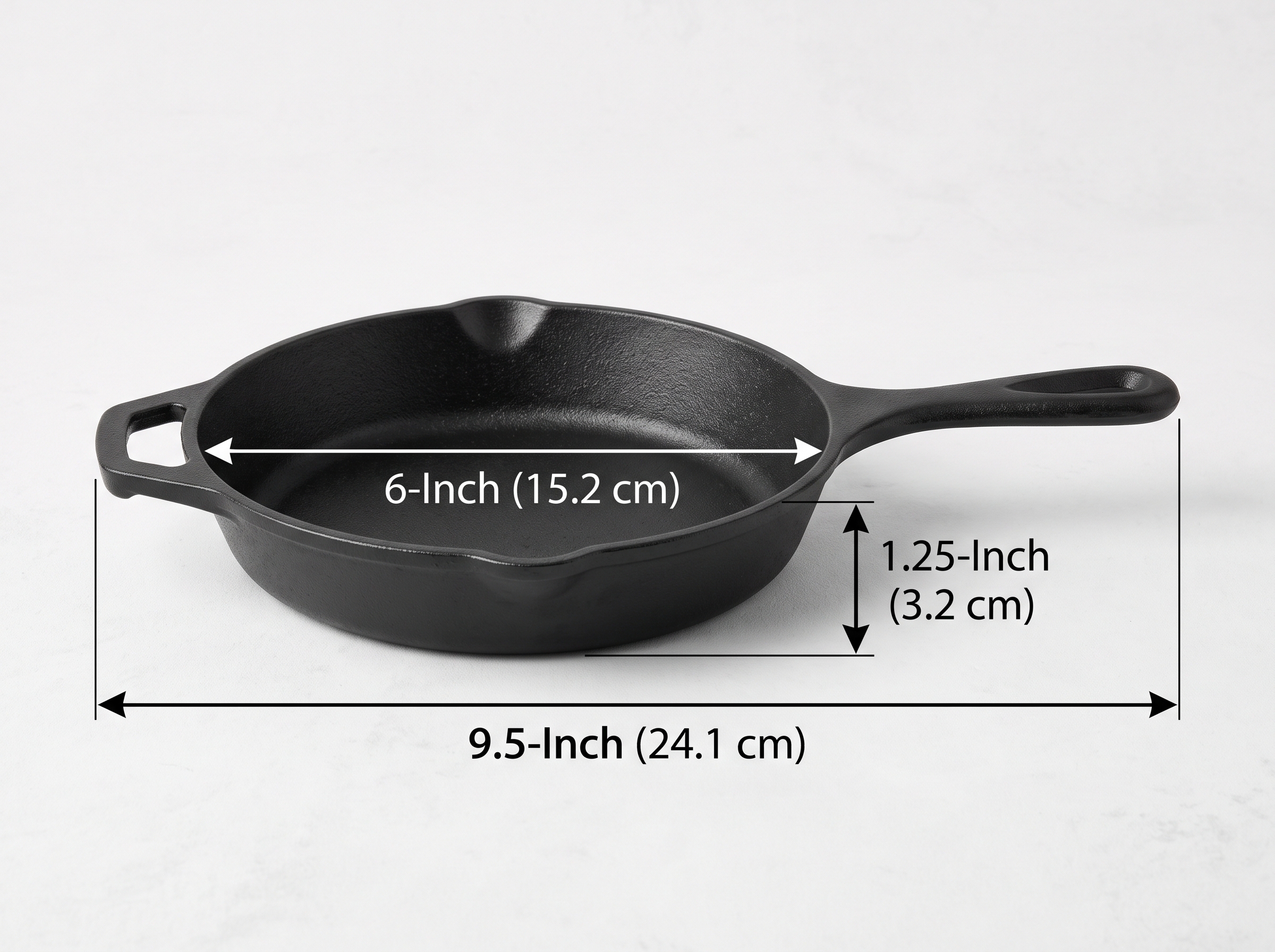
Mini cast iron skillets, popular for single-serving cornbread or cookies, are commonly sold as 6-inch skillets measured across the cooking surface by brands like Lodge. It’s a compact but genuinely useful kitchen-scale reference for this exact length.
10. An Adult Hand, Wrist to Fingertip (Length)
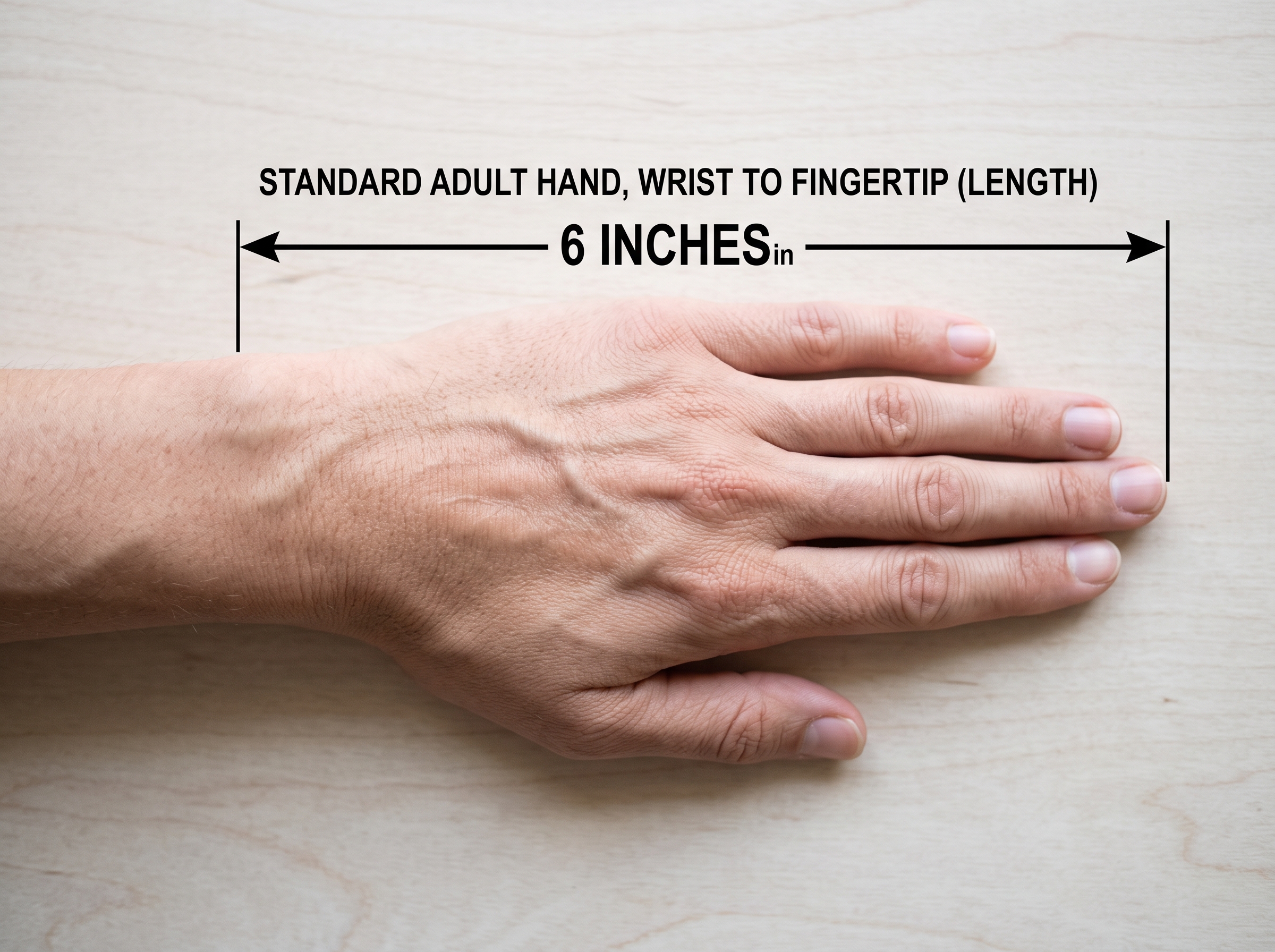
The average adult hand, measured from the wrist crease to the middle fingertip, runs close to 6 to 7 inches for women and slightly longer for most men, based on anthropometric hand-size data used in ergonomic design. It’s the one approximately-6-inch reference you’re always carrying with you.
6 Inches Compared to the Human Body & Everyday Posture
Six inches doesn’t map onto full-body proportions the way a foot or a yard does, but it shows up in useful smaller-scale comparisons. Infants typically grow roughly 6 inches in length during their first six months of life (from an average birth length near 19-20 inches to around 26-27 inches by six months), according to standard pediatric growth chart patterns — a helpful way to picture the length as “how much a baby grows in half a year.”
In adults, 6 inches is a little shorter than the average hand length from wrist to fingertip (about 6.8-7.4 inches), and roughly a quarter of an average adult walking stride (typically 2 to 2.5 feet per step). It’s also close to the depth many people’s front jeans pockets can hold before an item starts to poke out the top.
Practical DIY Hacks: How to Measure 6 Inches Without a Tape Measure
- US dollar bill (6.14 in). A single bill gets you within 0.14 inches of exactly 6 — the most accurate no-tool method available.
- Two credit cards, stacked lengthwise with a small gap. A standard payment card measures 3.37 inches under the ISO/IEC 7810 standard; two end to end total 6.74 inches — close enough for a rough visual check, or measure one card plus roughly 80% of a second for a tighter estimate.
- Standard copy paper, folded. An 8.5 x 11-inch sheet folded in half along its short edge yields a 5.5-inch section — a useful lower-bound reference just half an inch short of 6.
- Floor tile fraction. Standard floor tiles are commonly sold at 12 x 12 inches; half of one tile’s edge is exactly 6 inches, useful if you’re standing in a tiled kitchen or bathroom.
Common 6-Inch Sizes in cm
Six inches is a standard size for many products. Here are the ones people most often need to convert:
| Item | Size in inches | Size in cm | Notes |
|---|---|---|---|
| 4×6 photo print | 4 x 6 in | 10.2 x 15.2 cm | The metric 10 x 15 cm print is almost identical |
| 6-inch ruler | 6 in | 15.24 cm | Usually has a 15 cm metric scale on the other edge |
| 6-inch plant pot | 6 in across | about 15 cm | Sold as 15 cm pots in metric countries |
| 6-inch cake pan | 6 x 3 in | 15 x 7.5 cm | Popular for small layer cakes; a quarter of the area of a 12-inch pan |
| Large K-style rain gutter | 6 in wide | 15.2 cm | Used on big roofs; 5-inch is the house standard |
| Wall baseboard (tall) | about 5-6 in | 13-15 cm | Common in newer homes |
Inch Measurements Around 6 Inches
| Inches | Centimetres | Millimetres |
|---|---|---|
| 5 1/2 in | 13.97 cm | 139.7 mm |
| 5 3/4 in | 14.61 cm | 146.1 mm |
| 6 in | 15.24 cm | 152.4 mm |
| 6 1/4 in | 15.88 cm | 158.8 mm |
| 6 1/2 in | 16.51 cm | 165.1 mm |
In the other direction, 15 cm is 5.91 inches, about 2 mm short of 6 inches. Use the inches to cm converter for exact values.
Frequently Asked Questions
How much is 6 inches in centimeters?
6 inches equals exactly 15.24 centimeters (6 × 2.54).
How big is 6 inches in feet?
6 inches is exactly 0.5 feet, or half a foot, since a foot equals 12 inches.
Is 6 inches considered big or small?
6 inches is a mid-small, highly practical size — bigger than pocket items like keys or coins, smaller than most handheld electronics like tablets. It’s best understood simply as “half a foot.”
How big is 6 and a half inches?
6.5 inches equals 16.51 centimeters, or about 0.54 feet — just slightly longer than 6 inches, close to an average adult hand span for many men.
What does 6′ mean versus 6″?
The mark 6′ denotes 6 feet, while 6″ denotes 6 inches — a common and important notation mix-up, since 6 feet is twelve times longer than 6 inches.
What items are exactly 6 inches?
A US dollar bill (6.14 in, close enough to be a near-exact reference), a 4×6 photo print, and Post-it Super Sticky 4×6 notes are all genuinely checkable examples at or extremely close to 6 inches.
Is 6 inches the same as 6 centimeters?
No — 6 inches equals 15.24 centimeters, while 6 centimeters is only about 2.36 inches. Inches are the larger unit.
How many 6-inch lengths make a foot?
Exactly two, since a foot equals 12 inches.
Is 15 cm the same as 6 inches?
Almost. 15 cm is 5.91 inches and 6 inches is 15.24 cm, a difference of about 2.4 mm.
How big is a 4×6 photo in cm?
10.16 x 15.24 cm, usually written as 10 x 15 cm.
Final Visual Conclusion & Quick Reference
6 inches equals 15.24 centimeters, 152.4 millimeters, or exactly half a foot — a length you can picture instantly using a few reliable anchors. The easiest mental shortcuts: a US dollar bill (6.14 in), the long edge of a 4×6 photo, half a floor tile, or the exact midpoint of any 12-inch ruler. For precision work, a tape measure still wins, but these everyday references will get you visually accurate within seconds.
Related Articles
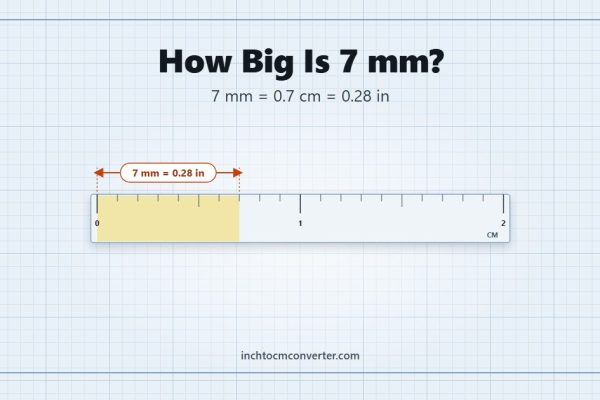
How Big Is 7mm? Size in Inches With Everyday Examples
7mm equals about 0.28 inches -- about the width of a standard pencil, four US quarters stacked, or the thickness of a smartphone.
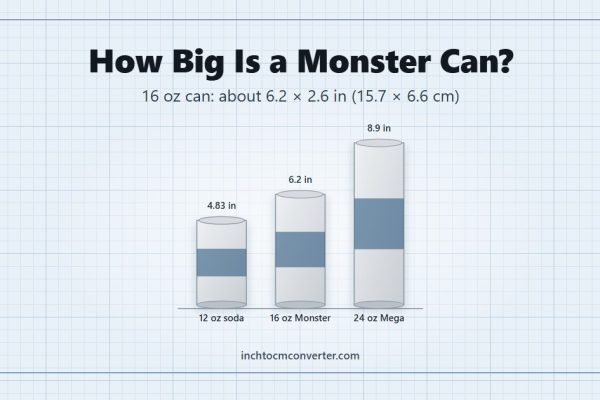
Monster Can Size: Height and Width in Inches and cm
A standard 16 oz Monster can is about 6.2 in tall and 2.6 in wide (15.7 x 6.6 cm), the same width as a soda can. Plus the 24 oz Mega Monster and caffeine.
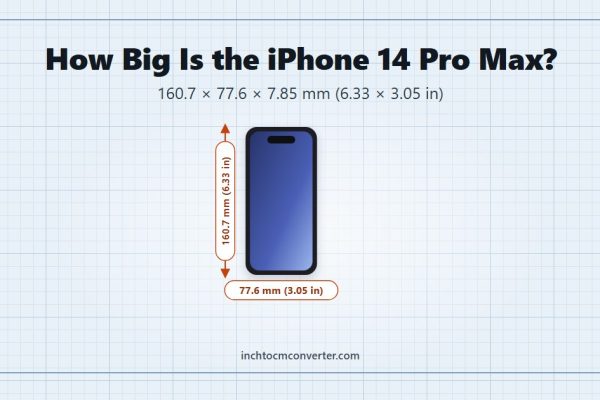
iPhone 14 Pro Max Size: Dimensions in Inches, cm and Weight
The iPhone 14 Pro Max measures 6.33 inches tall and 3.05 inches wide -- noticeably bigger than the standard iPhone 12.
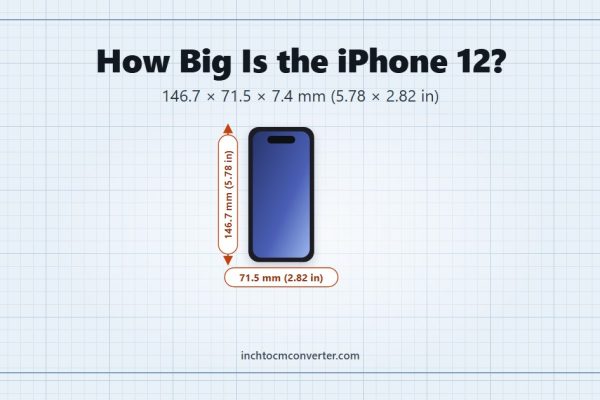
iPhone 12 Size: Dimensions in Inches, cm and Weight
The iPhone 12 measures 5.78 inches tall and 2.82 inches wide -- almost exactly the standard smartphone height.