How Big Is 2 mm? 10 Common Things Compared for Visual Scale
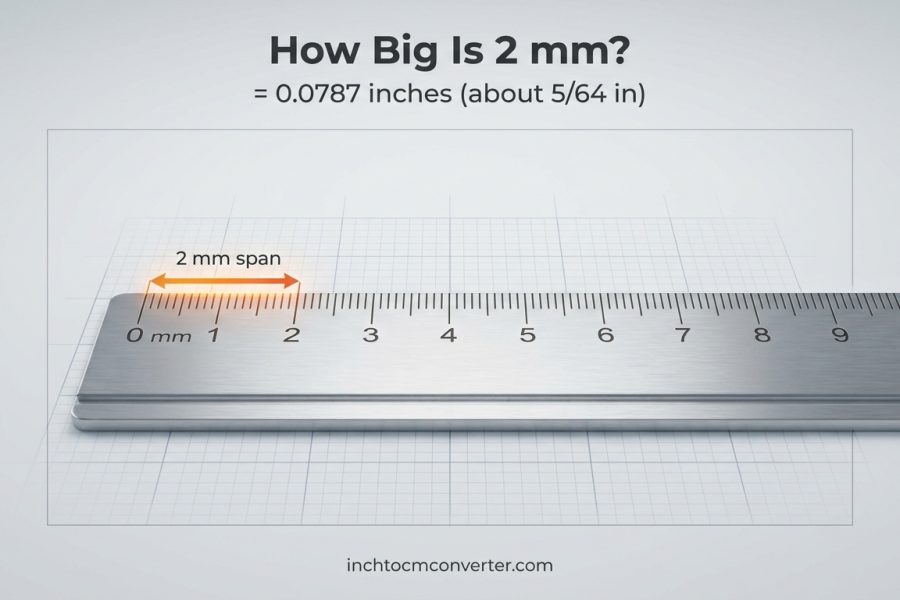
2 millimeters equals exactly 0.2 centimeters, or about 0.079 inches. That is roughly the thickness of a US nickel, or a stack of about three credit cards. Two millimeters is a “just a sliver” measurement — the width of a pencil lead, the thickness of a coin, the gap you can barely slide a fingernail into. For the exact inch value at any measurement, use the millimeters to inches converter.
- Centimeters: 0.2 cm (exact)
- Inches: 0.0787 in (about 5/64 in)
- Meters: 0.002 m
- Points (typography): 5.7 pt
Complete 2 mm Conversion & Dimension Reference Table
| Unit of Measurement | Exact Converted Value | Formula / Multiplier | Practical Reference / Notes |
| Centimeters (cm) | 0.2 cm | 2 ÷ 10 | Exact; 10 mm = 1 cm |
| Inches (in) | 0.0787 in | 2 ÷ 25.4 | About five sixty-fourths of an inch |
| Inches (fraction) | ≈ 5/64 in | 5/64 in = 1.98 mm | 2 mm is almost exactly 5/64 inch |
| Meters (m) | 0.002 m | 2 ÷ 1000 | Two thousandths of a meter |
| Points (typography) | 5.7 pt | 0.0787 × 72 | About the size of fine-print text |
| Thou / mil | 79 thou | 0.0787 × 1000 | Used in engineering; 1 thou = 0.001 inch |
Practical note: The millimeter-to-inch conversion is fixed: 1 inch is defined as exactly 25.4 mm, so 2 mm is exactly 2 ÷ 25.4 = 0.0787 inches.
What Does 2 mm Look Like?
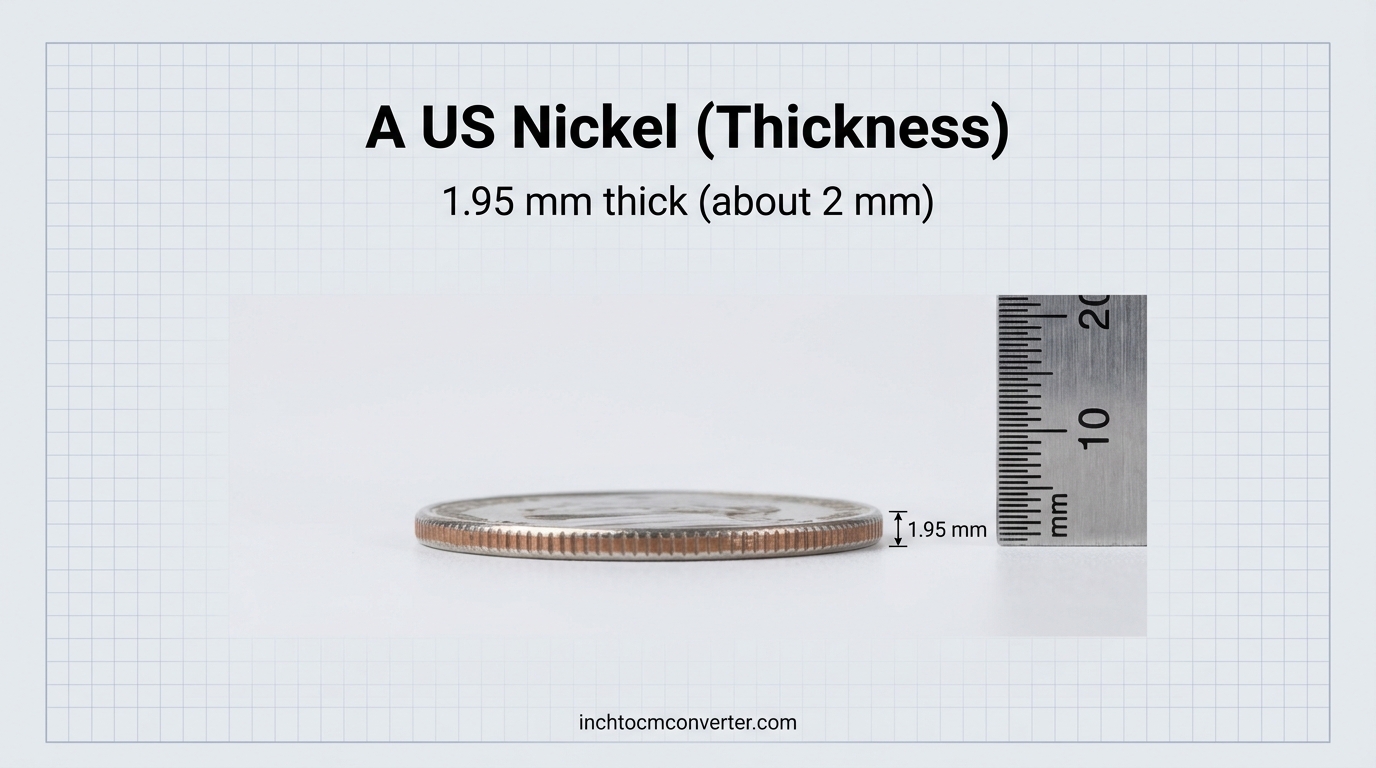
Two millimeters is near the smallest length most people ever need to picture. It is thicker than a sheet of card but thinner than a matchstick, about the width of the graphite in a wooden pencil or a strand of dry spaghetti. The cleanest mental picture is the thickness of a US nickel, which is 1.95 mm — essentially exactly 2 mm.
10 Common Things That Are About 2 Millimeters
1. A US Nickel (Thickness)
A US nickel is 1.95 mm thick — near enough to call it exactly 2 mm. Coin thickness is held to a tight tolerance, so a nickel on its edge is the most precise 2-mm reference you can carry.
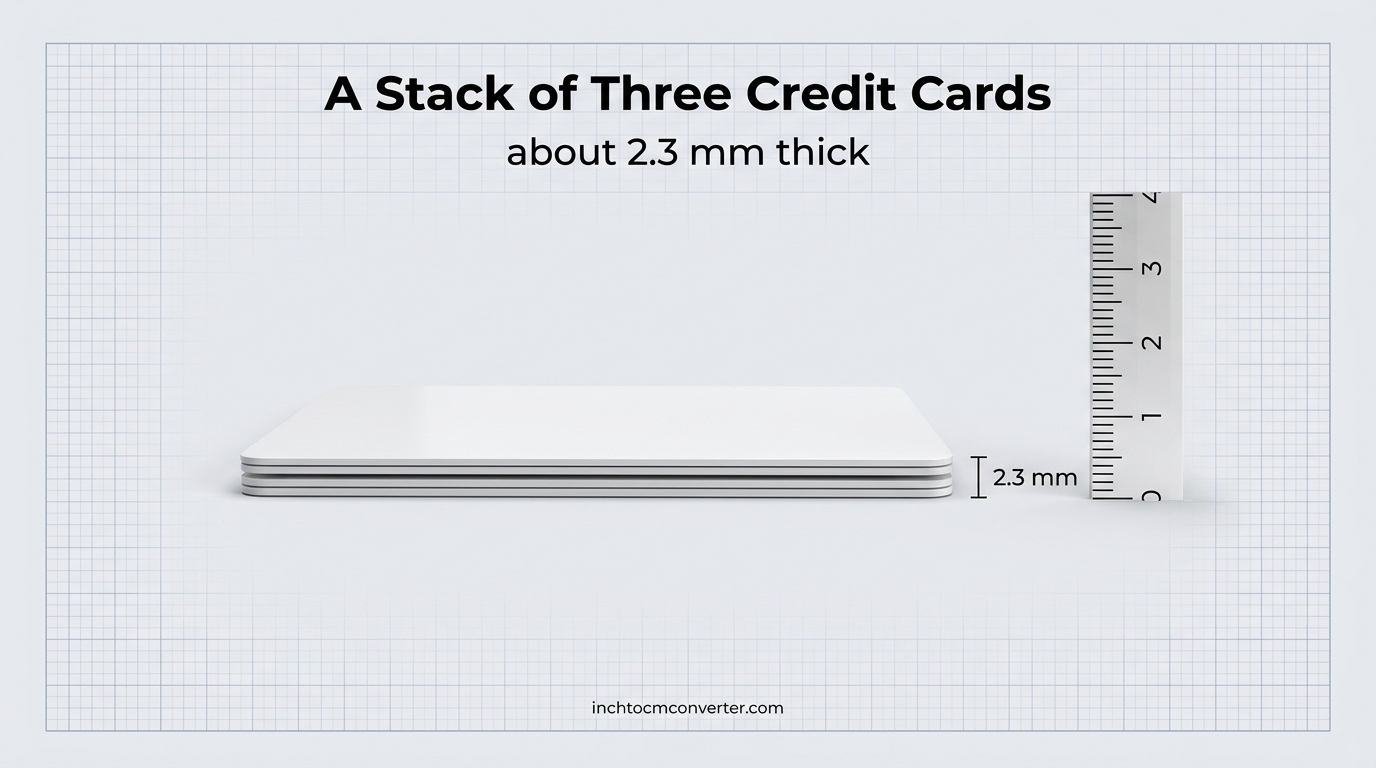
2. A Stack of Three Credit Cards
A payment card is 0.76 mm thick. Three cards stacked come to about 2.3 mm, and two-and-a-half to 2 mm. A small stack from your wallet is a quick gauge.
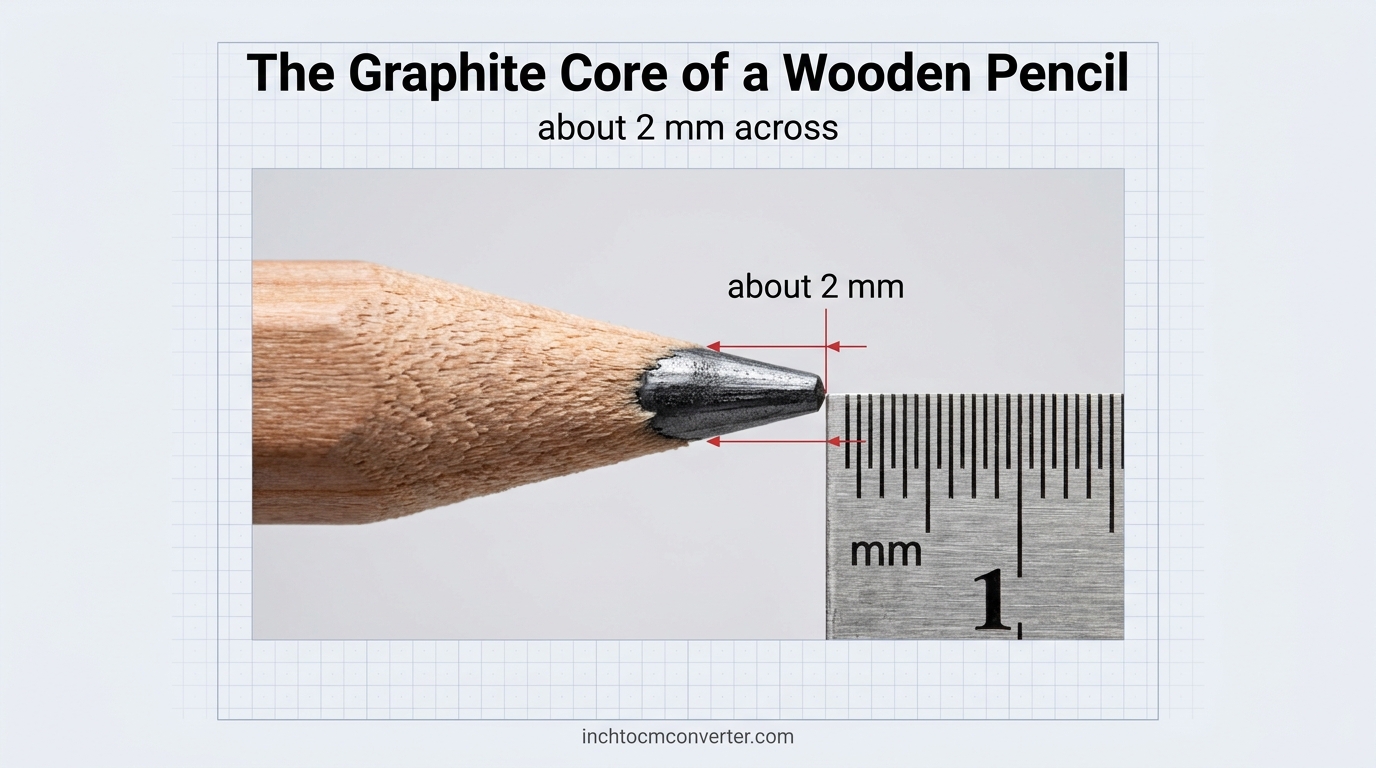
3. The Graphite Core of a Wooden Pencil
The lead inside a standard #2 pencil is about 2 mm across. Look at a sharpened pencil tip and the dark circle in the middle is a 2-mm reference.
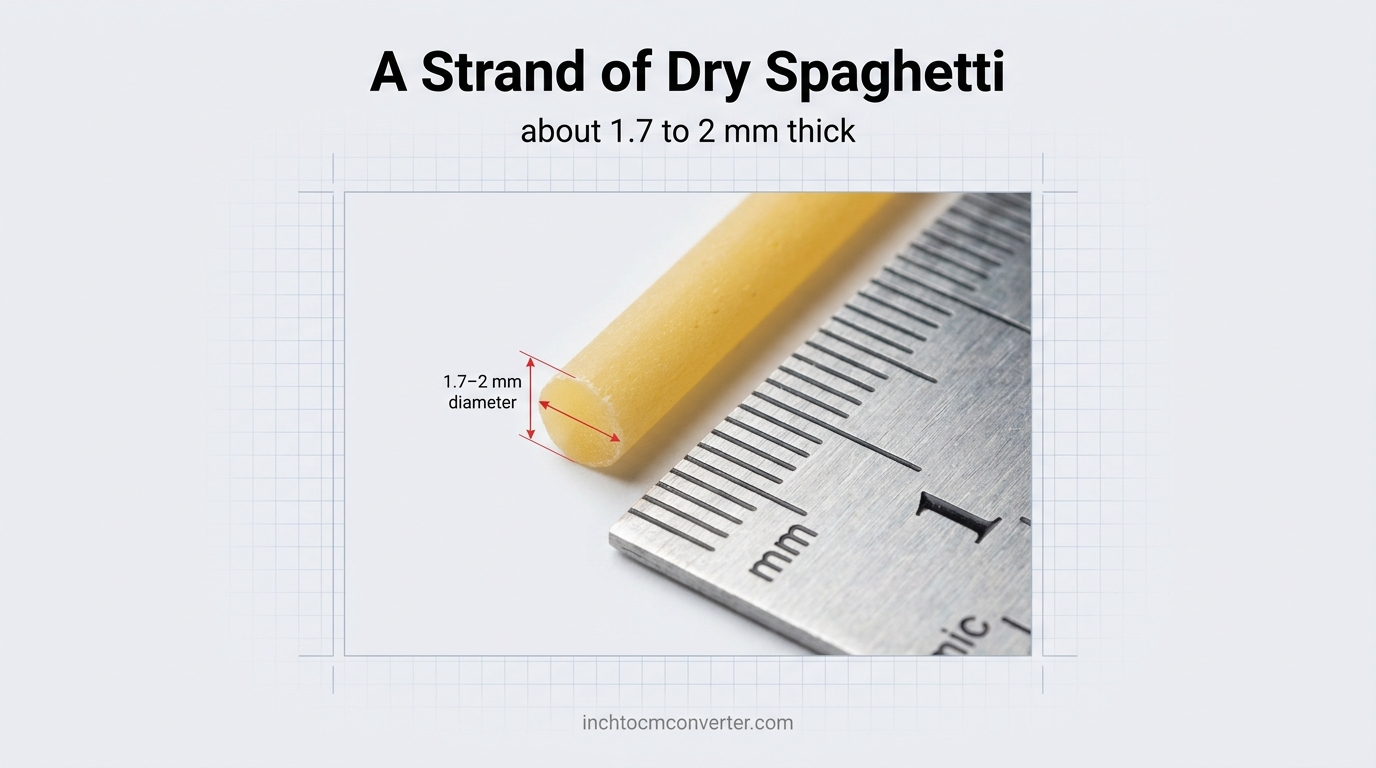
4. A Strand of Dry Spaghetti
A piece of uncooked spaghetti is about 1.7 to 2 mm in diameter. It is a small, universal object right at the 2-mm mark.
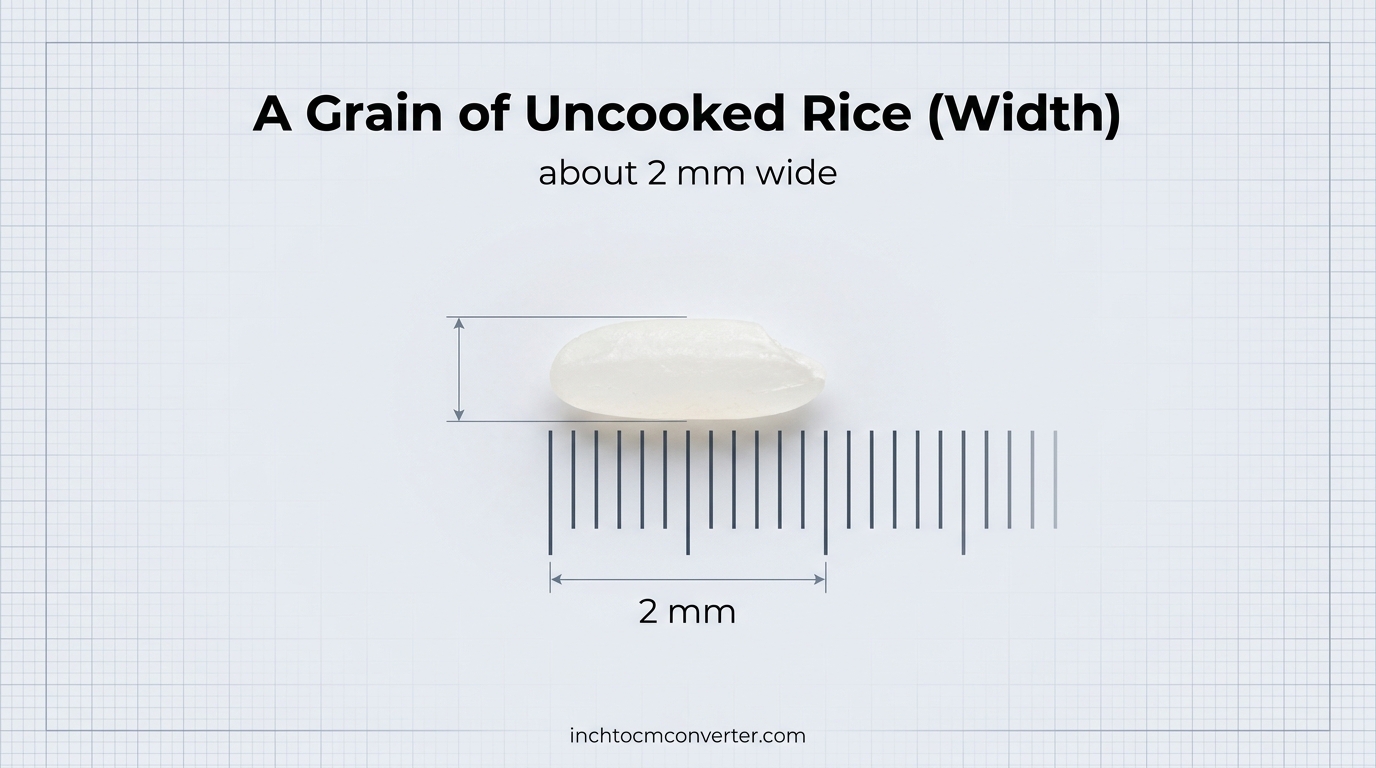
5. A Grain of Uncooked Rice (Width)
A grain of long-grain rice is about 2 mm wide. A single grain held between two fingertips is a tiny but instantly recognizable reference.
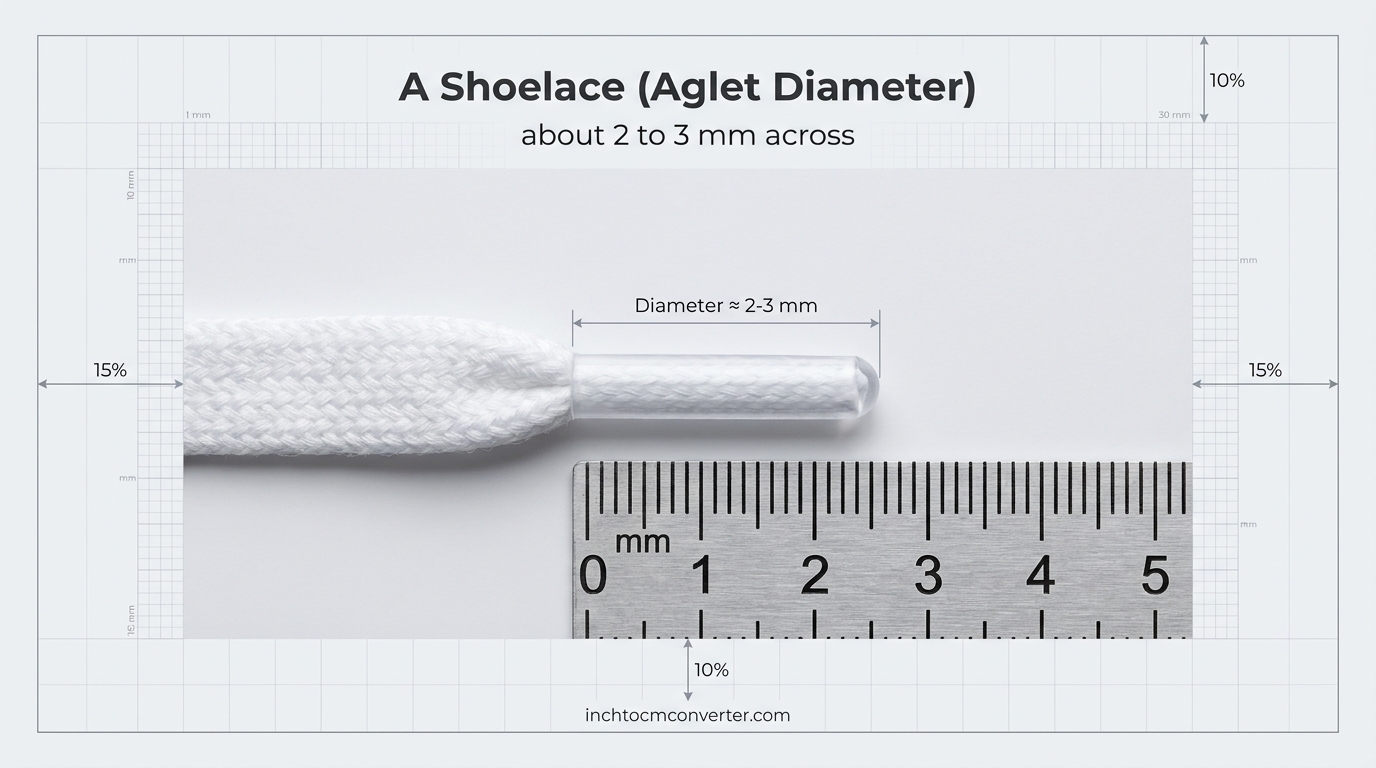
6. A Shoelace (Aglet Diameter)
The plastic tip (aglet) on a shoelace, and the lace cord itself, is about 2 to 3 mm across. It is an object you handle whenever you tie your shoes.
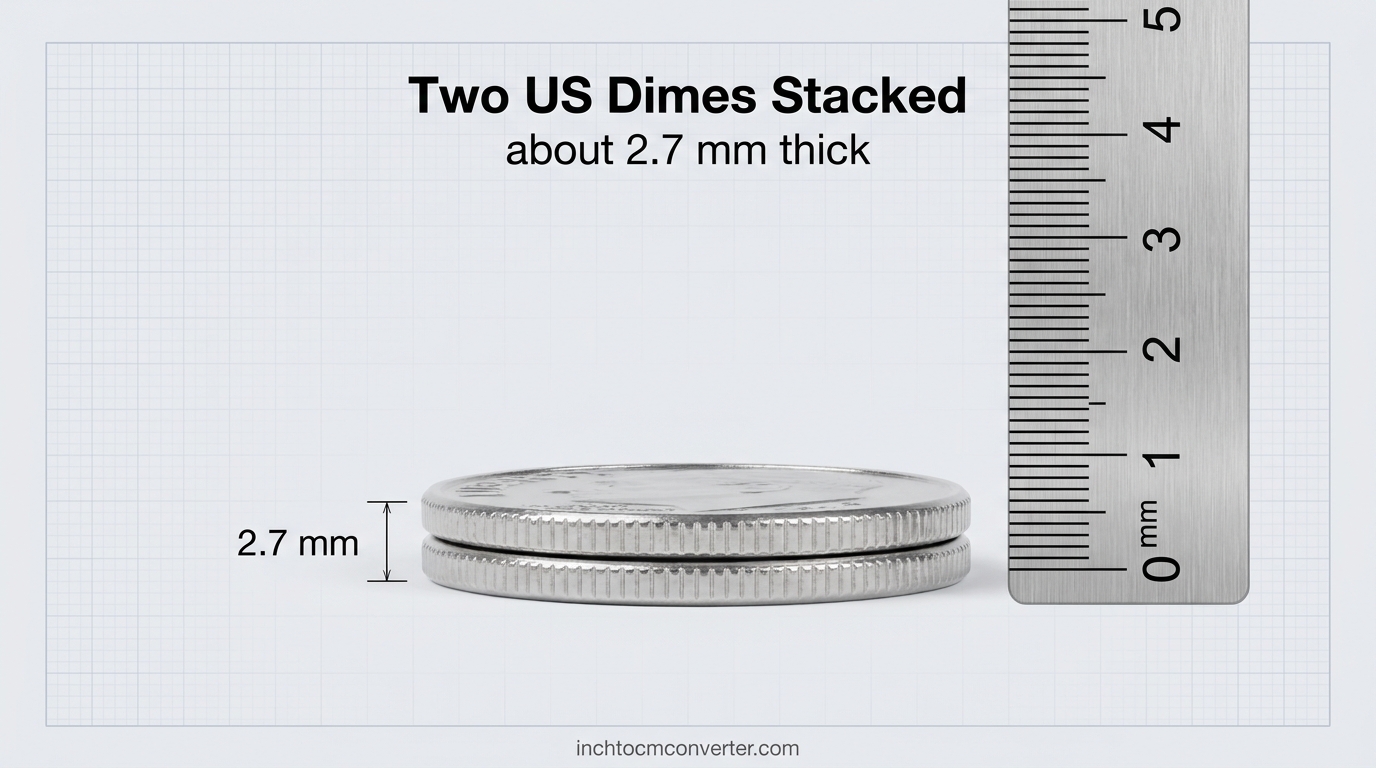
7. Two US Dimes Stacked (Minus a Bit)
A US dime is 1.35 mm thick. Two stacked come to 2.7 mm, so one dime plus about half of another is 2 mm — a reference built from pocket change.
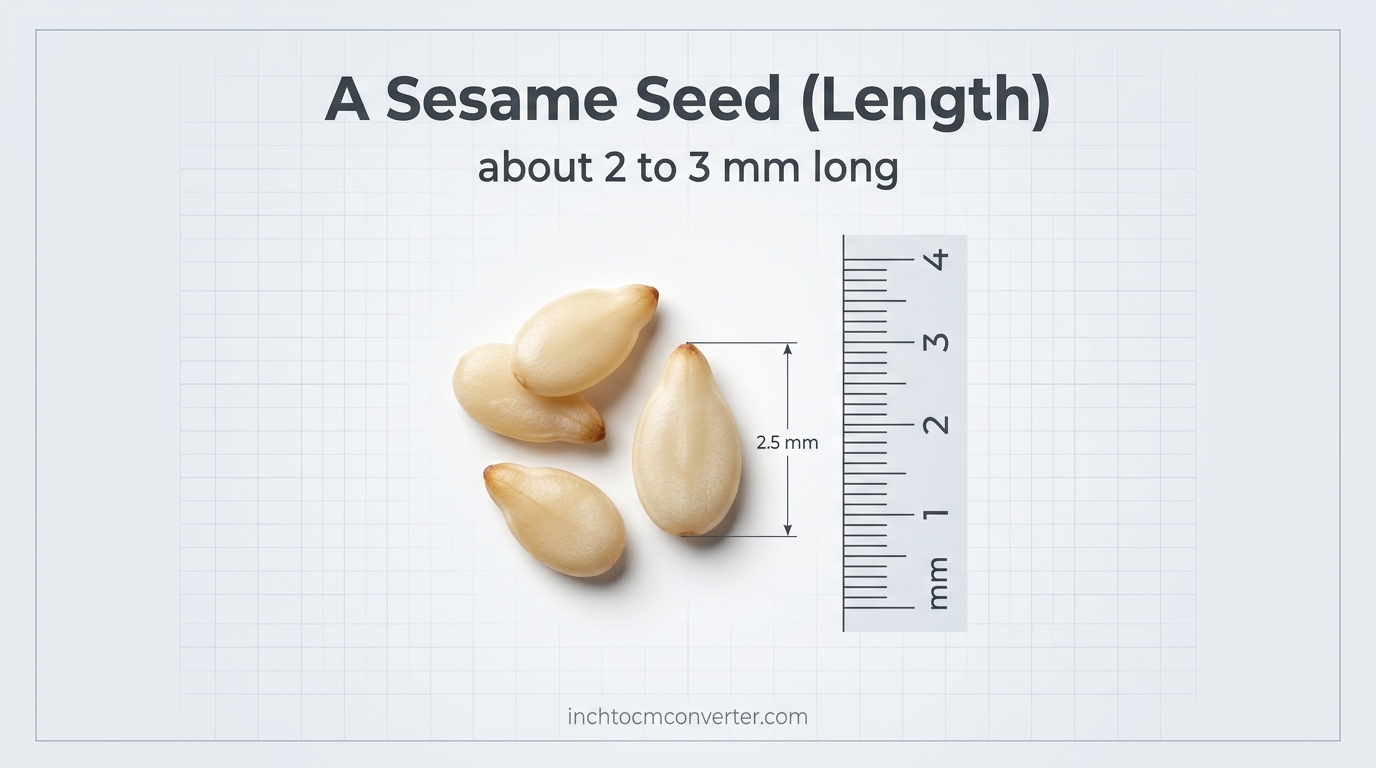
8. A Sesame Seed (Length)
A sesame seed is about 2 to 3 mm long. The next time you see a burger bun, the seeds on top are close to 2 mm each.
9. Four Staple Wires Side by Side
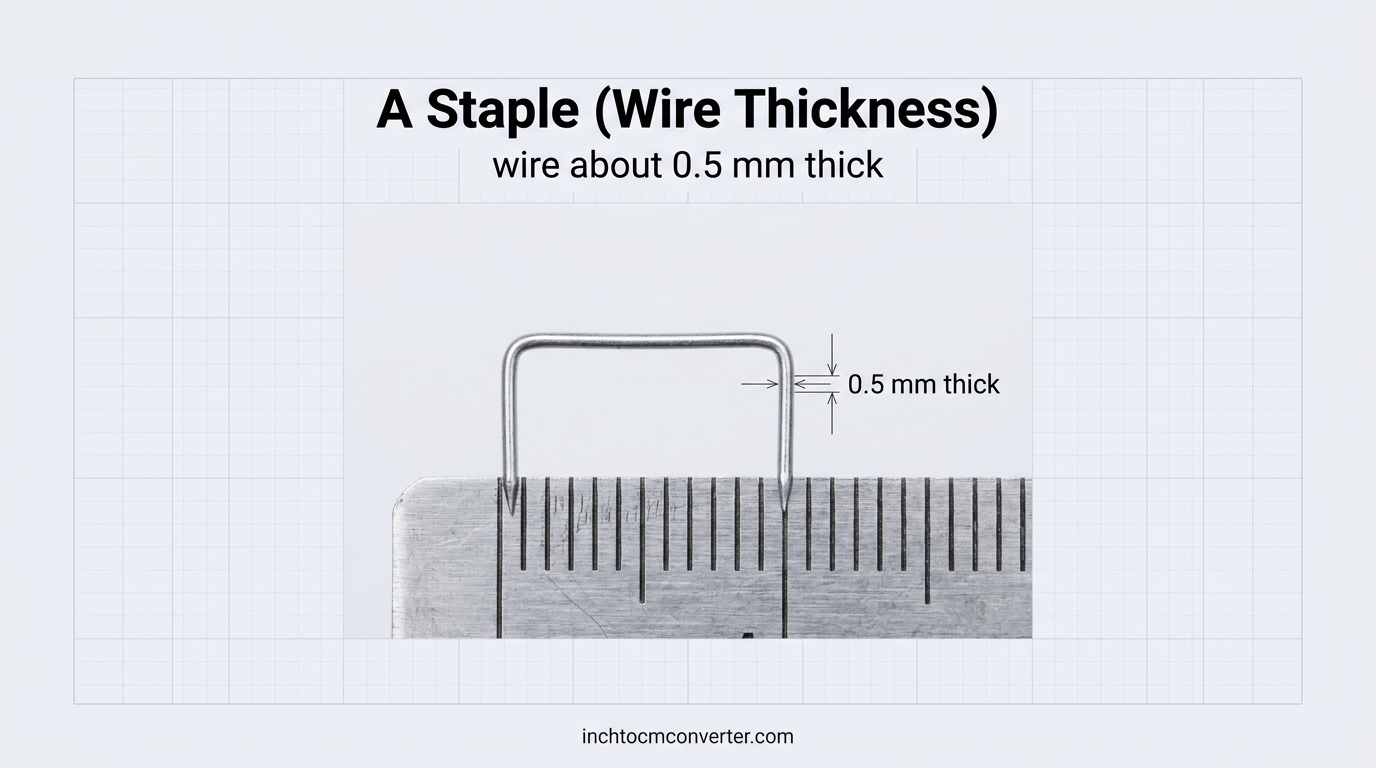
The wire in a standard office staple is about 0.5 mm thick, and the folded “crown” width is close to 12 mm. Four staple wires side by side make about 2 mm, and a small finishing nail has a shank of about 1.8-2 mm.
10. A Peppercorn (Small)
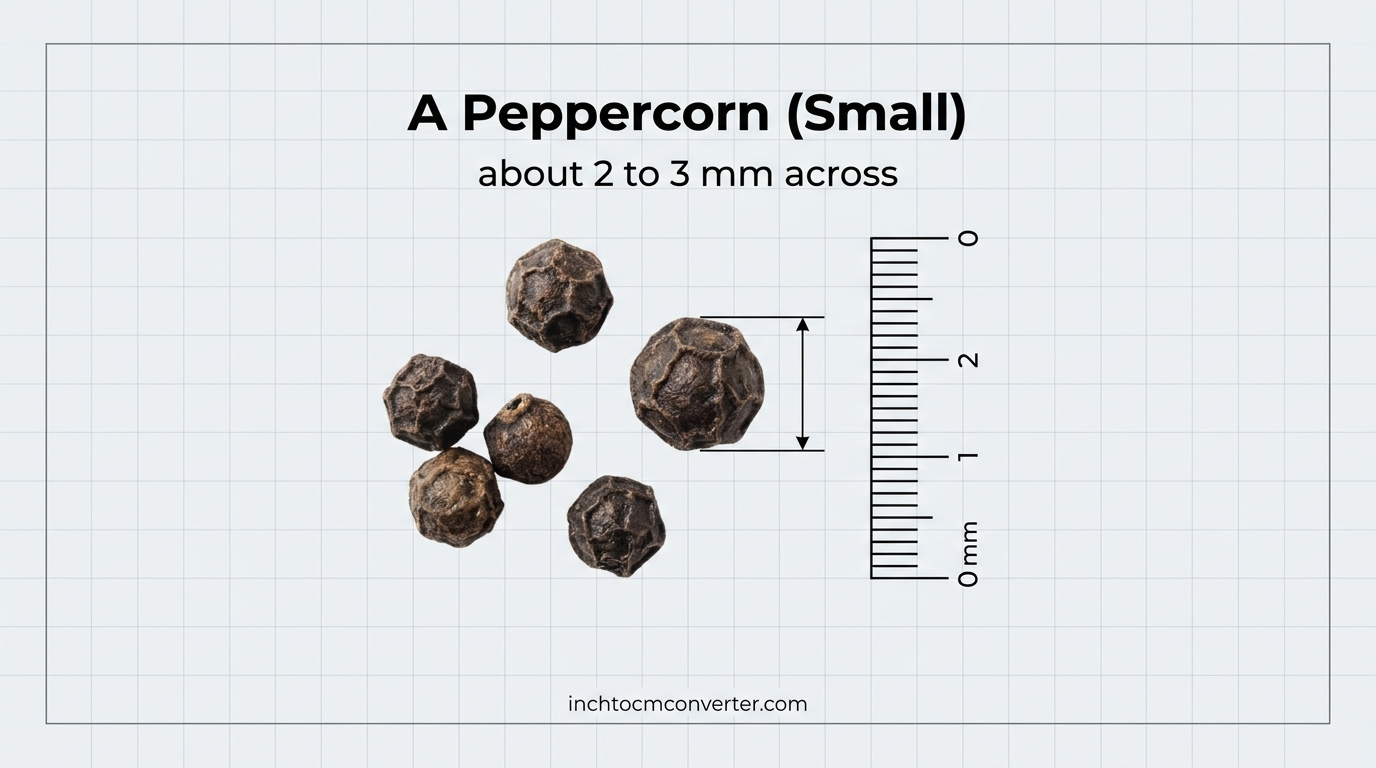
A small black peppercorn is close to 2 to 3 mm across. A jar of whole pepper is a bag of rough 2-to-3-mm spheres.
How to Estimate 2 mm Without a Ruler
- Use a nickel on its edge. A US nickel is 1.95 mm thick — the closest common reference to exactly 2 mm.
- Stack about three credit cards. Each card is 0.76 mm; two-and-a-half to three make 2 mm.
- Use a pencil tip. The graphite core of a wooden pencil is about 2 mm across.
- Use dry spaghetti. A single strand is about 2 mm in diameter — roll it between your fingers.
2 mm Compared to the Human Body
Two millimeters is about four times the thickness of a fingernail, about the thickness of a US nickel, or the gap you can just slide a nickel into. It is also about the diameter of the holes in a shirt button.
Common Mistakes People Make About 2 mm
- Confusing it with 2 cm. 2 mm is ten times smaller than 2 cm (which is about 0.79 inches).
- Overestimating it on screen. A “2 mm” line on a monitor looks far bigger than 2 mm feels in the hand.
- Assuming mechanical-pencil “0.5 mm” lead is close. That lead is a quarter of 2 mm; the 2 mm size is the thick “clutch” drafting lead.
2 mm Tools and Parts You Might Be Matching
People usually search for “2 mm” when they are choosing a drill bit, tile spacer, wire or hex key. These are the common 2 mm sizes and their nearest inch equivalents:
| Item | 2 mm size | Nearest imperial size |
|---|---|---|
| Drill bit | 2.0 mm | 5/64 in (1.98 mm), almost identical |
| Tile spacer | 2 mm | between 1/16 in (1.6 mm) and 1/8 in (3.2 mm); common for wall tiles |
| Hex (Allen) key | 2 mm | 5/64 in (1.98 mm); fits M4 grub screws and many bike and furniture parts |
| Wire | about 2 mm diameter | 12 AWG (2.05 mm), the gauge used for 20-amp household circuits in the US |
| Pencil lead (clutch pencil) | 2 mm | the thick lead used in drafting and sketching |
| 3D printing filament | 1.75 mm or 2.85 mm | 2 mm is not a standard filament size |
Millimetres Around 2 mm in Inches
| mm | Inches (decimal) | Nearest fraction |
|---|---|---|
| 1 mm | 0.039 in | between 1/32 in and 3/64 in |
| 1.5 mm | 0.059 in | about 1/16 in (1.59 mm) |
| 2 mm | 0.079 in | 5/64 in (1.98 mm) |
| 2.5 mm | 0.098 in | about 3/32 in (2.38 mm) |
| 3 mm | 0.118 in | about 1/8 in (3.18 mm) |
For other sizes, use the mm to inches converter.
Frequently Asked Questions
How big is 2 mm in inches?
About 0.079 inches — almost exactly 5/64 of an inch. Precisely, 2 ÷ 25.4 = 0.0787 in.
How thick is 2 mm?
About the thickness of a US nickel, a stack of about three credit cards, or a strand of dry spaghetti.
What does 2 millimeters look like?
A thin sliver — the width of a pencil lead, a strand of dry spaghetti, or a grain of rice on its side.
Is 2 mm the same as 2 cm?
No. 2 mm is 0.2 cm — ten times smaller than 2 cm.
How many millimeters is 2 cm?
20 millimeters. So 2 cm is ten times as long as 2 mm.
What is 2 mm on a ruler?
It is two of the smallest lines on a metric ruler — the first two millimeter marks past a centimeter line.
What drill bit is 2 mm in inches?
5/64 inch, which is 1.98 mm, practically the same as 2 mm.
Is 2 mm the same as 1/16 inch?
No. 1/16 inch is 1.59 mm. 2 mm is closer to 5/64 inch.
Final Visual Conclusion & Quick Reference
2 millimeters equals 0.2 centimeters, or about 0.079 inches — near 5/64 of an inch. The easiest anchors: the thickness of a US nickel, a pencil lead, a strand of dry spaghetti, or about three credit cards stacked. Any one of them lets you judge 2 mm without a ruler.
Related Articles
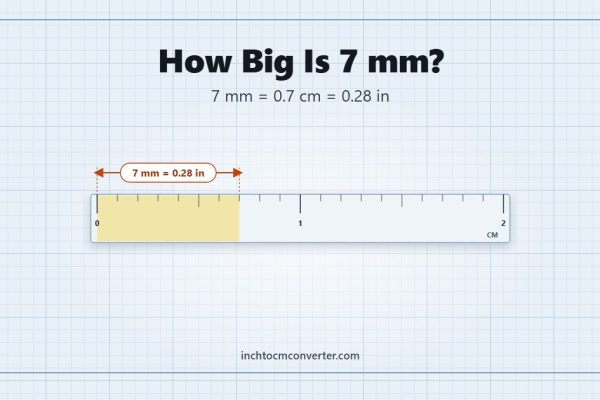
How Big Is 7mm? Size in Inches With Everyday Examples
7mm equals about 0.28 inches -- about the width of a standard pencil, four US quarters stacked, or the thickness of a smartphone.
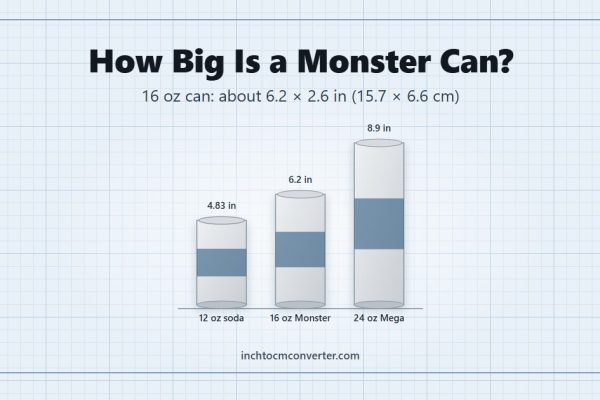
Monster Can Size: Height and Width in Inches and cm
A standard 16 oz Monster can is about 6.2 in tall and 2.6 in wide (15.7 x 6.6 cm), the same width as a soda can. Plus the 24 oz Mega Monster and caffeine.
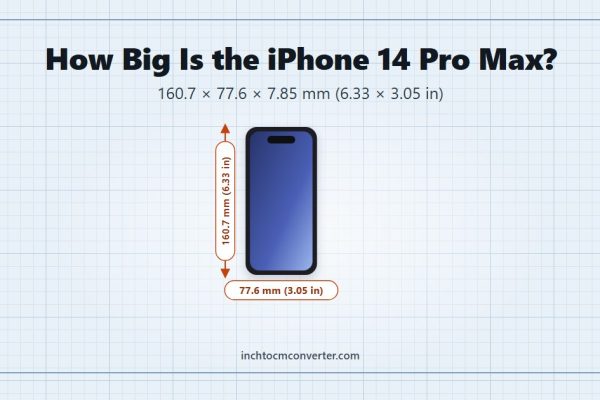
iPhone 14 Pro Max Size: Dimensions in Inches, cm and Weight
The iPhone 14 Pro Max measures 6.33 inches tall and 3.05 inches wide -- noticeably bigger than the standard iPhone 12.
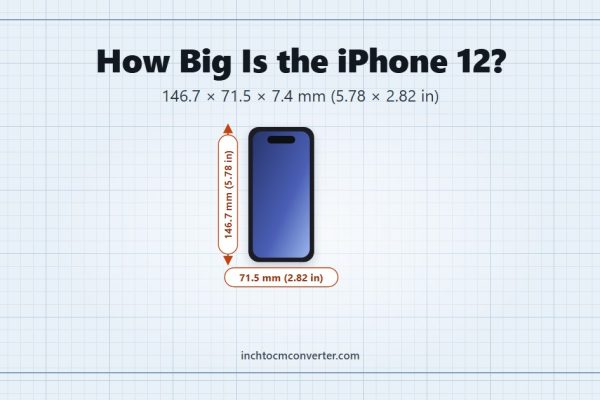
iPhone 12 Size: Dimensions in Inches, cm and Weight
The iPhone 12 measures 5.78 inches tall and 2.82 inches wide -- almost exactly the standard smartphone height.