65-Inch TV Dimensions: Width and Height in CM, Inches and Feet
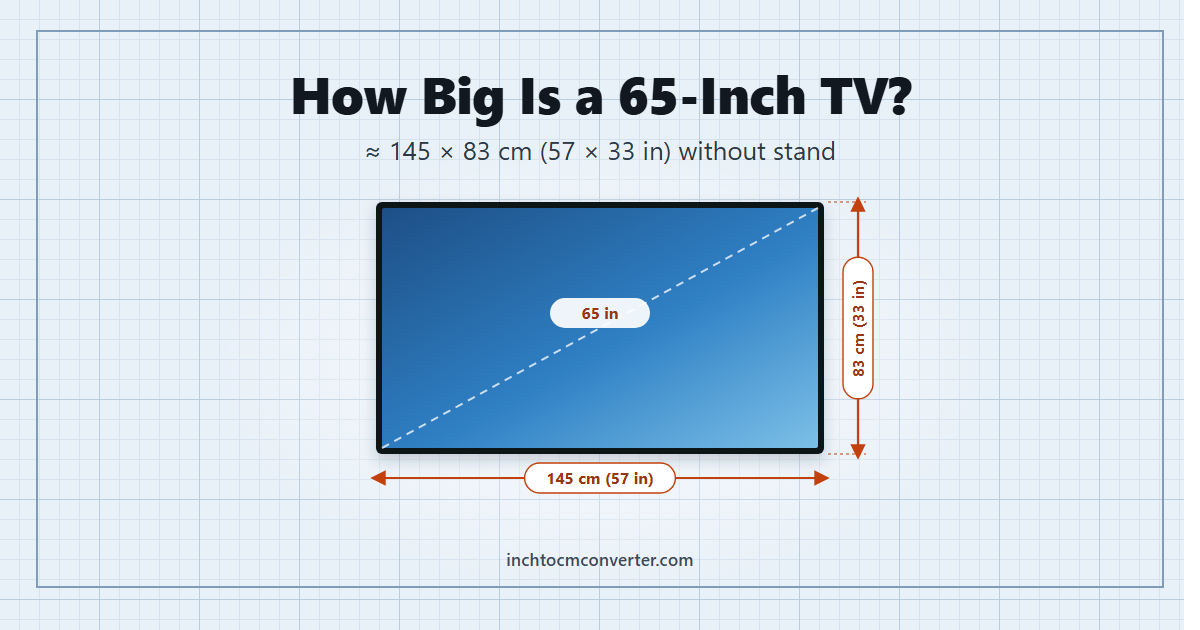
Quick answer: A 65-inch TV is about 145 cm wide and 83 cm tall (57 x 33 inches) without the stand, and roughly 2.5-6 cm deep. The screen itself measures 143.9 x 80.9 cm (56.7 x 31.9 in), and the 65 inches (165 cm) is its diagonal. Most 65-inch TVs weigh 17-30 kg, and the best viewing distance is about 2.0-3.0 m (6.5-10 ft).
| 65-inch TV (16:9) | cm | inches | feet |
|---|---|---|---|
| Screen diagonal | 165.1 | 65.0 | 5.42 |
| Screen width | 143.9 | 56.7 | 4.72 |
| Screen height | 80.9 | 31.9 | 2.66 |
| TV width with frame (typical) | 144-146 | 57-57.5 | 4.75 |
| TV height without stand (typical) | 82-84 | 32-33 | 2.7 |
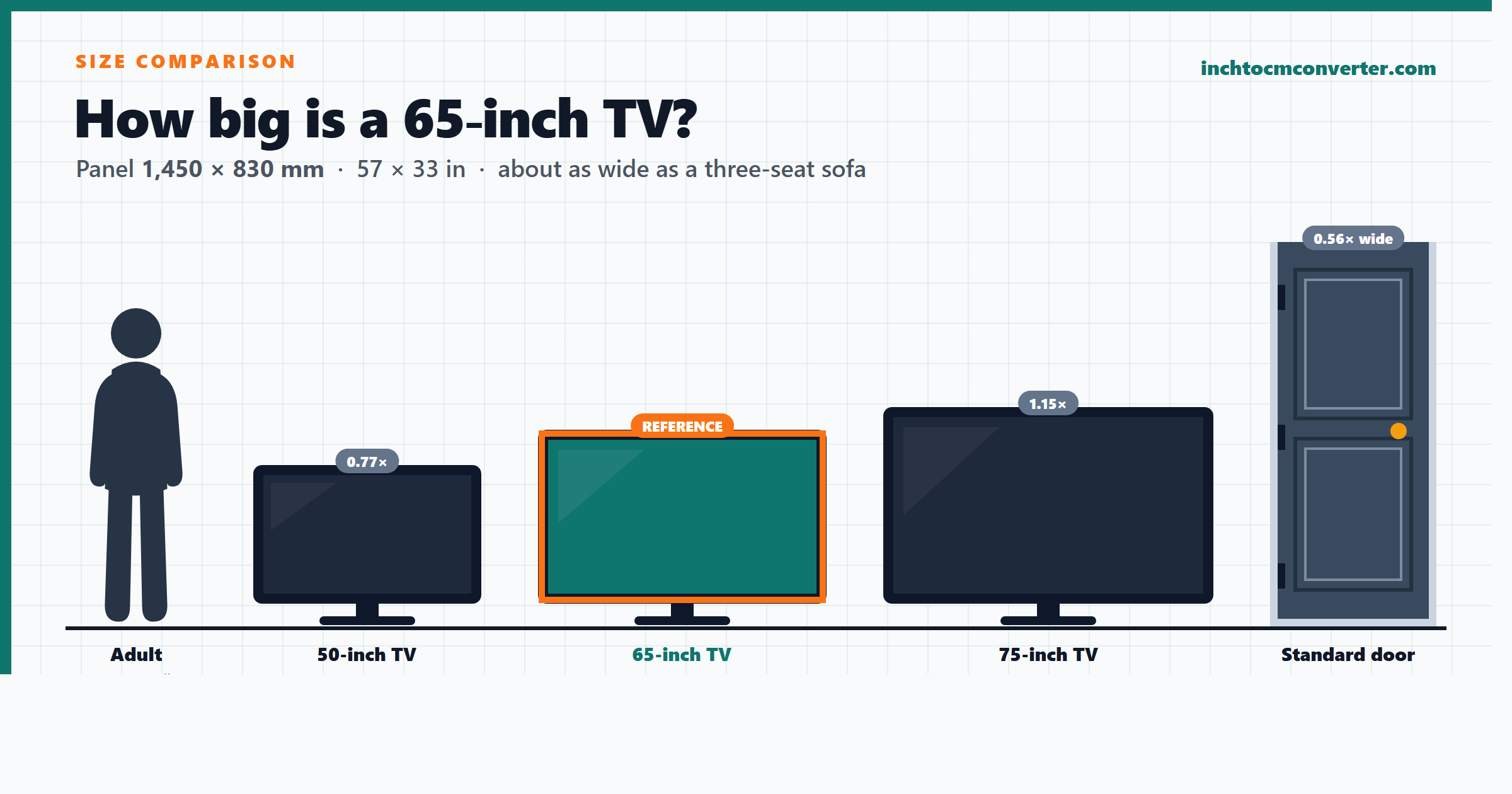
The “65 inches” on the box tells you surprisingly little about how much wall or cabinet space a 65-inch TV actually needs. This guide gives the real width, height, depth and weight, compares 65 inches with 55, 75 and other popular sizes, and explains viewing distance, wall mounting and the space you need in your room.
How wide is a 65-inch TV?
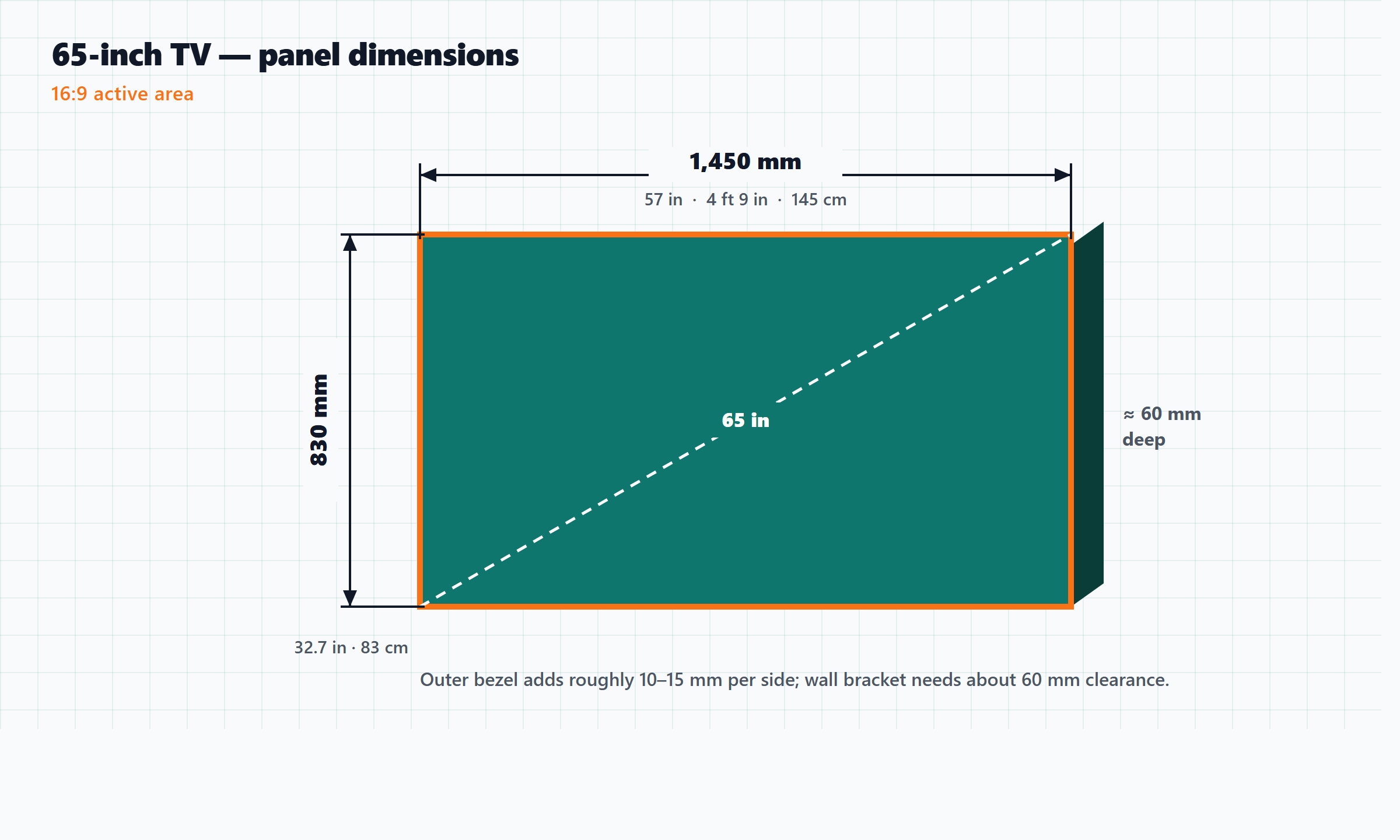
TV sizes are measured diagonally across the screen, corner to corner. Almost all TVs have a 16:9 screen, so the width and height can be calculated exactly:
- Screen width = 65 × 0.8716 = 56.7 in (143.9 cm).
- Screen height = 65 × 0.4903 = 31.9 in (80.9 cm).
The frame around the screen on a modern TV is thin – usually 5 to 15 mm on the sides – so the whole TV is typically about 144-146 cm (57 in) wide and 82-84 cm (33 in) tall without its stand. That is about 4 ft 9 in by 2 ft 9 in. Always check the exact figure on the product page before buying a cabinet or alcove, because models differ by a few centimetres.
Depth and weight
- Depth: OLED and premium models are often only 2.5-4 cm thick at the top, but most TVs have a thicker section at the back for the electronics, so plan for about 5-8 cm of depth when wall-mounted, including the bracket.
- With the stand: the height rises to around 87-90 cm, and the feet or pedestal need about 25-35 cm of depth on the cabinet.
- Weight: most 65-inch TVs weigh between 17 and 30 kg (37-66 lb) without the stand. Two people should lift it.
- Box size: the box is usually around 160 x 95-100 cm and 15-20 cm deep, so it needs a large car or van with the seats folded down. Always carry a TV upright, as it was packed.
65-inch TV compared to other TV sizes
| TV size | Screen width | Screen height | Screen area vs 65-inch |
|---|---|---|---|
| 43 in | 95.2 cm (37.5 in) | 53.5 cm (21.1 in) | 44% |
| 50 in | 110.7 cm (43.6 in) | 62.3 cm (24.5 in) | 59% |
| 55 in | 121.8 cm (47.9 in) | 68.5 cm (27.0 in) | 72% |
| 65 in | 143.9 cm (56.7 in) | 80.9 cm (31.9 in) | 100% |
| 75 in | 166.0 cm (65.4 in) | 93.4 cm (36.8 in) | 133% |
| 85 in | 188.2 cm (74.1 in) | 105.8 cm (41.7 in) | 171% |
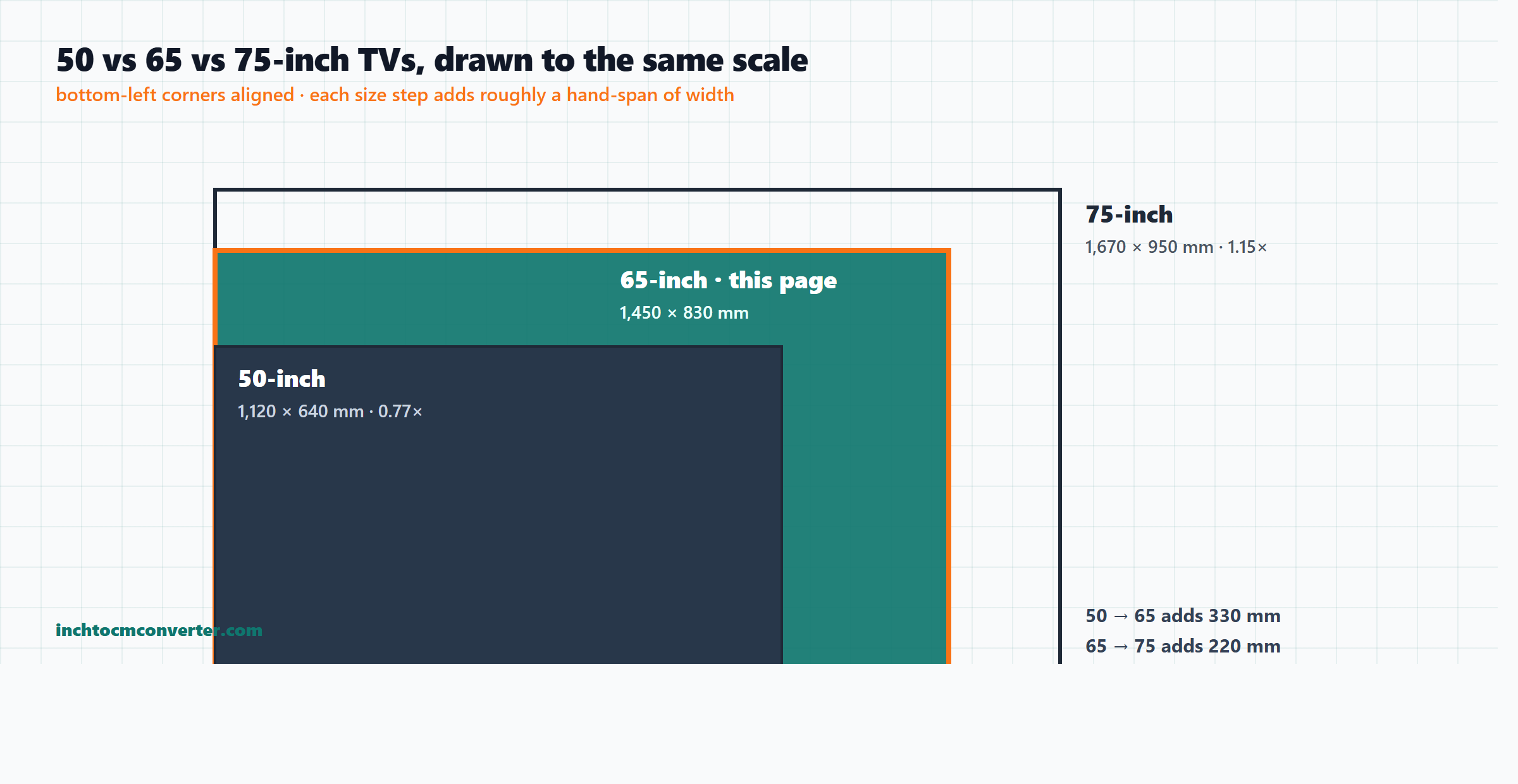
- 65 vs 55 inches: a 65-inch TV is about 22 cm (8.7 in) wider and 12 cm taller, with around 40% more screen area. This is the most common upgrade, and most people adapt to the bigger screen within days.
- 65 vs 75 inches: a 75-inch TV is another 22 cm wider and 12.5 cm taller. It is usually this jump that stops a TV fitting above a fireplace or inside an alcove.
- 65 vs 50 inches: a 50-inch screen is only 77% as wide, losing about 16 cm of width on each side.
65-inch TV compared to everyday objects
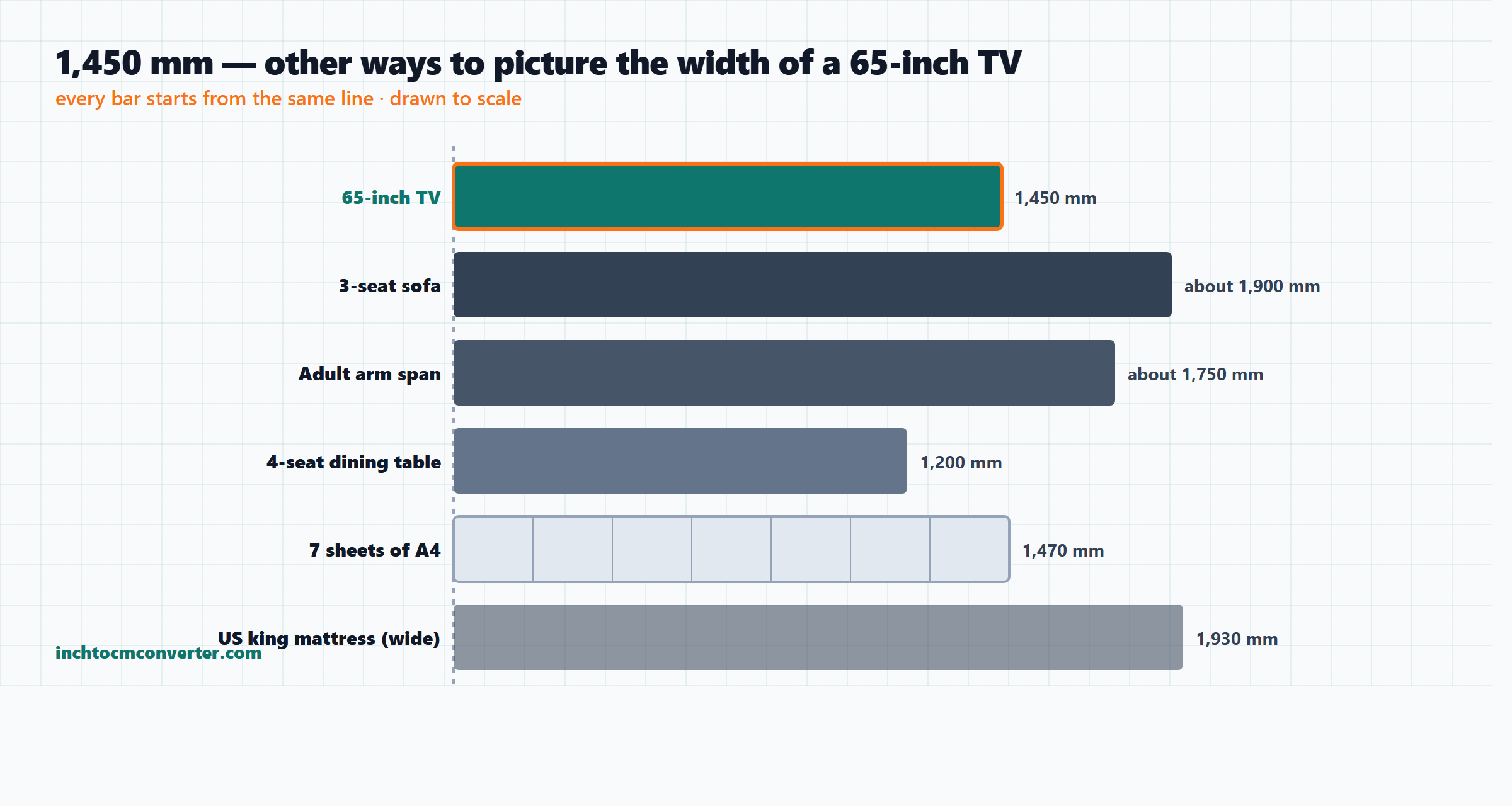
- Sofa: about the length of a compact three-seat sofa or a large two-seater.
- Office desk: a standard office desk is 140 cm wide, so the TV is a desk plus about 5 cm.
- King mattress: a US king mattress is 193 cm wide, about 48 cm wider than the TV.
- Door: a standard interior door is 81 cm wide, so the TV is almost as wide as two doors side by side.
- Person: laid on its side, the TV is about 30 cm shorter than an average adult man (175 cm).
- A4 paper: about seven A4 sheets side by side along their short edge.
- Monitor: almost three 24-inch monitors placed side by side.
Best viewing distance for a 65-inch TV
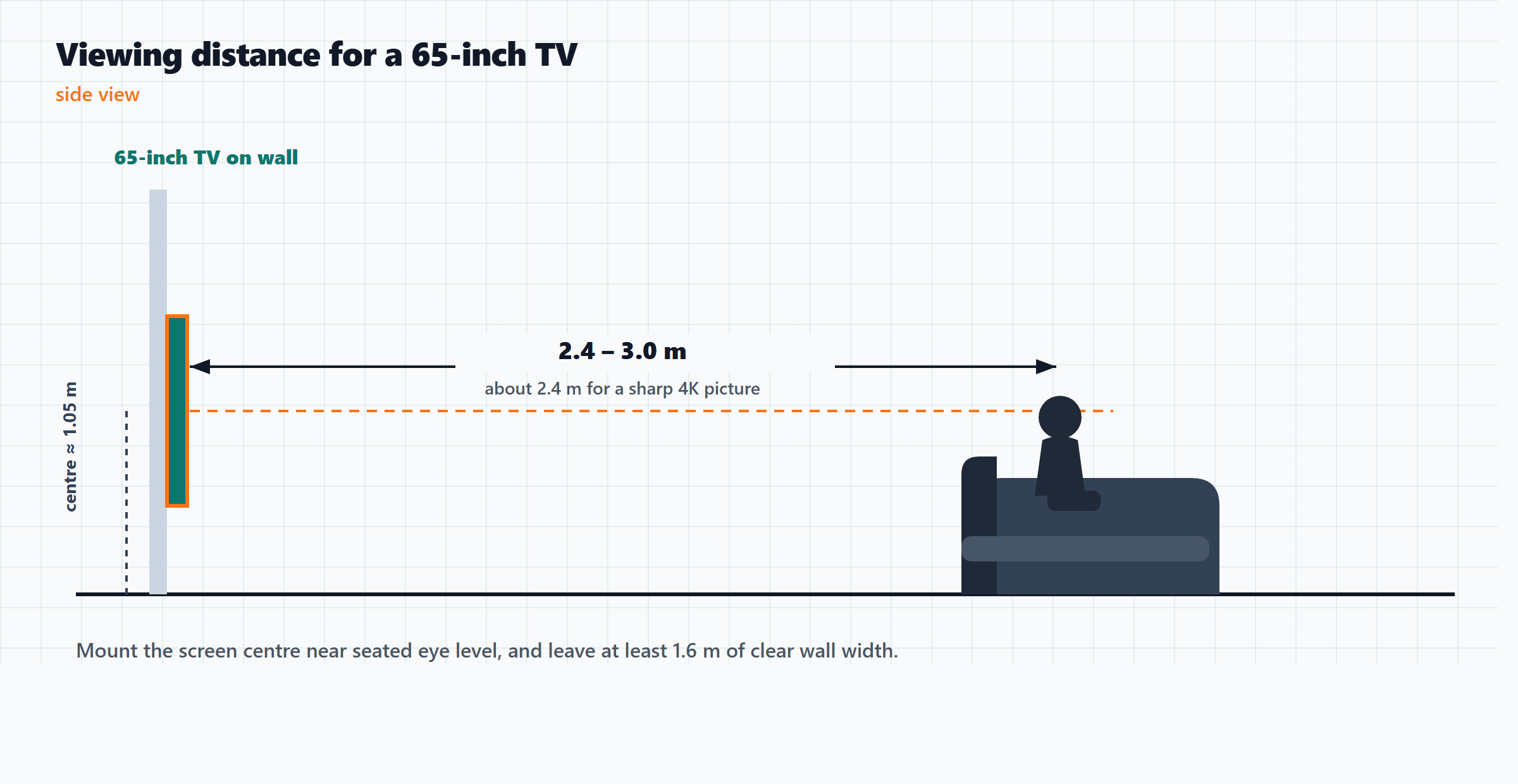
For a 65-inch 4K TV, a comfortable viewing distance is about 2.0 to 3.0 m (6.5 to 10 ft):
- About 2.0 m (6.5 ft): the screen fills around 40 degrees of your view, the cinema-like recommendation from THX. This is the best distance to see the full detail of 4K.
- About 2.7 m (9 ft): the screen fills about 30 degrees of your view, the SMPTE recommendation for general viewing.
- Over 3.5 m (11.5 ft): the TV will start to feel small, and a 75-inch may be a better choice.
- Under 1.8 m (6 ft): a 65-inch screen can feel overwhelming, and on a 1080p TV you may start to see the pixels.
So in most living rooms – where the sofa is 2.5 to 3 m from the wall – a 65-inch TV is a very good fit. In a small bedroom with less than 2 m between the bed and the wall, a 55-inch or smaller TV is usually more comfortable.
Wall mounting and space planning
- Wall space: allow at least 155-160 cm (5 ft 2 in) of clear wall width so the TV does not look squeezed, and more if there are speakers or shelves either side.
- Mounting height: put the centre of the screen at about 105-110 cm (42 in) from the floor, roughly seated eye level. The bottom edge then sits about 65 cm off the floor.
- Bracket: most 65-inch TVs use a VESA pattern of 300 x 300 mm or 400 x 400 mm. Choose a bracket rated for at least 35-40 kg to give a safety margin.
- Studs: wall studs are usually 400 mm (UK) or 16 inches (US, 406 mm) apart, so a 145 cm wide TV always spans at least three of them.
- TV stand or cabinet: choose furniture at least as wide as the TV – 150 cm or more – and at least 40 cm deep so the feet sit safely.
- Above a fireplace: this usually puts the screen too high for comfortable viewing. If you must, use a tilting or pull-down mount.
65-inch TV size in every unit
| Measurement | mm | cm | inches | feet |
|---|---|---|---|---|
| Diagonal | 1,651 | 165.1 | 65.00 | 5.42 |
| Screen width | 1,439 | 143.9 | 56.65 | 4.72 |
| Screen height | 809 | 80.9 | 31.87 | 2.66 |
| TV width with frame (typical) | 1,450 | 145.0 | 57.09 | 4.76 |
| TV height with frame (typical) | 830 | 83.0 | 32.68 | 2.72 |
Check your own wall or cabinet with the inches to cm converter or the mm to inches converter.
Frequently asked questions
How wide is a 65-inch TV in cm?
The screen is 143.9 cm wide, and most 65-inch TVs are about 144-146 cm wide including the frame.
How wide is a 65-inch TV in inches?
The screen is about 56.7 inches wide, and the whole TV is usually about 57 inches wide.
How tall is a 65-inch TV?
About 83 cm (33 in) without the stand and about 87-90 cm (34-35 in) with it.
What are the dimensions of a 65-inch TV in feet?
About 4 ft 9 in wide and 2 ft 9 in tall without the stand.
How far should you sit from a 65-inch TV?
About 2.0 to 3.0 m (6.5 to 10 ft). Closer gives a more cinema-like experience; further makes the screen feel smaller.
How much bigger is a 65-inch TV than a 55-inch?
About 22 cm (8.7 in) wider and 12 cm (4.9 in) taller, with around 40% more screen area.
How much does a 65-inch TV weigh?
Most weigh 17-30 kg (37-66 lb) without the stand, depending on the model and technology.
Is a 65-inch TV too big for a bedroom?
Not if you can sit at least 2 m away. For viewing distances under 2 m, a 55-inch or smaller TV is usually more comfortable.
Related Articles
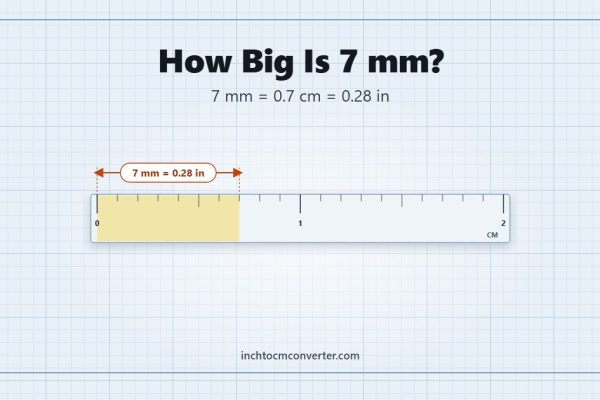
How Big Is 7mm? Size in Inches With Everyday Examples
7mm equals about 0.28 inches -- about the width of a standard pencil, four US quarters stacked, or the thickness of a smartphone.

Monster Can Size: Height and Width in Inches and cm
A standard 16 oz Monster can is about 6.2 in tall and 2.6 in wide (15.7 x 6.6 cm), the same width as a soda can. Plus the 24 oz Mega Monster and caffeine.
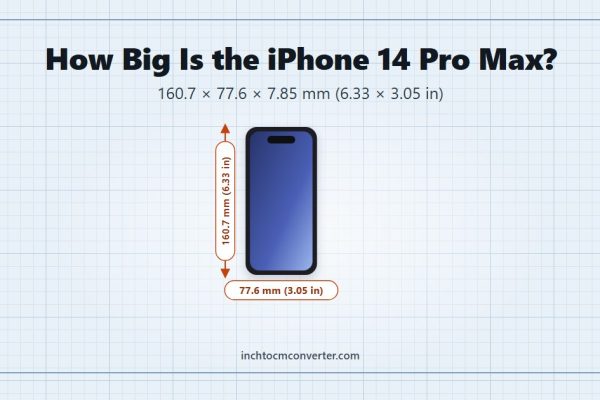
iPhone 14 Pro Max Size: Dimensions in Inches, cm and Weight
The iPhone 14 Pro Max measures 6.33 inches tall and 3.05 inches wide -- noticeably bigger than the standard iPhone 12.
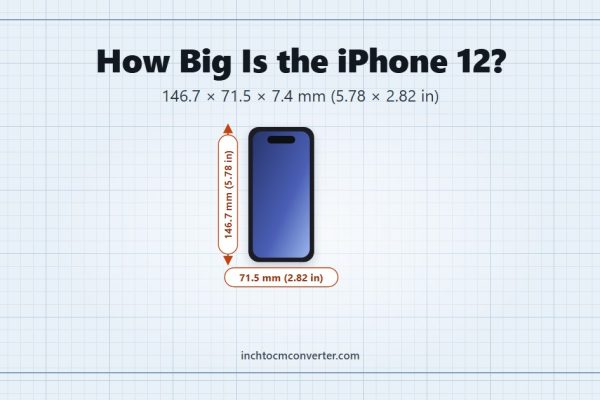
iPhone 12 Size: Dimensions in Inches, cm and Weight
The iPhone 12 measures 5.78 inches tall and 2.82 inches wide -- almost exactly the standard smartphone height.