How Long Is 100 Feet? 10 Real-World Distances Compared for Visual Scale
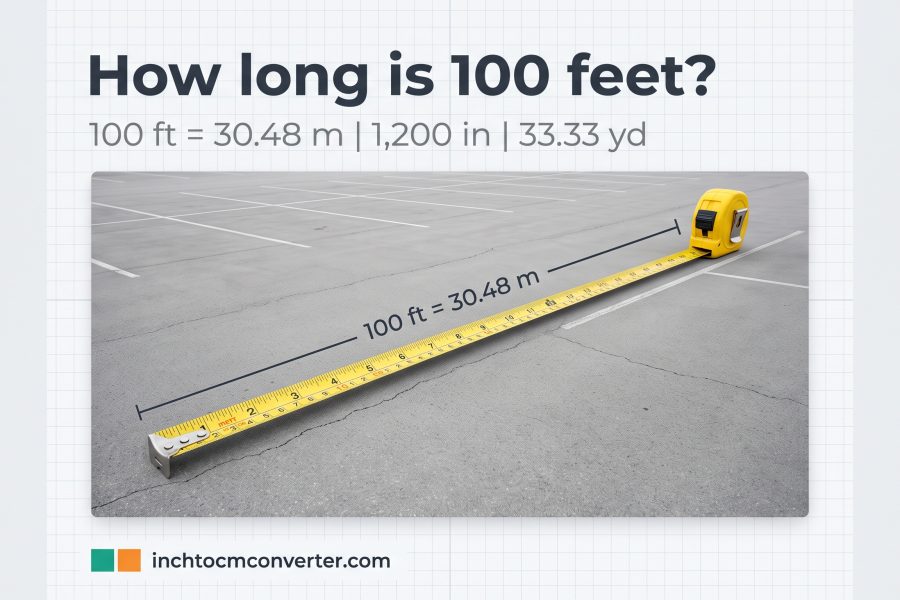
- Inches: 1,200 in (100 × 12)
- Yards: 33.33 yd (100 ÷ 3)
- Meters: 30.48 m (exact)
- Centimeters: 3,048 cm
- Miles: 0.01894 mi (about 1/53 of a mile)
100 feet equals exactly 1,200 inches, 30.48 meters, or 33.33 yards. To convert feet to meters you multiply by 0.3048; to reach yards you divide by 3. It is a distance most people picture best as a bit longer than an NBA basketball court (94 ft), roughly a third of an American football field, or the length of an adult blue whale. For the exact metric value at any distance, use the feet to meters converter.
- Complete 100 Feet Conversion & Distance Reference Table
- Visualizing 100 Feet: What Does It Look Like in Real Life?
- 10 Common Things That Are About 100 Feet Long or Tall
- 1. An NBA Basketball Court (Length)
- 2. An Adult Blue Whale
- 3. A Ten-Story Building (Height)
- 4. Two and a Half Shipping Containers
- 5. A Semi-Truck With Trailer
- 6. Home Plate to First Base, Plus a Bit
- 7. One and a Half Cricket Pitches
- 8. A 100-Foot Garden Hose
- 9. Two and a Half Utility Poles
- 10. About 17 People Lying Head to Toe
- Practical Hacks: How to Estimate 100 Feet Without a Tape Measure
- How Tall Is 100 Feet Compared to People and Landmarks?
- Frequently Asked Questions
- How many meters is 100 feet?
- How many stories is 100 feet?
- How far is 100 feet visually?
- How long does it take to walk 100 feet?
- How many yards is 100 feet?
- Is 100 feet the same as 100 yards?
- What does 100 feet look like on the road?
- How tall is 100 feet compared to a human?
- Final Visual Conclusion & Quick Reference
Complete 100 Feet Conversion & Distance Reference Table
| Unit of Measurement | Exact Converted Value | Formula / Multiplier | Practical Reference / Notes |
| Inches (in) | 1,200 in | 100 × 12 | One hundred one-foot rulers end to end |
| Yards (yd) | 33.33 yd | 100 ÷ 3 | A third of a football field’s 100-yard playing area |
| Meters (m) | 30.48 m | 100 × 0.3048 | Exact; the international foot is defined as 0.3048 m |
| Centimeters (cm) | 3,048 cm | 100 × 30.48 | Used for technical and survey work |
| Kilometers (km) | 0.03048 km | 100 × 0.0003048 | About 3% of a kilometer |
| Miles (mi) | 0.01894 mi | 100 ÷ 5,280 | Roughly 1/53 of a mile |
| Fathoms | 16.67 fathoms | 100 ÷ 6 | Nautical depth unit; 1 fathom = 6 ft |
| Chains (surveyor’s) | 1.515 chains | 100 ÷ 66 | A chain is 66 ft; still used in land surveying |
Practical note: The international foot is defined as exactly 0.3048 meters, so 100 feet is exactly 30.48 meters with no rounding. The older US survey foot differs by about 2 parts per million — a difference of roughly 0.006 inches over 100 feet, invisible in everyday use.
Visualizing 100 Feet: What Does It Look Like in Real Life?
One hundred feet is a “site-scale” distance — too long to step off casually, but short enough to take in with a single glance across a parking lot, a sports field, or the front of a large building. It is the kind of number surveyors, contractors, and event planners use constantly: garden hoses, extension cords, and network cables are all sold in 100-foot spools, and many residential lots are around 100 feet deep from the street to the back fence.
Laid flat, 100 feet is a touch longer than a professional basketball court and about a third of a full American football field including the end zones. Stood upright, it is roughly the height of an eight-to-ten-story building. Walked, it is about 35 to 40 normal adult paces. Driven, it passes in a little over a second at highway speed — which is exactly why “keep 100 feet back” road signs exist: at 30 mph you cover that gap in well under three seconds.
10 Common Things That Are About 100 Feet Long or Tall
1. An NBA Basketball Court (Length)
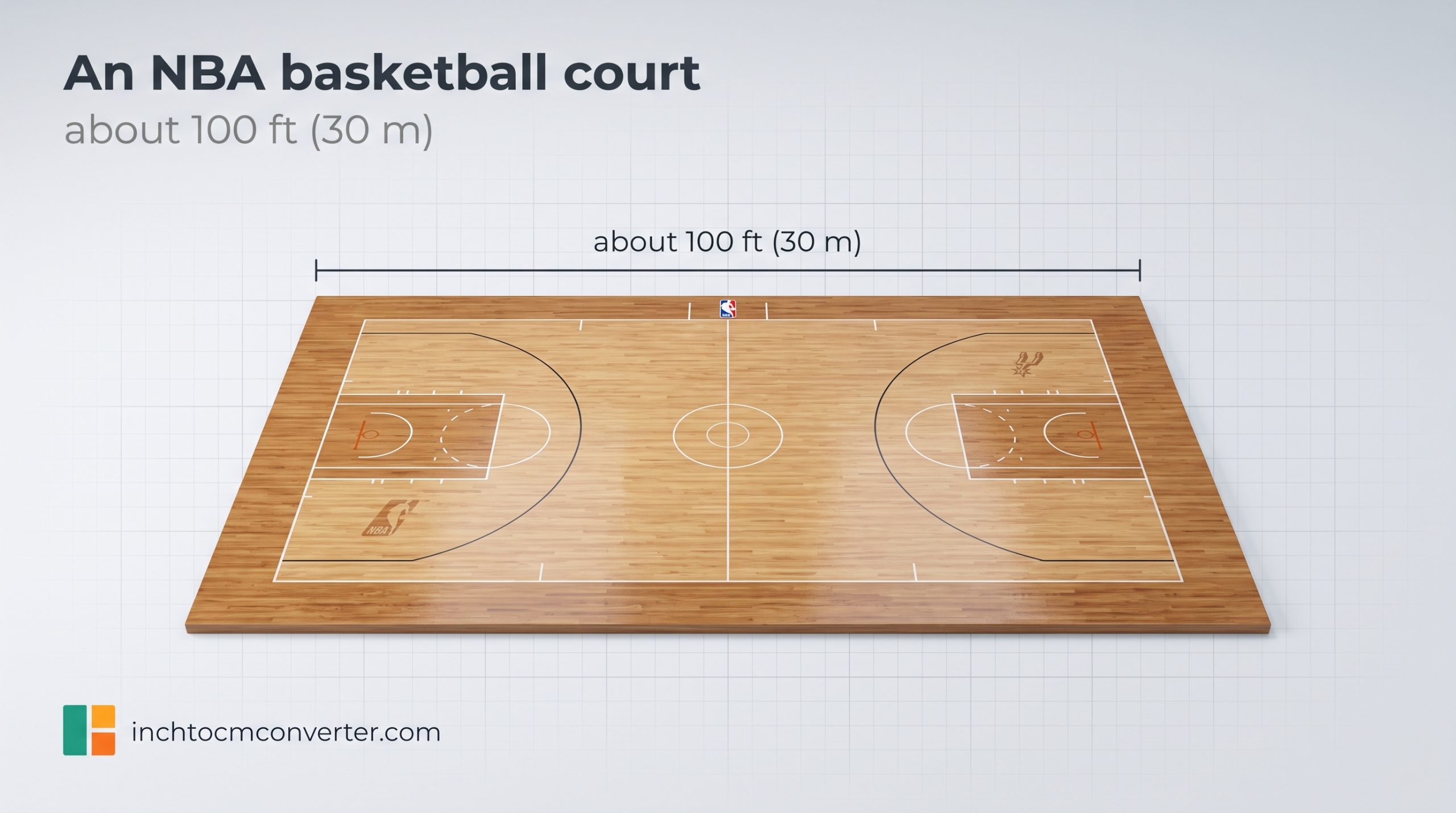
A regulation NBA court is 94 feet from baseline to baseline, set by the league rulebook. Add six feet — about one more stride past the baseline — and you have 100 feet. If you have ever watched a full-court sprint on television, you have watched almost exactly this distance.
2. An Adult Blue Whale
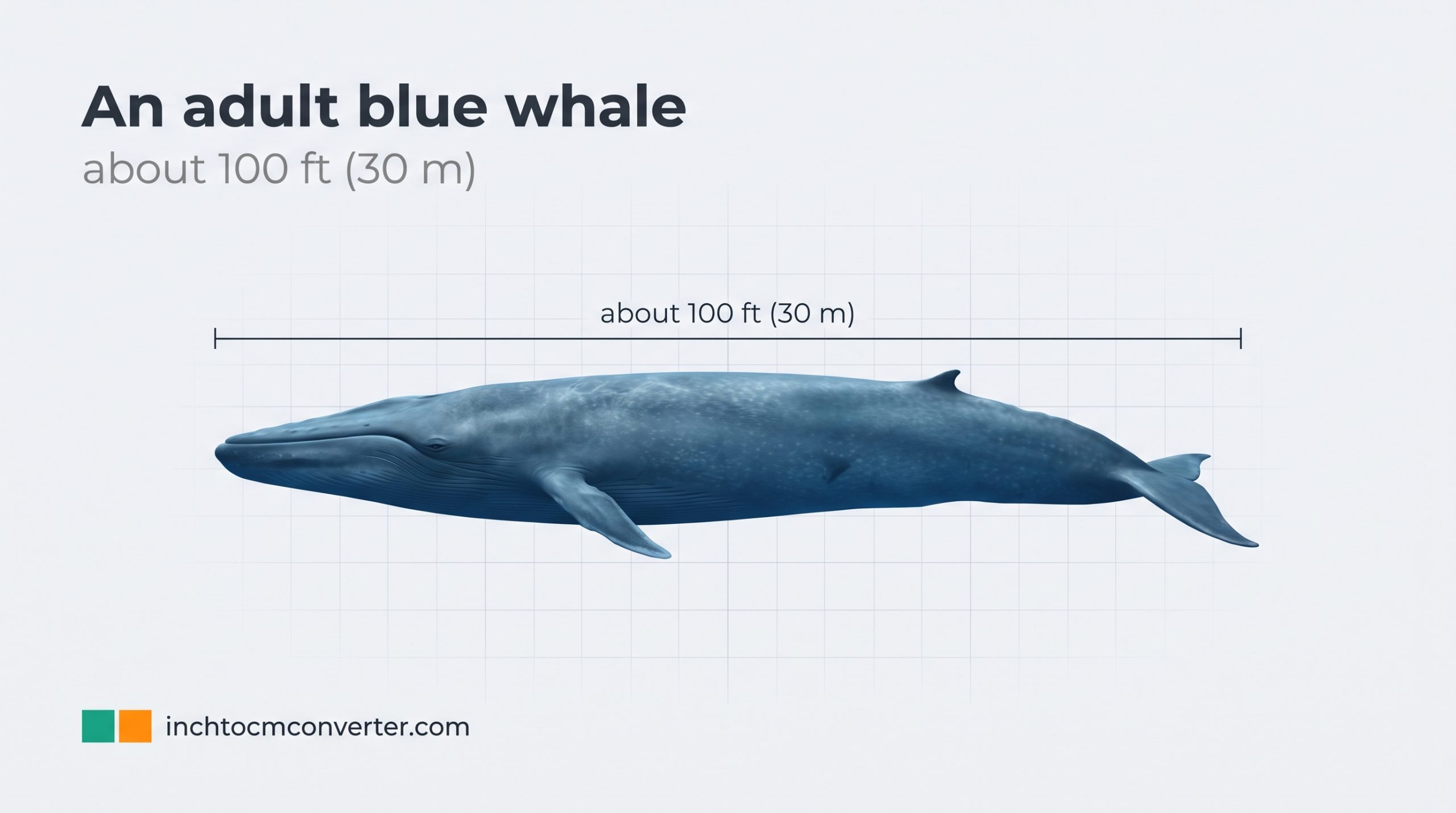
The largest animal that has ever lived measures 80 to 100 feet long as an adult, with the biggest individuals reaching the full 100. It is the single best “living” reference for the distance: one whale, nose to tail, is 100 feet.
3. A Ten-Story Building (Height)

Commercial floors run about 10 to 13 feet each once you include the structure and ceiling space, so a building of eight to ten stories stands close to 100 feet at the roofline. Picture a mid-rise office block or hotel and you are picturing 100 feet of height.
4. Two and a Half Shipping Containers
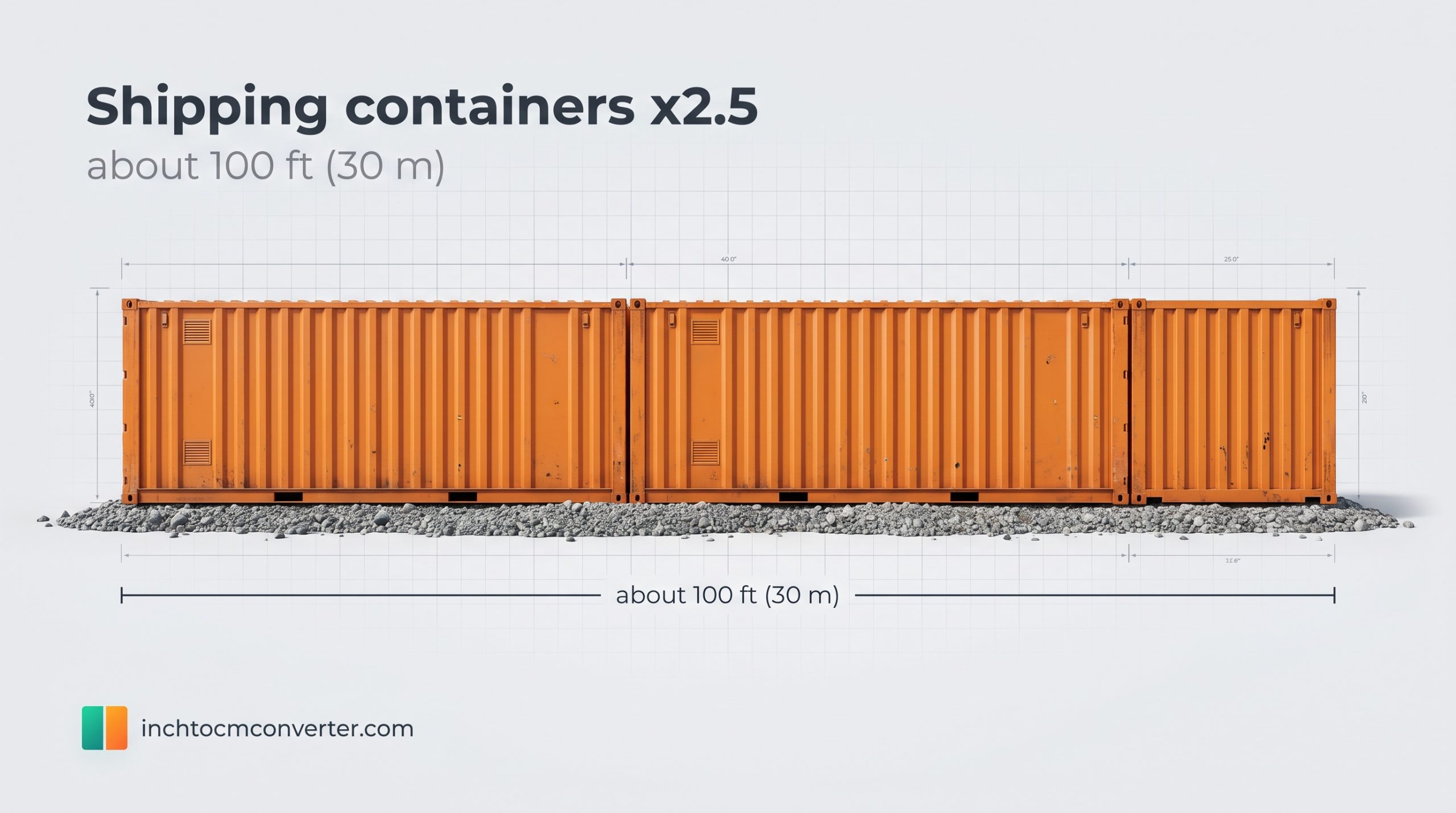
A standard intermodal shipping container is 40 feet long. Line up two end to end and add half of a third and you reach 100 feet. Container dimensions are locked by ISO standard, so this is a precise, repeatable way to break the distance into parts.
5. A Semi-Truck With Trailer
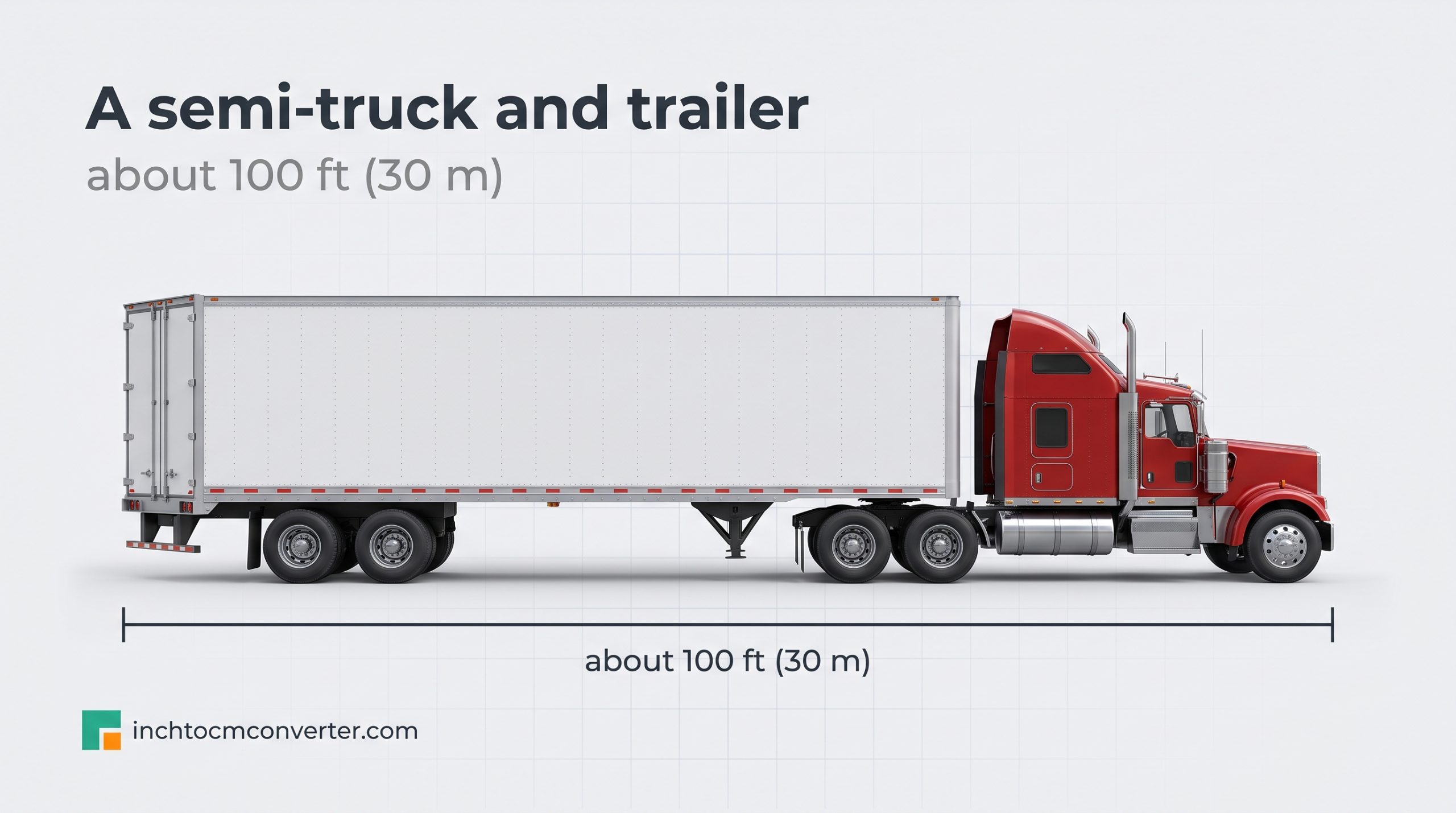
A tractor pulling a 53-foot trailer runs 70 to 80 feet overall. One full rig plus about a third of another equals 100 feet — a useful gauge on the highway when you want to judge a gap ahead.
6. Home Plate to First Base, Plus a Bit
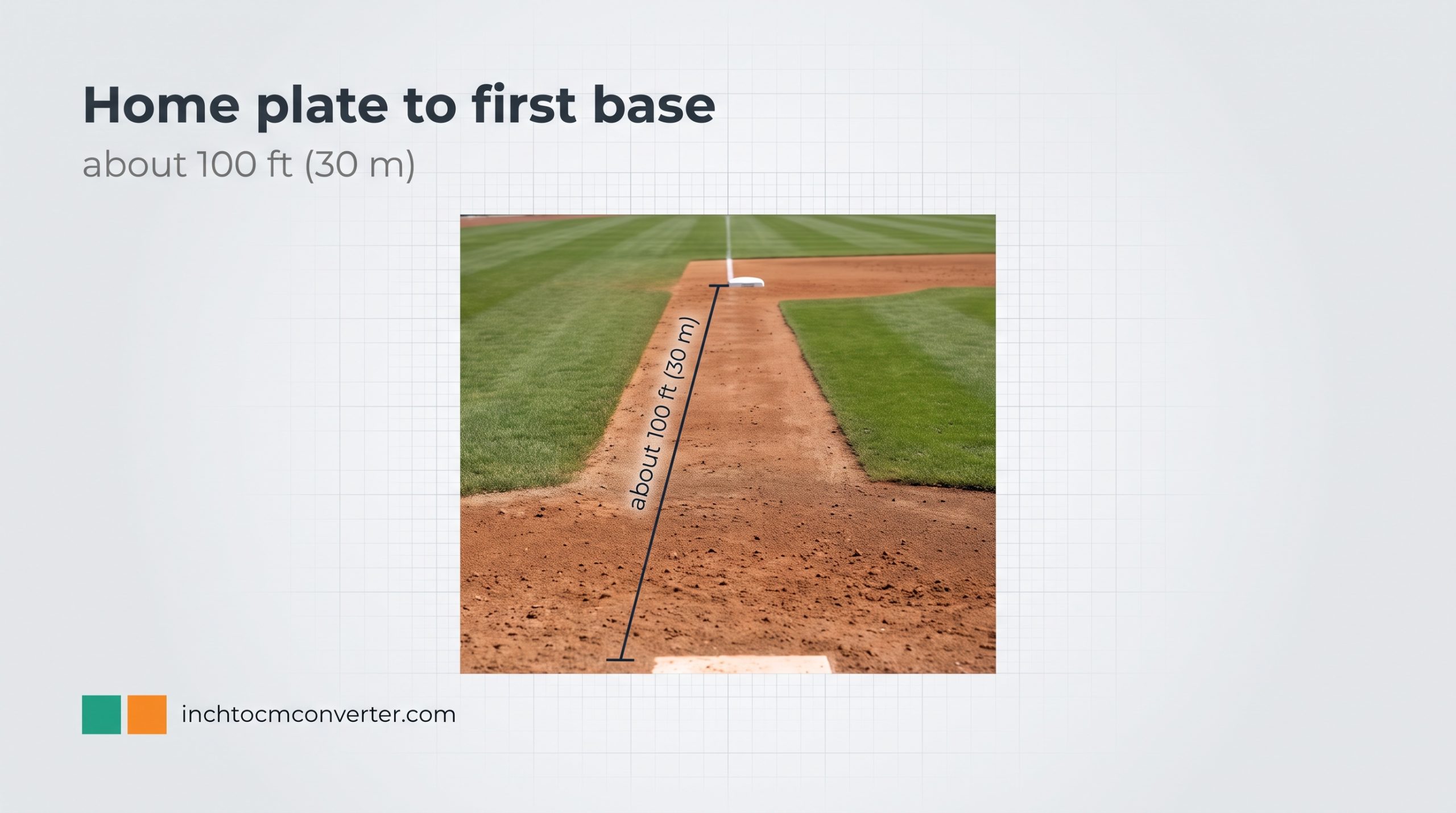
The base paths on a Major League Baseball diamond are 90 feet between bags. Run from home to first and keep going about ten more feet and you have covered 100 feet. Every baseball fan already has this distance calibrated by eye.
7. One and a Half Cricket Pitches
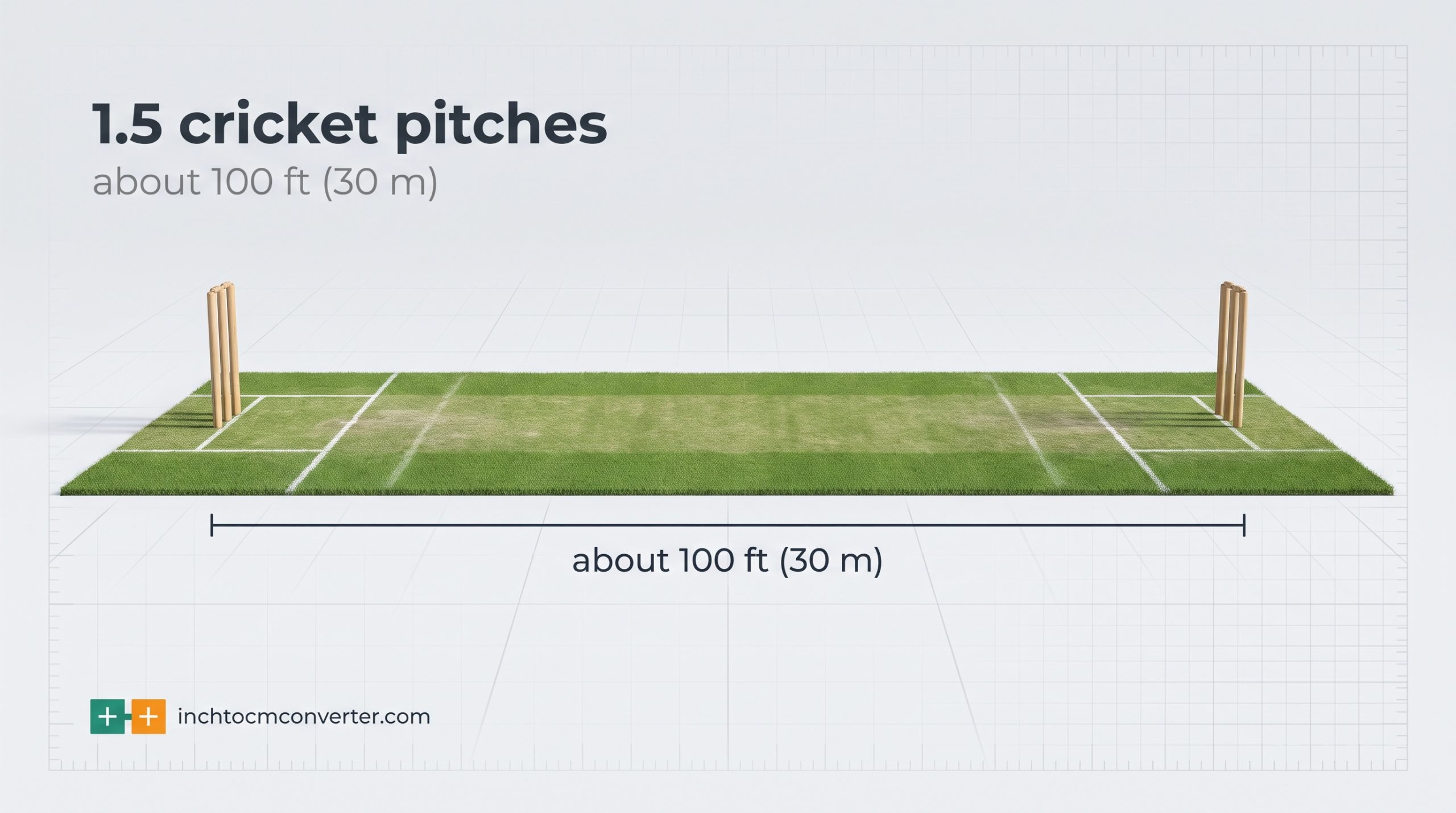
A cricket pitch, wicket to wicket, is 66 feet (22 yards). One and a half pitches laid end to end come to 99 feet — near enough that a cricket follower can picture 100 feet instantly.
8. A 100-Foot Garden Hose
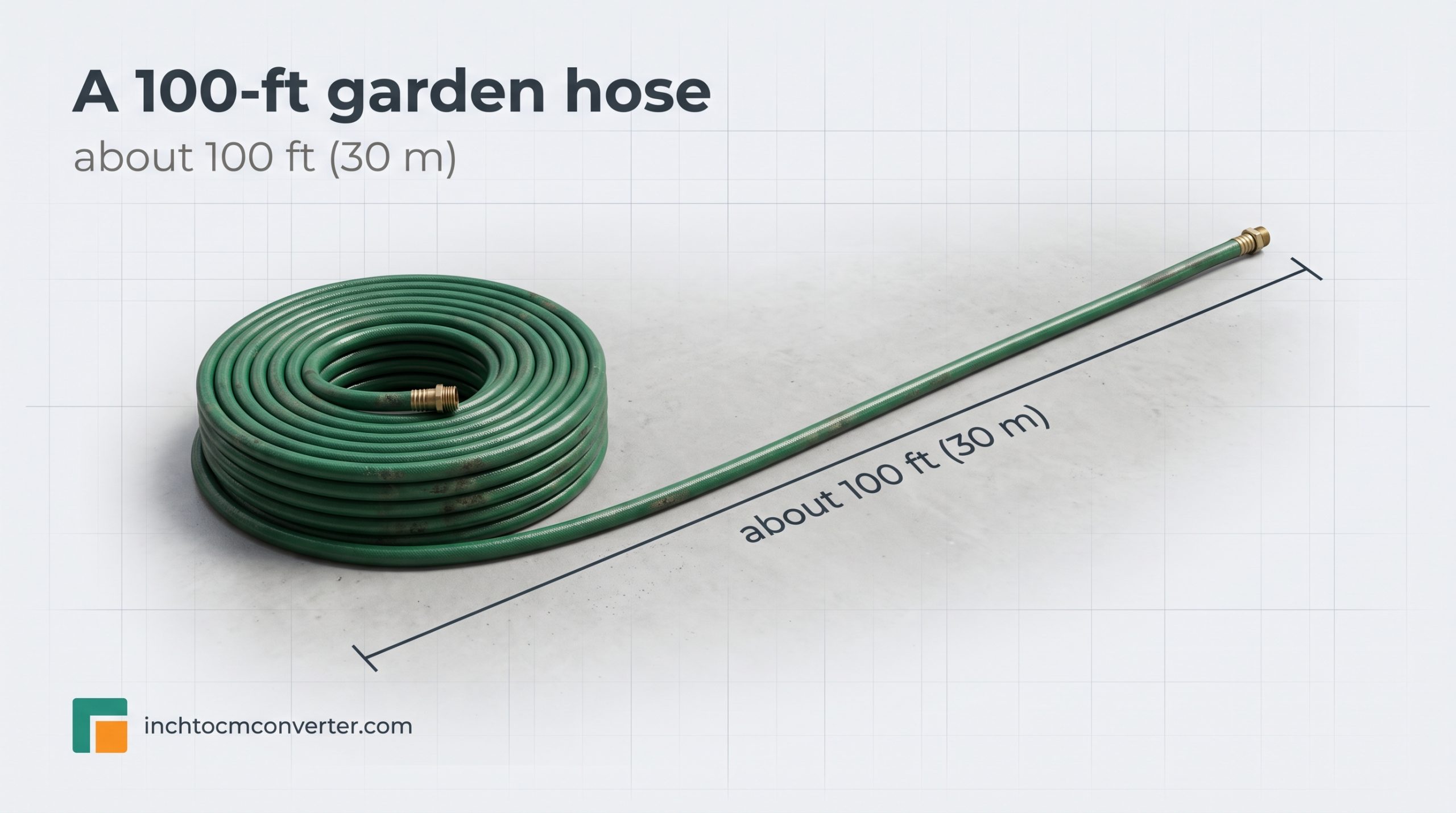
The longest common retail length of garden hose is exactly 100 feet, and the same is true of contractor extension cords and pull-through Ethernet cable. If you have ever fully unrolled one across a yard, you have laid out the distance in a straight line.
9. Two and a Half Utility Poles
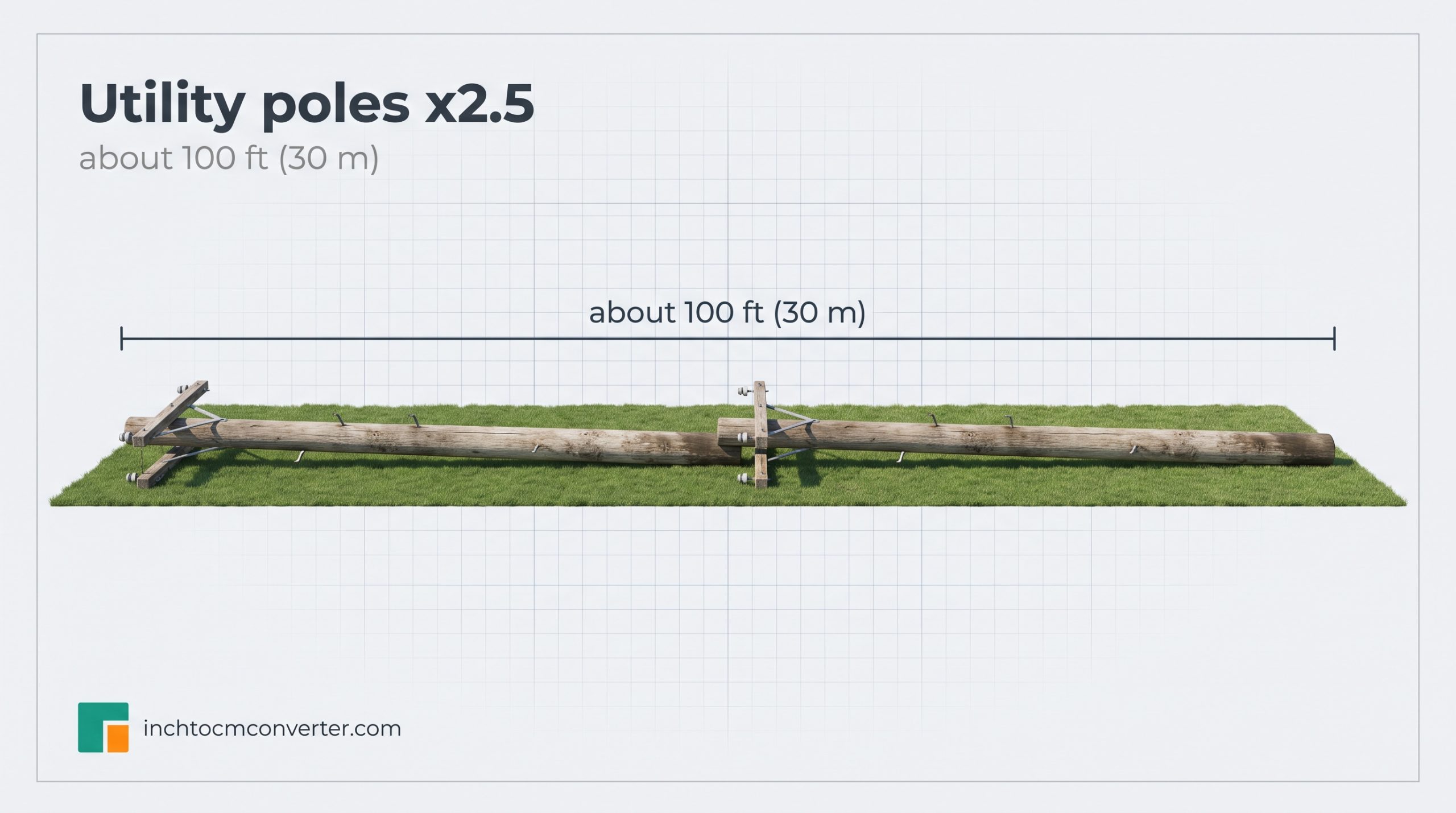
A standard wooden utility pole stands about 35 to 40 feet above ground. Stack two and a half of them and you reach 100 feet — a handy vertical reference when you are trying to judge the height of a tree or a crane.
10. About 17 People Lying Head to Toe
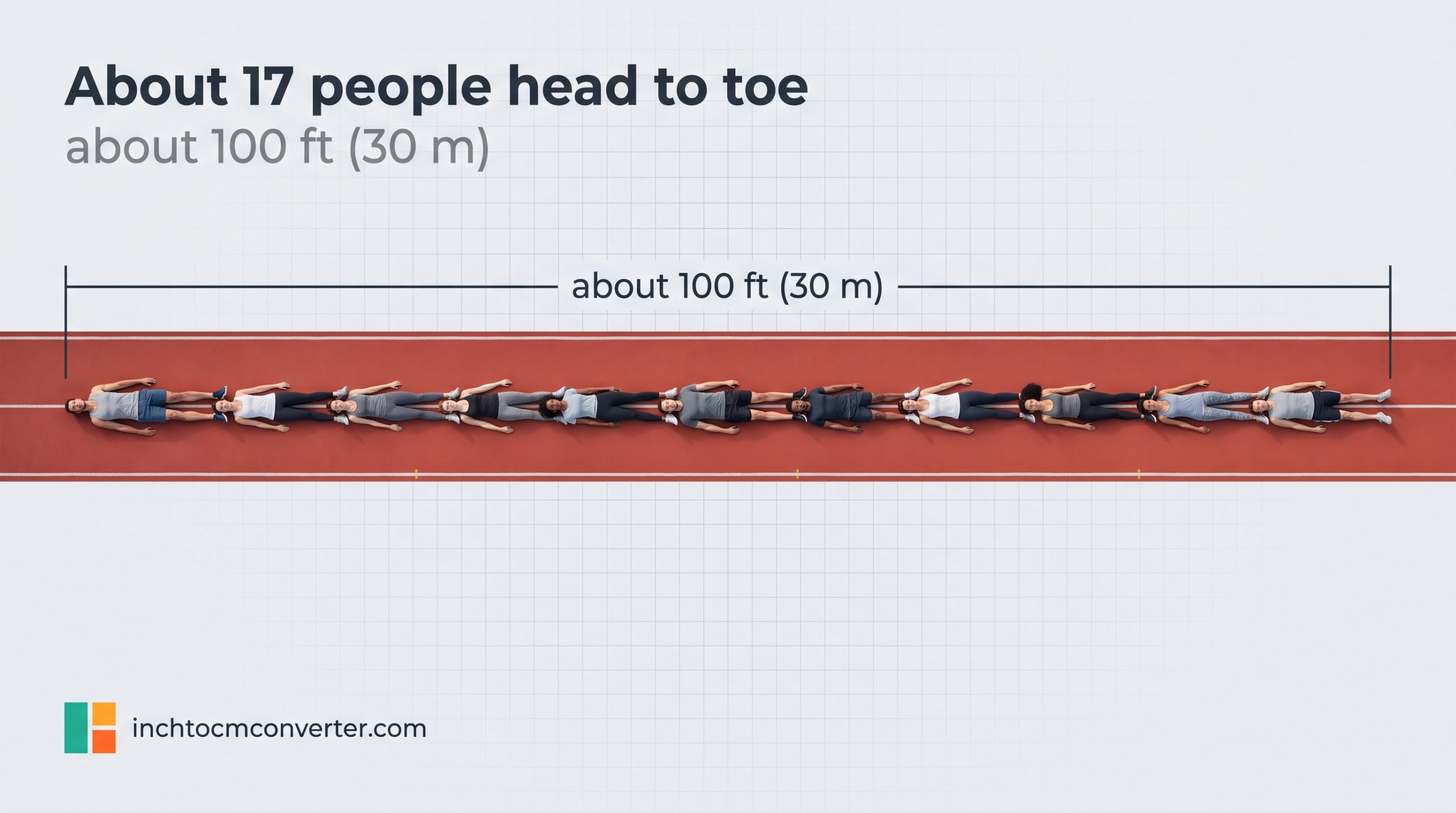
The average adult is roughly 5 feet 8 inches tall. Line up about 17 people head to toe and the chain is 100 feet long. It is a slow way to measure, but it makes the distance feel human-sized.
Practical Hacks: How to Estimate 100 Feet Without a Tape Measure
- Pace it out. Calibrate your stride once against a known distance; a typical adult pace is 2.5 to 3 feet, so 35 to 40 paces covers 100 feet.
- Use a basketball court. An NBA court is 94 feet baseline to baseline; add roughly two of your own steps past the line for 100 feet.
- Count parked cars. Six to seven mid-size cars bumper to bumper, or five standard parking-space lengths, comes to about 100 feet.
- Unroll a known spool. A retail “100-foot” garden hose or extension cord, pulled fully straight, is your ready-made 100-foot line.
How Tall Is 100 Feet Compared to People and Landmarks?
Standing upright, 100 feet is about 17 times the height of an average adult, or a stack of roughly 60 stacked dining chairs. It is a little more than half the height of the Leaning Tower of Pisa (183 ft) and roughly two-thirds the height of Niagara Falls (about 167 ft). The Hollywood Sign’s letters are 45 feet tall, so 100 feet is a bit more than two of them.
Frequently Asked Questions
How many meters is 100 feet?
Exactly 30.48 meters, because one foot is defined as 0.3048 meters (100 × 0.3048 = 30.48).
How many stories is 100 feet?
About 8 to 10 stories. Residential floors are shorter (roughly 9 to 10 feet), giving close to 10 stories; commercial floors are taller (10 to 13 feet), giving closer to 8.
How far is 100 feet visually?
A little longer than a basketball court, about a third of a football field, roughly six to seven cars parked bumper to bumper, or one adult blue whale nose to tail.
How long does it take to walk 100 feet?
About 20 to 25 seconds at a normal walking pace, or 35 to 40 steps for a typical adult.
How many yards is 100 feet?
33.33 yards, since a yard is 3 feet and 100 ÷ 3 = 33.33. That is a third of a football field’s 100-yard playing area.
Is 100 feet the same as 100 yards?
No. 100 yards is 300 feet — three times longer. A football field’s playing area is 100 yards; 100 feet is only a third of that.
What does 100 feet look like on the road?
Roughly five standard parking spaces in a row, or the gap a car covers in about 2.3 seconds at 30 mph. Many “no parking” and “stop ahead” signs use this distance.
How tall is 100 feet compared to a human?
About 17 times the height of an average 5-foot-8 adult — roughly a 9- or 10-story building.
Final Visual Conclusion & Quick Reference
100 feet equals 30.48 meters, 33.33 yards, or 1,200 inches. The fastest anchors to remember: a basketball court plus a couple of steps, a third of a football field, an adult blue whale, or a 9-to-10-story building standing on end. Lock in any one of those and you can judge 100 feet across a field or up a wall without a tape measure.
Related Articles
How Long Is 300 Feet? 10 Common Things Compared for Visual Scale
300 feet equals exactly 91.44 meters, or 100 yards - a football field's playing area. See what 300 feet looks like, plus a full conversion table.
How Long Is 50 Feet? 10 Common Things Compared for Visual Scale
50 feet equals exactly 15.24 meters (16.67 yards). See what 50 feet looks like next to a semi-trailer, a 5-story building and half a basketball court.
How Long Is 15 Feet? 10 Common Things Compared for Visual Scale
15 feet equals exactly 4.572 meters, or 5 yards. See what 15 feet looks like next to a car, a garage door and a kayak, plus a conversion table.
How Long Is 10 Meters? 10 Common Things Compared for Visual Scale
10 meters equals exactly 32.8 feet (10.94 yards). See what 10 meters looks like next to a bus, a diving platform and three cars, plus a conversion table.