Weight Converter
Enter a weight once and read it in every common unit – milligrams through to tonnes. Every factor is exact by the 1959 international agreement: 1 pound = 0.45359237 kg, 1 ounce = 28.349523125 g. Useful when a spec sheet, a shipping label and your bathroom scale all speak different systems.
A weight in every unit, with something to picture
Type “624 g” (a basketball) and you get 0.624 kg, 22 oz and 1.38 lb at a glance. “3.4 kg” is a newborn baby – 7.5 lb, 120 oz. “2 kg” is a standard brick. For a single known pair such as lb to kg, the focused pounds to kg converter is quicker.
The units and their homes
- mg – medication doses, nutrition labels
- g – food, mail, small parts
- kg – body weight, luggage, groceries (most of the world)
- tonne (t) – vehicles, freight, materials (1000 kg)
- ounce – US kitchen and postal weights
- pound – US/UK body weight and produce
- US ton – 2000 lb (907 kg); the UK long ton is 2240 lb
Watch the ton, and the troy ounce
Two traps live in this converter. “Ton” is ambiguous: a metric tonne is 1000 kg, a US short ton is 907 kg, and a UK long ton is 1016 kg – this tool uses the US short ton. And the ounce here is the avoirdupois ounce (28.35 g) for everyday goods, not the troy ounce (31.10 g) used for precious metals. For calorie planning that needs body weight in kg, see the BMR and BMI calculators.
FAQ
What is the difference between a metric ton and a US ton?
A metric tonne is 1000 kg. A US (short) ton is 2000 lb, or 907.18 kg. A UK long ton is 2240 lb, or 1016.05 kg. This converter uses the US short ton.
Is the pound-to-kilogram factor exact?
Yes - since 1959 the international avoirdupois pound is defined as exactly 0.45359237 kg.
Does this handle troy ounces for gold?
No. It uses the avoirdupois ounce (28.35 g) for everyday items. A troy ounce is 31.10 g - use a dedicated precious-metals converter.
How do I convert grams to pounds?
Divide grams by 453.592. For example, 1000 g ÷ 453.592 = 2.205 lb.
Related Articles
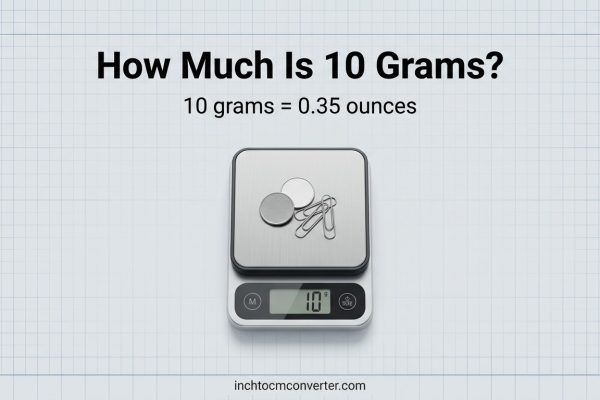
How Much Is 10 Grams? — Explained
10 grams equals about 0.35 ounces -- exactly two US nickel coins, about two sheets of printer paper, or 2.5 teaspoons of sugar.
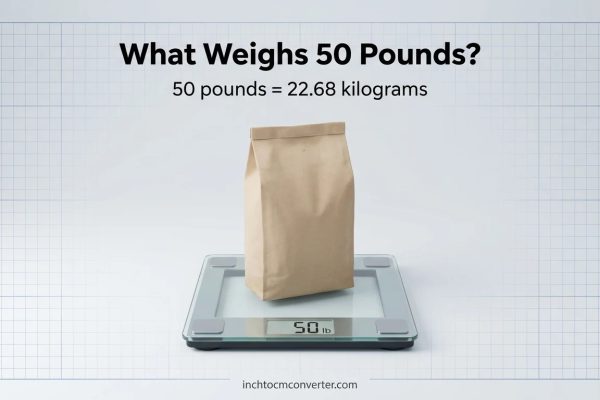
What Weighs 50 Pounds? (Common Things Compared)
50 pounds equals about 22.7 kg -- the exact size of a standard bag of dog food, or close to a bag of concrete mix.
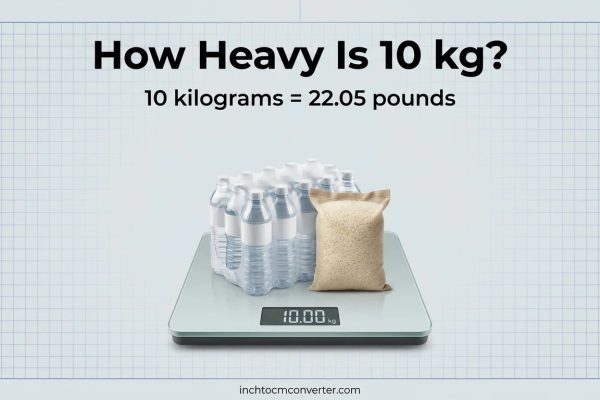
How Heavy Is 10 kg? 10 Common Things Compared for Visual Scale
10 kg equals about 22 pounds (10,000 g). See what 10 kg feels like - a case of water, a car tire, a medium dog - plus a full weight conversion table.