How Heavy Is 10 kg? 10 Common Things Compared for Visual Scale
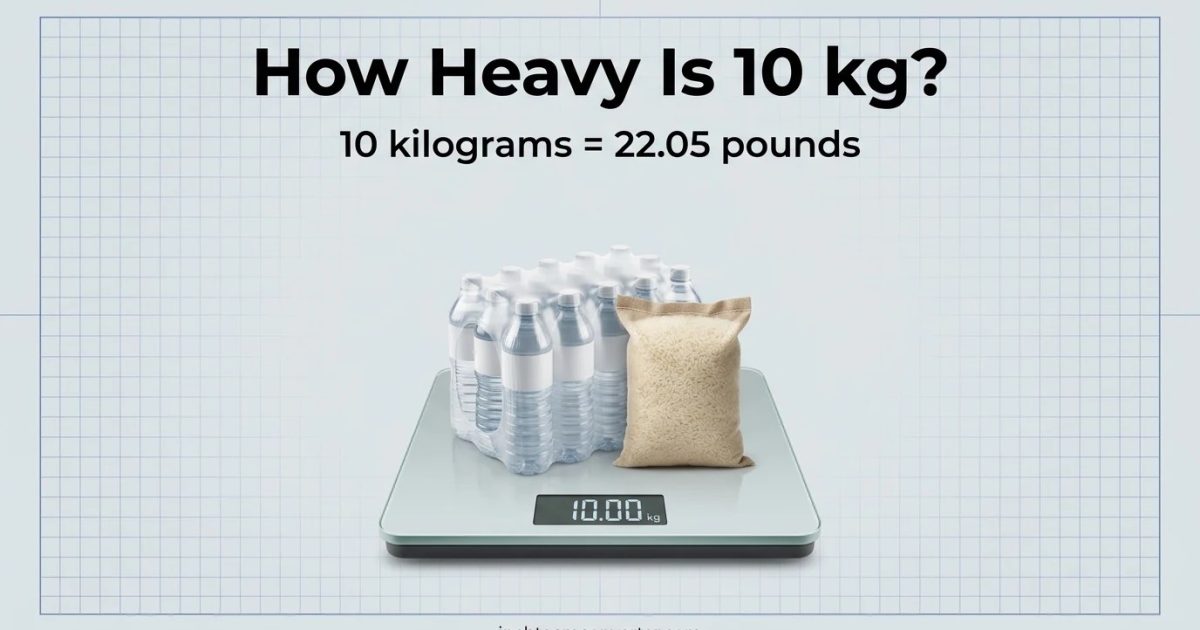
How heavy is 10 kg? 10 kg equals about 22 pounds. Here is 10 kg in every common unit:
- Pounds: 22.046 lb (about 22 lb)
- Grams: 10,000 g (exact)
- Ounces: 352.74 oz
- Stone: 1.575 st (UK weight unit)
Complete 10 kg Conversion & Weight Reference Table
| Unit of Measurement | Exact Converted Value | Formula / Multiplier | Practical Reference / Notes |
| Grams (g) | 10,000 g | 10 × 1000 | Exact; 1 kg = 1000 g |
| Pounds (lb) | 22.046 lb | 10 ÷ 0.453592 | Just over 22 pounds |
| Ounces (oz) | 352.74 oz | 22.046 × 16 | Used for small-scale kitchen weights |
| Stone (st) | 1.575 st | 22.046 ÷ 14 | UK body-weight unit; 1 stone = 14 lb |
| Metric tonnes (t) | 0.01 t | 10 ÷ 1000 | One hundredth of a tonne |
| Newtons (force) | 98.1 N | 10 × 9.81 | The downward force 10 kg exerts under gravity |
Practical note: The kilogram-to-pound conversion is fixed: one pound is defined as exactly 0.45359237 kg, so 10 kg is exactly 22.046 pounds.
What Does 10 kg Feel Like?
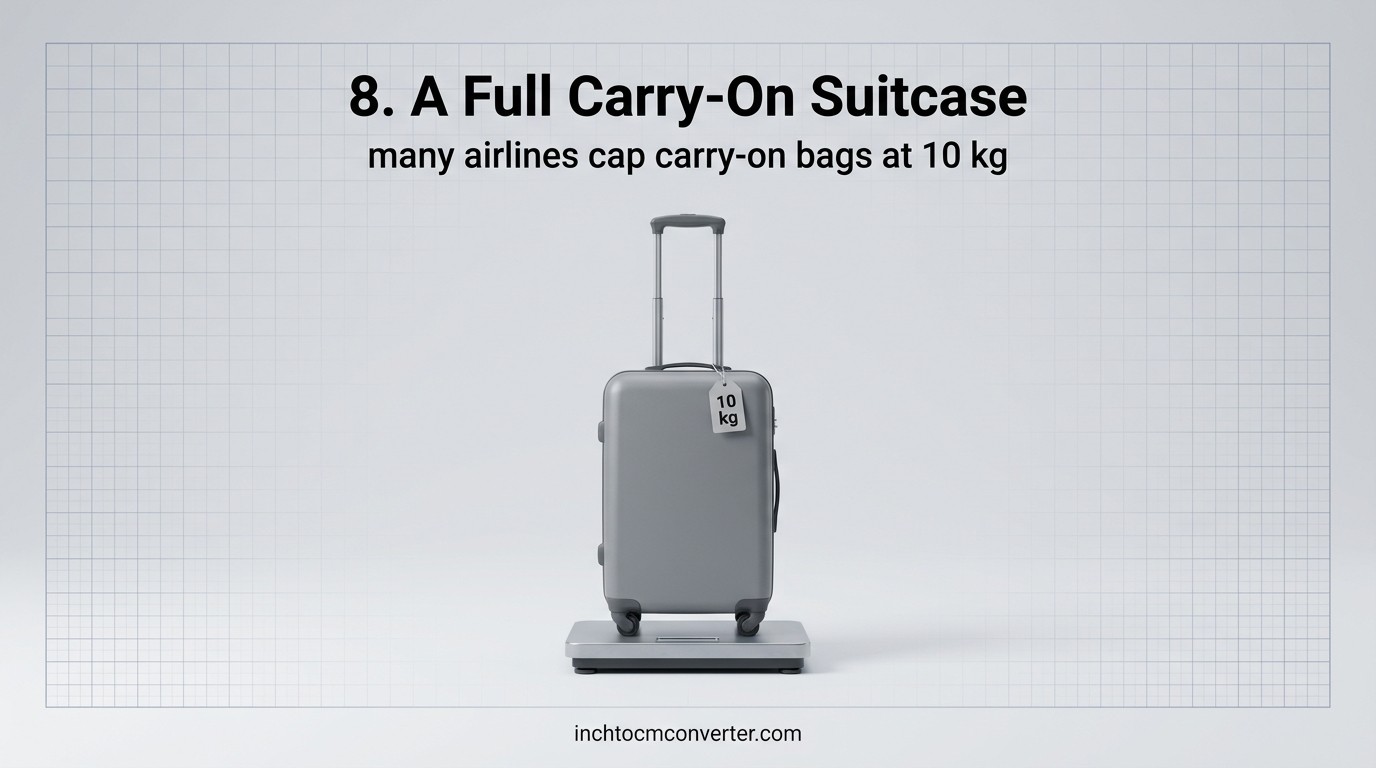
Ten kilograms is right at the edge of a comfortable one-hand carry — most people can lift it in one hand for a few steps but switch to two hands for anything longer. It is heavier than a full backpack for school, lighter than a typical suitcase packed for a two-week trip. Airlines often set 10 kg as the carry-on weight limit for exactly this reason: it is a load an average traveller can lift into an overhead bin without help.
10 Common Things That Weigh About 10 Kilograms
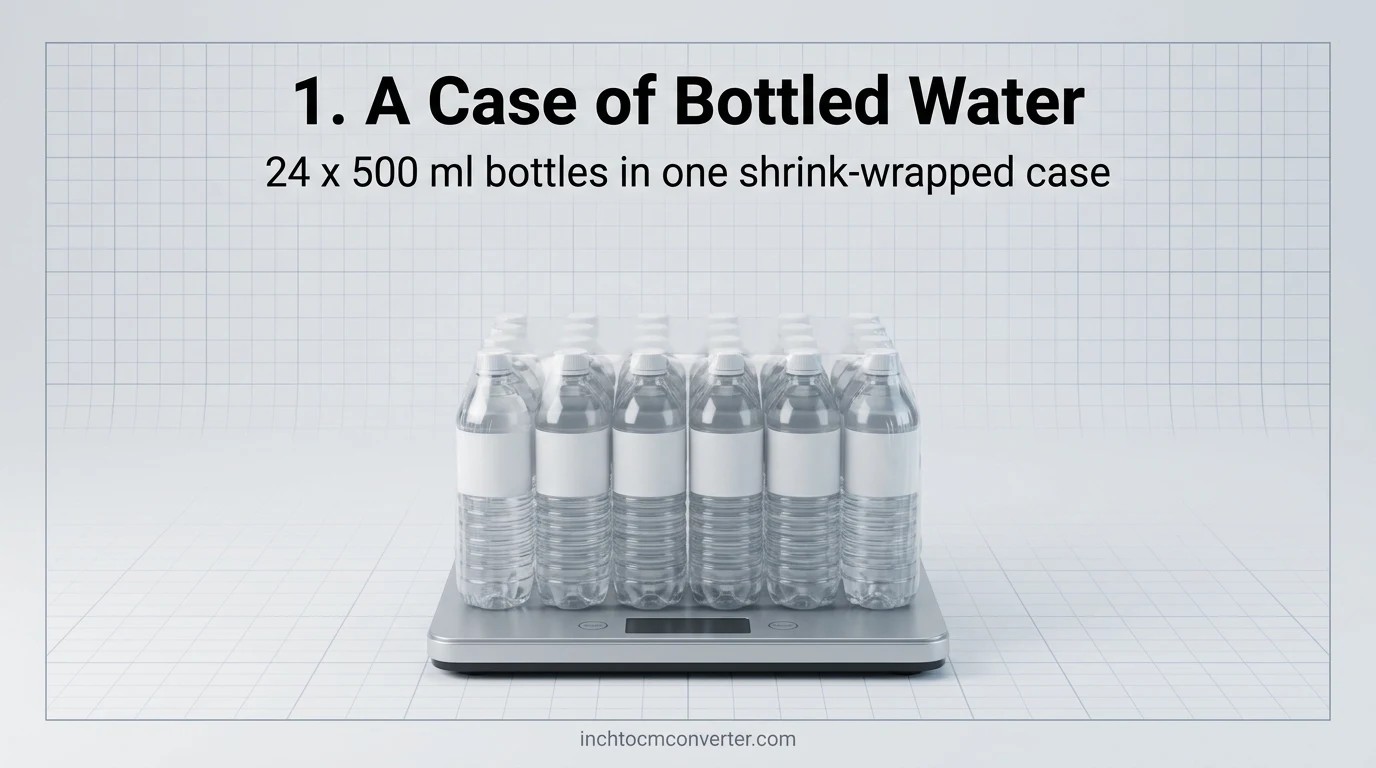
1. A Case of Bottled Water (24 x 500 ml)
A shrink-wrapped case of 24 half-litre water bottles weighs about 12 kg — 12 litres of water plus the plastic. That is a little over 10 kg: take four bottles out and the remaining 20 weigh almost exactly 10 kg. It is one of the easiest everyday references for the weight, and one is easy to find in any supermarket.
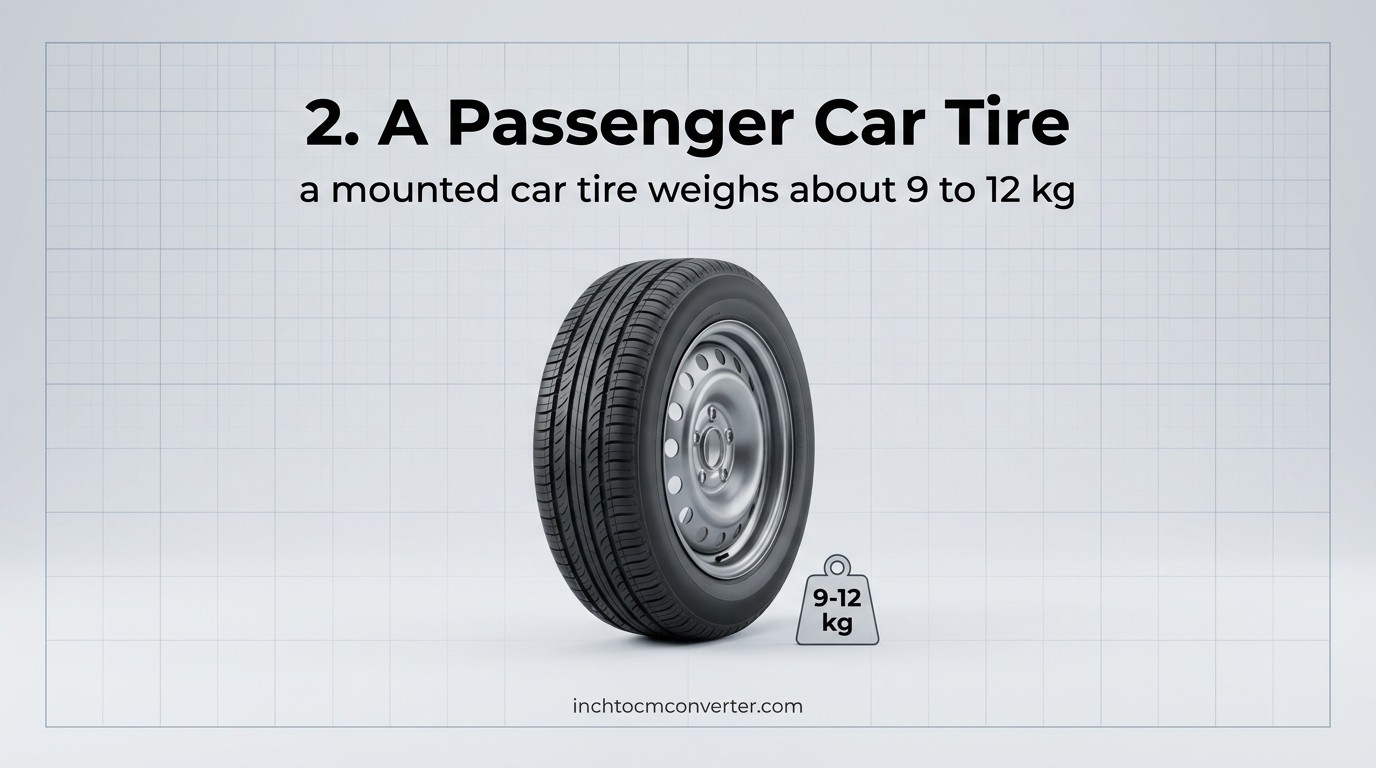
2. A Passenger Car Tire
A standard mounted car tire on its steel wheel weighs about 9 to 12 kg, with a mid-size tire right at 10 kg. If you have ever changed a flat, you have lifted close to this weight.
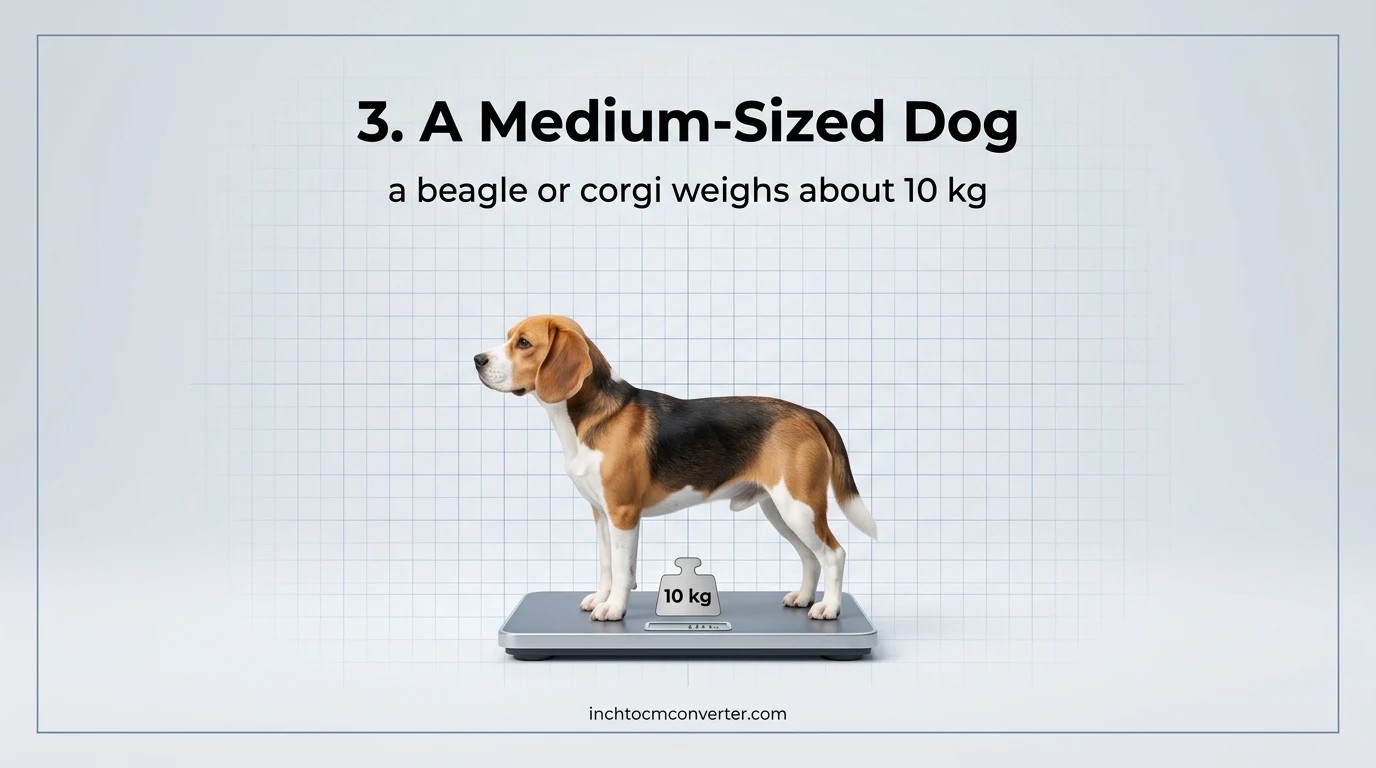
3. A Medium-Sized Dog
A small-to-medium dog — a beagle, a corgi, a miniature schnauzer — weighs about 10 kg. Lifting a dog that size into a car is a good feel for the load.
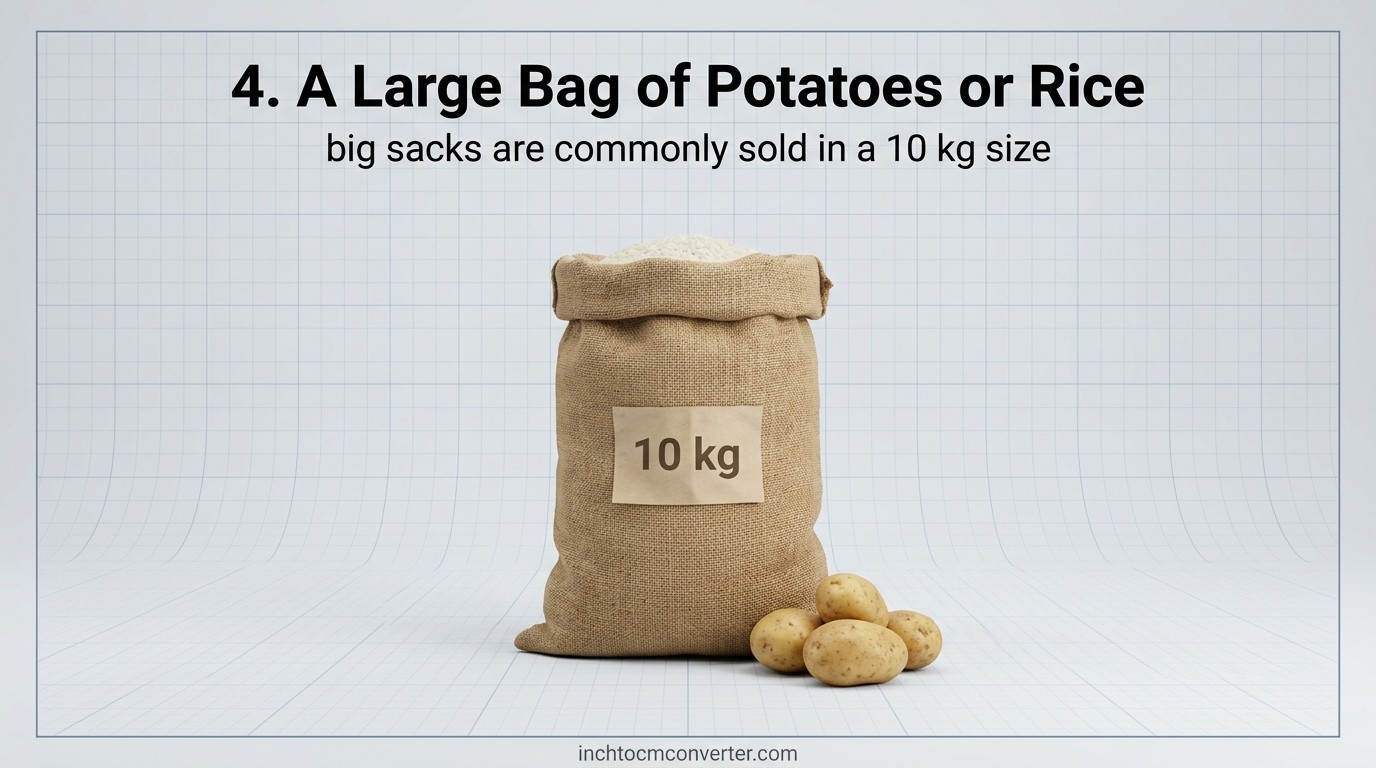
4. A Large Bag of Potatoes or Rice
A big sack of potatoes, rice, or flour is commonly sold in a 10 kg size. Carrying one home from the store is the classic “10 kilos” experience.
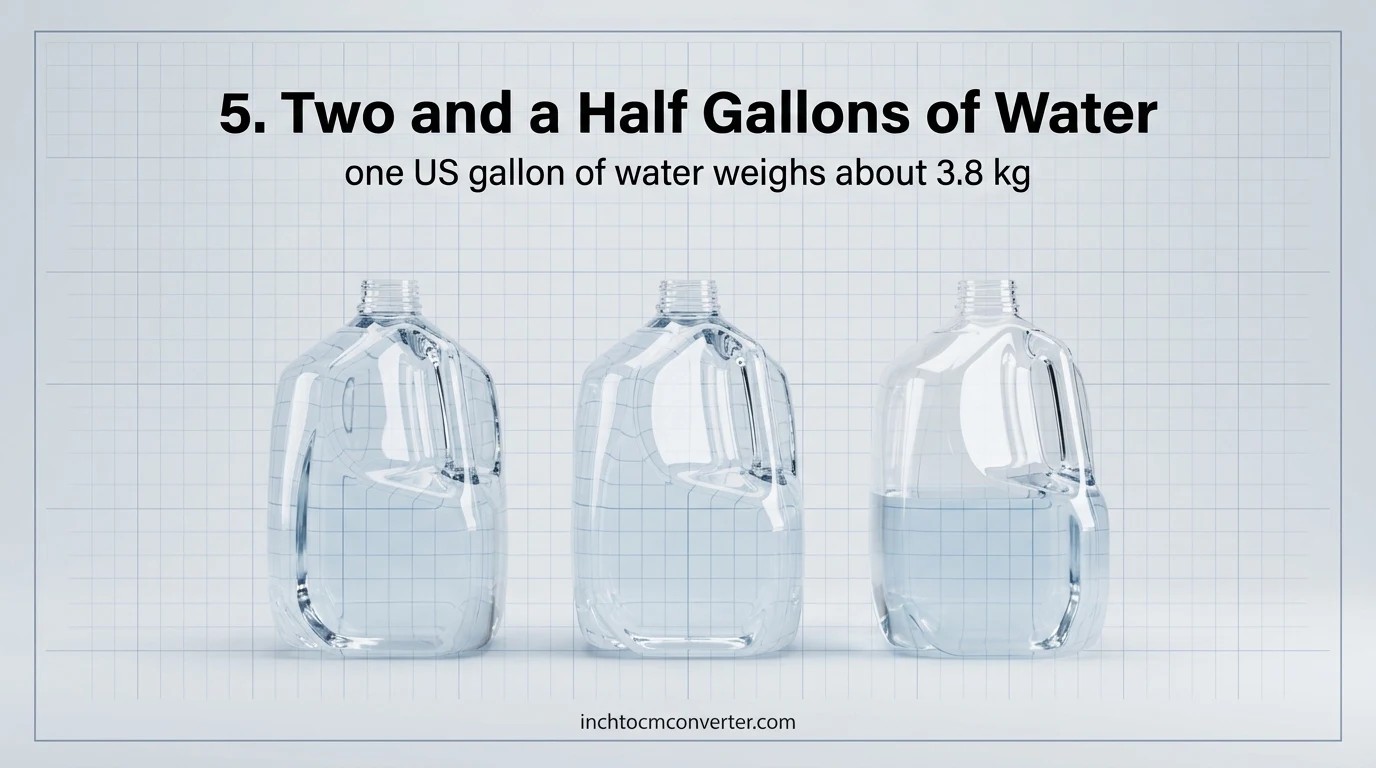
5. Two and a Half Gallons of Water
A US gallon of water weighs about 3.8 kg, so two and a half gallons — or a bit more than two large milk jugs — comes to 10 kg. Water is the easiest way to build the weight from parts.
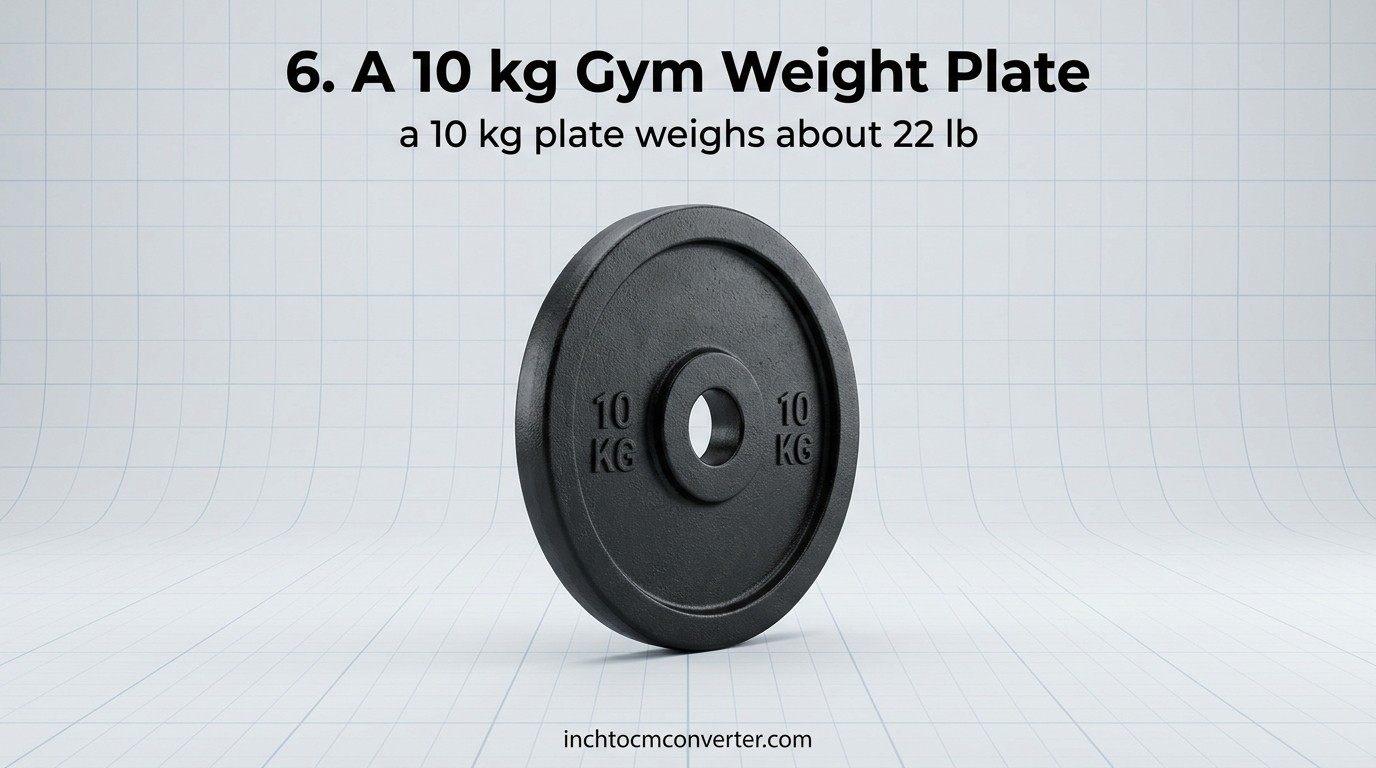
6. A 10 kg Gym Weight Plate
Gym weight plates come in a standard 10 kg (or 25 lb) size. Anyone who has loaded a barbell has handled this exact weight.
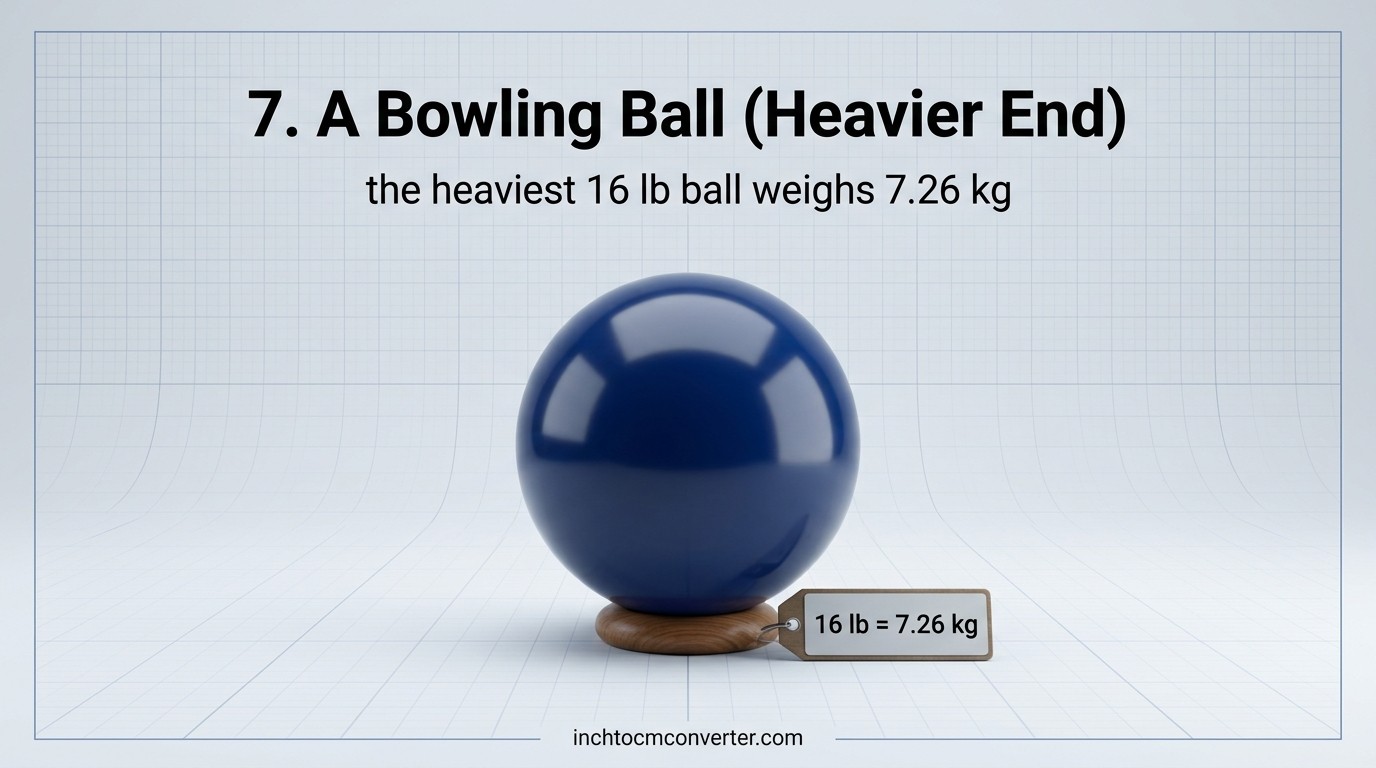
7. A Bowling Ball (Heavier End)
The heaviest legal bowling ball is 7.26 kg (16 lb); a “house ball” for a strong adult is 6 to 7 kg. Ten kilograms is a bit heavier than the maximum bowling ball — picture that ball plus a bag of sugar.
8. A Full Carry-On Suitcase
Airlines commonly cap carry-on baggage at 10 kg, so a cabin bag packed to the limit is exactly this weight. Lifting one into an overhead bin is the reference most travellers know.
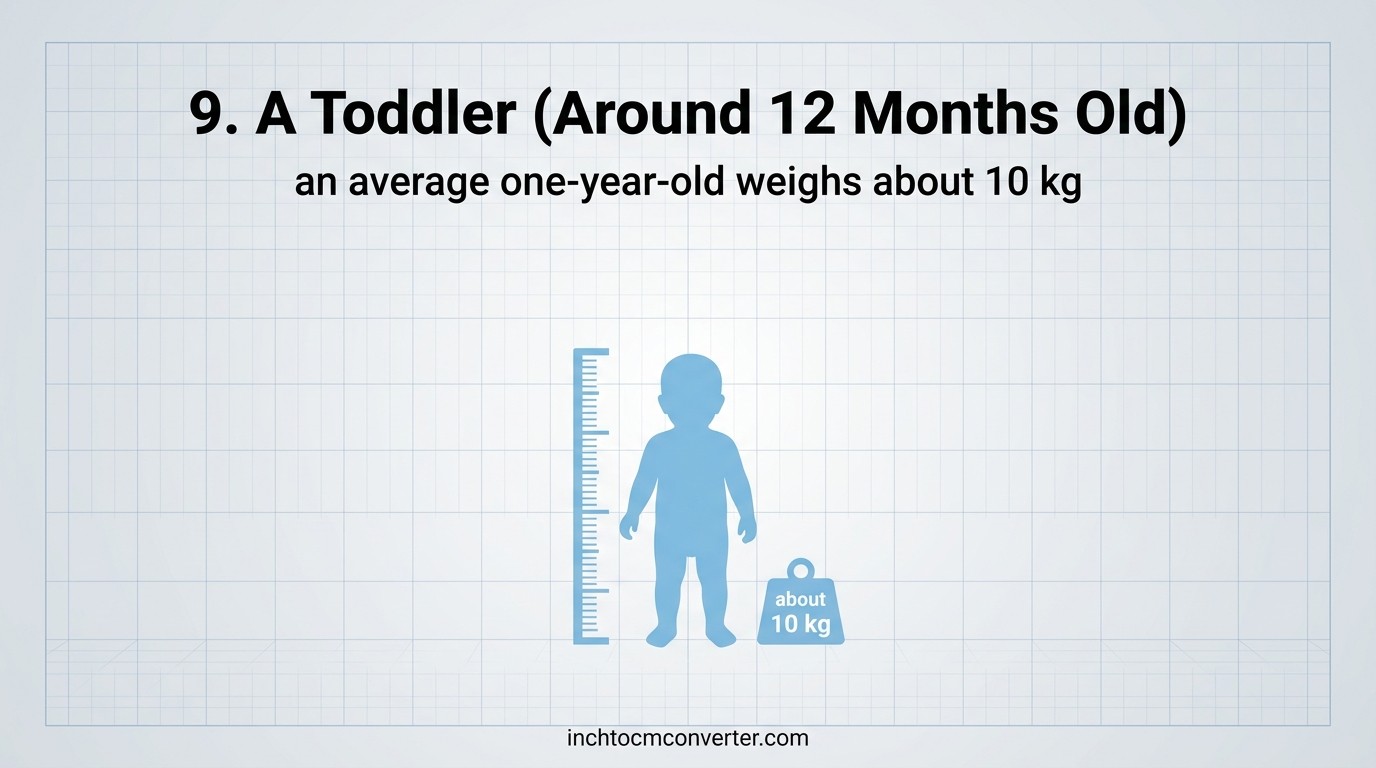
9. A Toddler (Around 12 Months Old)
An average one-year-old child weighs about 10 kg. Parents carry this weight on one hip for long stretches without thinking about it.
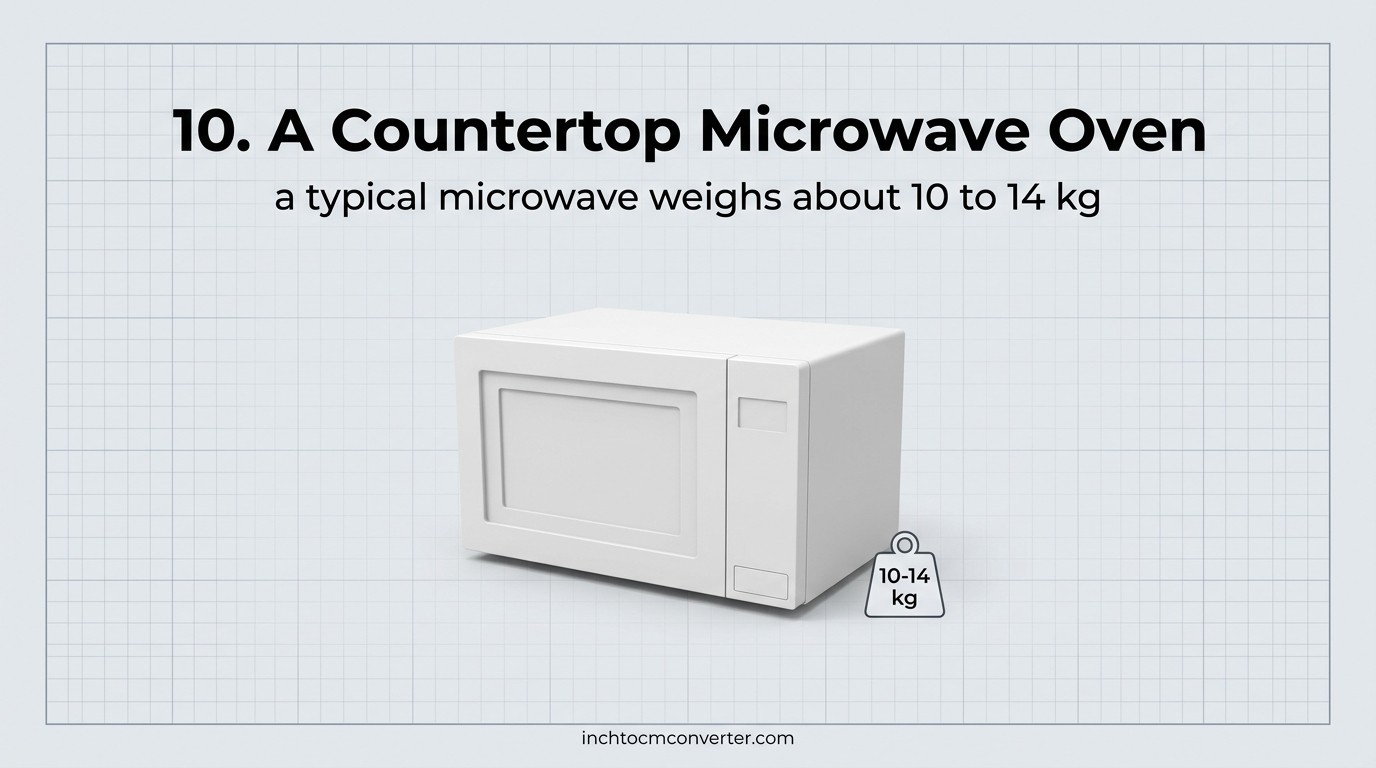
10. A Countertop Microwave Oven
A mid-size countertop microwave weighs about 10 to 14 kg, with the smaller units right at 10 kg. Moving one to a new spot is a fair feel for the load.
How to Estimate 10 kg Without a Scale
- Use a case of water. A 24-pack of 500 ml bottles weighs about 12 kg, so a pack of 20 bottles weighs almost exactly 10 kg.
- Use water jugs. Two and a half US gallons of water comes to about 10 kg.
- Use a car tire. A mounted passenger-car tire is close to 10 kg.
- Use a bag of rice or potatoes. The standard large sack is sold in a 10 kg size.
10 kg Compared to the Human Body
Ten kilograms is about one-seventh of an average adult’s body weight (roughly 70 kg), the weight of a human leg below the knee, or a bit more than the combined weight of both arms. It is close to the weight of a newborn baby at three to four months old, or a large house cat.
Common Mistakes People Make About 10 kg
- Confusing kilograms and pounds. 10 kg is about 22 pounds — more than double “10 pounds.”
- Underestimating it at arm’s length. Ten kilograms held close feels light; held out from the body it feels several times heavier.
- Assuming a bowling ball is 10 kg. The heaviest legal ball is 7.26 kg; 10 kg is noticeably heavier.
Frequently Asked Questions
How much is 10 kg in pounds?
About 22 pounds — precisely 22.046 lb, since one pound is 0.45359237 kg.
How heavy is 10 kg?
About the weight of a case of bottled water, a car tire, a medium dog, or a one-year-old child.
Is 10 kg heavy to lift?
It is a moderate load — most adults can lift it in one hand briefly and carry it with two hands comfortably. It is around the point where workplace guidelines suggest getting help for repeated lifts.
How many grams is 10 kg?
Exactly 10,000 grams, since 1 kilogram is 1,000 grams.
What is 10 kg in stone?
About 1.57 stone, since one stone is 14 pounds and 10 kg is 22.05 pounds.
Can I take 10 kg as carry-on?
On many airlines yes — 10 kg is a common cabin-baggage limit, though some carriers allow less (7–8 kg) or more. Always check the specific airline.
Final Weight Conclusion & Quick Reference
10 kilograms equals about 22 pounds, or 10,000 grams. The easiest anchors: a 24-pack case of bottled water, a passenger-car tire, a medium dog, or a one-year-old child. Any one of them lets you judge 10 kg without a scale.
Related Articles
How Much Is 10 Grams? — Explained
10 grams equals about 0.35 ounces -- exactly two US nickel coins, about two sheets of printer paper, or 2.5 teaspoons of sugar.
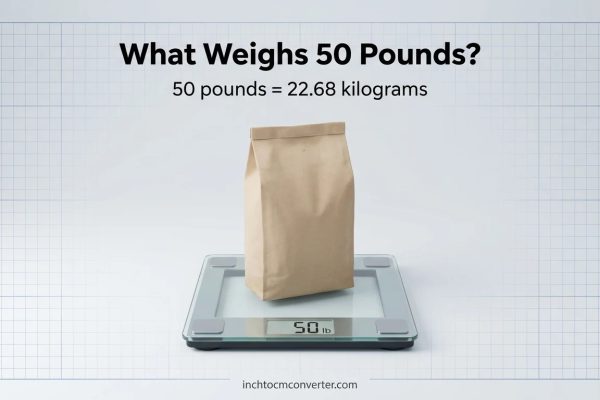
What Weighs 50 Pounds? (Common Things Compared)
50 pounds equals about 22.7 kg -- the exact size of a standard bag of dog food, or close to a bag of concrete mix.